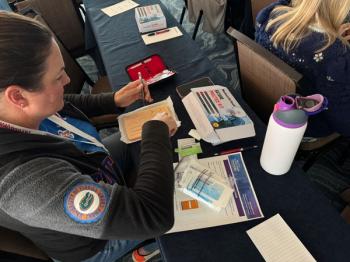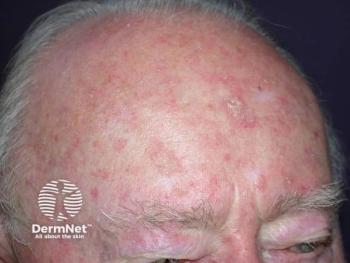
Faculty from the Cutaneous Oncology Workshop answer practical questions spanning skin cancer prevention, diagnosis, treatment, and follow-up.
At Elevate-Derm, Justin Love, PA-C, explains why planning is essential for successful and meaningful patient discussions.
Justin Love, PA-C, has a basic rule for the hardest conversations he has with patients: never wing it. “You’re not just walking into a room and discussing topical retinoids for a 13 year old that has acne,” Love said in an interview with Dermatology Times at the 2026
Love’s comfort with mortality and difficult conversations predates his dermatology career. Before becoming a PA, he spent about a year working nights as a respiratory therapist in inpatient hospital units. In addition to the everyday mundane tasks, he placed patients on ventilators and both intubated and extubated them as he helped wean them off breathing support. Sometimes this put him in the room when families decided to withdraw a patient from life support, explained Love. That exposure gave him a unique perspective.
Now assistant clinical professor at Loma Linda University with 18 years of experience as a dermatology PA, Love
A few weeks before the interview, Love said he had what he believed was a final visit with a patient he had treated for more than 7 years. The patient, who had been treated for several skin cancers over the course of the relationship, arrived in a wheelchair, looking less than his normal self, Love explained.
Despite the circumstances, the visit carried the same warmth it always had. “He’d always had like a nice joke or a quip to give me, so it was a very nice interaction because he’s always very, very happy to come in and see us,” Love said. “Those visits can be difficult.”
Love said clinicians facing an end-of-life or other difficult conversation should start with a
Just as important as what’s said is how much time is set aside to say it. Love builds extra room into his schedule for these types of visits so patients don’t feel rushed through a conversation that deserves space for questions and for the patient to feel heard. “It does take some planning, it does take some intentionality to say, ‘Okay, guys, I need this 20 minute block, and I don’t need anybody to interrupt me,’” he said. If a visit runs long, he added, that’s simply the cost of doing it right: “If I’ve been in the room longer than what is normal, that’s okay, we’re having a difficult conversation.”
For Love, the throughline is preparation. “It’s kind of like anything goes better when you prepare for it,” he said. “The more you prepare, the more you plan. It just makes that process much easier,” he told Dermatology Times.