

Opinion|Videos|August 5, 2026
Approaching Sensitive Exams and Diagnostic Delay in Adolescent HS
Examining a teenager's groin or axilla requires more than clinical skill. The panel discusses consent, comfort, and why HS diagnosis still lags for years.
Advertisement
Episodes in this series
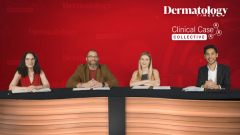
This episode, "Approaching Sensitive Exams and Diagnostic Delay in Adolescent HS," features the panel examining how to build trust with adolescent patients during sensitive exams.
Continuing with the adolescent case, Dr. Tjahjono explains that treating a teenager means treating the family, since parents can become the strongest allies in care or, if excluded, a barrier to it. He notes that safety data supporting biologics in younger patients has only become robust in the last several years, giving him more confidence to discuss hope and disease control with families than was possible before. The goal, he says, is halting progression before any irreversible anatomic damage occurs.
The panel turns to the practical challenge of examining sensitive areas in patients who are often deeply uncomfortable with their bodies. Dr. Cices describes offering patients a choice about whether a parent stays in the room, asking permission before any exam, and noting that some patients leave underwear on even when only genital involvement is present, a signal of how hesitant they can be. Cynthia Trickett recalls a patient undergoing gender transition who declined any exam for three visits before eventually agreeing, illustrating that patience itself builds the therapeutic relationship and, over time, treatment adherence. Encouraging patients to fully undress matters clinically too, since disease can exist in areas patients forget to mention or have never noticed.
Asked what drives diagnostic delay, Cynthia Trickett points to shame on the patient side, where embarrassment keeps people silent until they reach crisis, and a parallel delay on the provider side, where urgent care and emergency clinicians often treat and discharge without recognizing HS. Dr. Payette adds a case of his own: a 13-year-old with a single axillary abscess who returned three months later with another, a pattern he says is often enough, on its own, to justify an early diagnosis and intervention.
Up next, in "Starting Biologic Therapy for HS in Adolescent Patients," the panel discusses when and how they introduce biologic therapy to adolescent patients and their families.
Advertisement
Related to this article

Phase 3 LATITUDE Atlas data presented at EADV 2026 showed higher rates of complete and near-complete skin clearance with zasocitinib compared with deucravacitinib.

Day 2 of EADV 2026 highlighted new findings involving GLP-1–associated nail changes, long-term atopic dermatitis control, emerging therapies, alopecia, and hidradenitis suppurativa.
According to data presented at EADV, at week 16 of the phase 2 study, 47.8% to 62.5% of adults receiving tilrekimig achieved EASI 75 across doses, compared with 9.1% to 19.9% with placebo.

AbbVie reports F-VASI 75 of 55.1% in Viti-Up-1 and 47.4% in Viti-Up-2 at week 76 among patients continuing upadacitinib, with numerically higher responses alongside NB-UVB.
A new report from the National Eczema Association (NEA) found systemic corticosteroids were filled more often than dupilumab, and 13% of Americans live in counties without a dermatology or allergy/immunology practitioner.

Real-world EADV 2026 data suggest autonomous AI could increase dermatology capacity while maintaining high sensitivity for invasive skin cancers.
Up to 72% of tulisokibart-treated patients achieved HiSCR50 at week 16 vs 35% with placebo, the first positive phase 2 anti-TL1A data in dermatology.
Treatment success reached 56.7% and total lesions fell 71.8% with up to 52 weeks of oral denifanstat, with no adverse event-related discontinuations.
Advertisement
Advertisement
Trending on Dermatology Times
1
NEA Report Highlights Atopic Dermatitis Care Access Gaps by State
2
EADV 2026 Day 1: Late-Breaking Data, Emerging Therapies, and New Directions in Dermatology
3
Nemolizumab Sustains Atopic Dermatitis Responses Through 3 Years in ARCADIA
4
Tulisokibart Meets Primary Endpoint in Phase 2b Hidradenitis Suppurativa Trial
5