


Opinion|Videos|September 2, 2026
Building Clinician Confidence to Treat HS Early and Aggressively
Ultrasound findings suggest inflammation is often present long before it's visible. The panel discusses what it takes for clinicians to treat HS with the same urgency as acne scarring.
Advertisement
Episodes in this series
In "Building Clinician Confidence to Treat HS Early and Aggressively," the panel discusses the tools and mindset shifts needed to treat HS with real confidence.
Cynthia Trickett opens by urging clinicians to master HS diagnosis itself, since early scarring is frequently under-recognized; she cites a Lancet-referenced finding that 57% of patients are under-staged because early tunnels go undetected without ultrasound. That point leads a panelist to question whether true Hurley Stage 1 disease exists at all, arguing that even clinically quiet skin may already conceal tunnels invisible to the naked eye, a limitation she considers one of the field's biggest blind spots.
Asked what builds confidence for less experienced prescribers, Dr. Tjahjono recommends the IHS4 tool specifically for its speed and objectivity, taking only a minute or two once mastered. He suggests reframing the standard side-effect conversation around the risk of not treating, namely disease progression, and anchoring decisions to how a patient's life looks outside the exam room rather than a single good day in clinic. Panelists agree that repeated courses of prolonged antibiotics without benefit should itself trigger escalation.
Several panelists distill their message to a single phrase, time is tissue, arguing clinicians already trust these medications elsewhere in dermatology and should extend that same confidence to HS, since delay risks irreversible scarring. One draws a direct comparison to acne, noting dermatologists readily prescribe isotretinoin at the first sign of scarring risk and should treat HS with equal urgency. For clinicians who aren't yet comfortable prescribing advanced therapy themselves, the panel's advice is to start something and refer rather than let a patient go untreated, leaning on informal curbside consults with colleagues. They close by revisiting tape-strip research showing that skin adjacent to visible lesions, and even areas near burned-out tunnels, can carry inflammatory burden dramatically exceeding that seen in psoriasis.
Up next, in "The Future of HS Treatment: Emerging Therapies on the Horizon," the panel looks ahead to the next generation of HS therapies now moving through the pipeline.
Advertisement
Related to this article

Houston dermatology clinicians compared severity scoring, JAK inhibitor safety data, and psychosocial counseling strategies across 3 alopecia areata patient cases.

Preview the trial data dermatology NPs and PAs will dissect in small-group sessions on AD, psoriasis, and type 2 disease at Horizons in Advanced Practice.
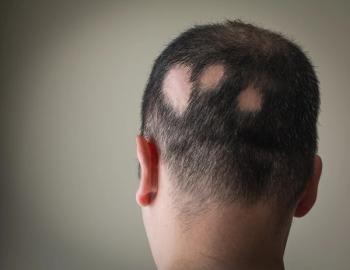
The September issue highlights advances in alopecia areata, cosmetic SPF, psoriasis treatment, teledermatology, and atopic dermatitis.

Phase 3 data show intismeran plus pembrolizumab reduced recurrence or death risk by 42% in patients with resected stage IIB-IV melanoma.
The 3rd annual meeting in Atlanta gives dermatology NPs and PAs 4 case-based breakout sessions and a general education session in a focused, small-group setting.

Shannon Trotter, DO, moderated a Dermatology Times Case-Based Roundtable event on how pharmacokinetics, adverse event timing, and trial response criteria should shape hedgehog pathway inhibitor selection in advanced BCC.
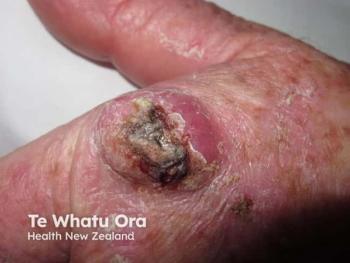
Cosibelimab-ipdl is now an NCCN Category 2A option for locally advanced CSCC in patients ineligible for curative surgery or radiation.

Lutikizumab significantly improved HiSCR75 response, pain, and disease flares in adults and adolescents with moderate to severe HS.
Advertisement
Advertisement
Trending on Dermatology Times
1
Lutikizumab Meets Primary End Point in Phase 3 HS Trial
2
Dupilumab Associated With Lower Atopic March Risk in Pediatric Atopic Dermatitis
3
AAD, HS Foundation Issue First Joint Hidradenitis Suppurativa Guidelines
4
Intismeran Plus Pembrolizumab Improves RFS in Melanoma
5