


Opinion|Videos|August 26, 2026
HS Case Study: Setting Treatment Goals in Severe Disease
Twelve years of inconsistent care have left this patient reluctant to even be in the room. The panel sets short- and long-term goals for HS.
Advertisement
Episodes in this series
In "HS Case Study: Setting Treatment Goals in Severe Disease," the panel takes on its third case: a warehouse supervisor with 12 years of progressively worsening HS.
The panel's final case is a 42-year-old man who reluctantly seeks a second opinion after 12 years of inconsistent HS care. He has multiple inflammatory nodules, abscesses, and moderate scarring across both axillae and the inguinal region, with limited tunnels in each axilla and the groin, placing him at Hurley Stage 2, though panelists note his multi-site involvement and high inflammatory burden feel closer to Stage 3. He works a physically demanding warehouse job, reports significant sleep disturbance and rising psychological distress, and rates his pain at seven out of ten, rising to nine during flares. His history includes well-controlled hypertension, newly diagnosed moderate depression on an SSRI, and two years of adalimumab with only partial, plateaued response after multiple prior antibiotic courses and steroid injections failed.
One panelist immediately classifies this as straightforwardly severe disease, calculating an IHS4 score of roughly twelve, above the threshold typically marking severe HS, compounded by work absenteeism and a high symptom burden. He frames treatment goals in two phases: a roughly sixteen-week short-term goal of visible improvement on a new therapy, followed by a longer-term goal of durable disease control, minimal pain, and no new tunnel formation, since outcomes tend to improve the longer patients remain on effective biologic therapy.
Panelists read his reluctance as disillusionment with a healthcare system that has repeatedly failed him, whether he came in on his own or under pressure from family or his employer. They agree he needs decisive treatment now rather than another trial of conservative therapy, and that surgical intervention may eventually help clear damaged tissue, though only after inflammation is under better medical control, since operating too early risks new HS activity at the surgical site.
The next episode in this series, "Managing Tunneling HS and Screening for Comorbid Crohn's Disease," has the panel differentiating biologic options for patients with extensive tunneling disease.
Advertisement
Related to this article
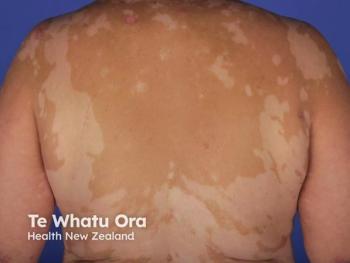
The FDA clearance allows Edesa to expand an ongoing placebo-controlled study of the CXCL10 antibody EB06 to US sites, with topline data expected in the fourth quarter of 2027.

The novel oral helicase-primase inhibitor demonstrated significantly higher rates of complete lesion healing compared with investigator’s choice treatment in the phase 3 PRIOH-1 trial.
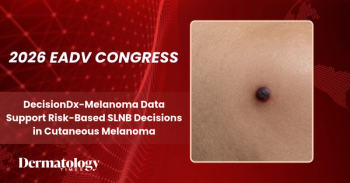
Prospective data suggest DecisionDx-Melanoma may help refine SLNB decisions and identify recurrence risk beyond conventional staging.

Falk G. Bechara, MD, discusses long-term tunnel control, structural damage, and the evolving role of biologics and surgery in HS care.
Galderma has agreed to acquire ZO Skin Health for $1.5 billion, adding the physician-dispensed skincare brand to a portfolio that already includes Cetaphil and Alastin.

New dermatology research explores hidden steroids in OTC products, infant eczema, melanoma prevention, cutaneous lymphoma, and pediatric AD.

SYX-5219 improved disease severity and itch in a Phase 1b trial of adults with moderate to severe atopic dermatitis.

In a survey of 301 employed adults, overall work impairment attributable to CHE was 31.8%, and quality of life worsened in step with self-reported disease severity.
Advertisement
Advertisement
Trending on Dermatology Times
1
FDA Approves Pritelivir for Refractory Mucocutaneous HSV in Immunocompromised Adults
2
GLP-1 Agonists Address Metabolic Risk in Psoriatic Disease
3
EB06 Phase 2 Vitiligo Study Receives FDA IND Clearance
4
EADV 2026 Atopic Dermatitis Highlights: Tilrekimig, RAC2 Inhibition, and Level Up Data
5