

Opinion|Videos|July 29, 2026
Defining HS Severity: Staging Systems and Standard of Care
Hurley staging built the field's first common language for HS, but the panel explains why it falls short and what newer scoring tools capture instead.
Advertisement
Episodes in this series
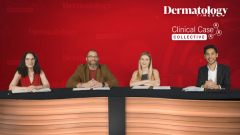
In "Defining HS Severity: Staging Systems and Standard of Care," the panel lays out how they define disease severity and where today's standard of care stands.
Asked to describe the current standard of care, Dr. Cices explains that HS exists on a spectrum from mild to severe, and clinicians cannot reliably predict which patients will progress or how quickly. That uncertainty means close monitoring and a willingness to adjust treatment over time, since no single therapy clears disease or halts progression for every patient. Combination therapy is typically necessary: topicals, oral antibiotics, injectable steroids, and surgical intervention alongside systemic medications that address inflammation from within the body rather than only on the skin's surface. She notes that spironolactone, metformin, GLP-1 receptor agonists, and biologic therapies targeting overactive inflammatory pathways all have a role, along with early laser hair removal to slow progression.
The conversation turns to staging tools. Dr. Cices favors the Hurley system for drug approvals and patient communication but flags its origin as a surgical scale measuring chronic skin damage rather than active inflammation; most clinical trials require Hurley Stage 2 or 3, which already reflects anatomic change. Dr. Tjahjono describes the International Hidradenitis Suppurativa Severity Score System, or IHS4, as his preferred tool, assigning one point per inflammatory nodule, two per abscess, and four per draining tunnel. A 50% reduction, called IHS50, is considered clinically meaningful, and he finds it more dynamic and objective once clinicians become familiar with counting lesions.
The panel agrees that neither Hurley nor IHS4 captures quality of life, which functions as a multiplier: disease that looks mild on exam can still be classifiable as moderate or severe if it is disrupting work, school, or daily functioning. They also discuss the International Psoriasis Council's systemic-therapy threshold as a model HS lacks but could benefit from adopting.Welcome back to another Dermatology Times Clinical Case Collective series. In "How Understanding of HS Has Evolved in Clinical Practice," moderator Michael Payette, MD, MBA, FAAD is joined by Ahuva Cices, MD, FAAD, Leonardo Tjahjono, MD, FAAD, and Cynthia Trickett, MPAS, PA-C to open the series on hidradenitis suppurativa (HS).
Advertisement
Latest CME


Advertisement
Advertisement
Trending on Dermatology Times
1
FDA Grants Priority Review to Zasocitinib for Moderate-to-Severe Plaque Psoriasis
2
FDA Approves Ameluz Red Light PDT for Superficial Basal Cell Carcinoma
3
How Emerging Androgenetic Alopecia Therapies Target DHT at the Scalp Level
4
The Inflammation–Itch–Neurobehavioral Axis: Exploring the Link Between Pediatric Atopic Dermatitis and ADHD
5