




Psoriasis
Latest News
Advertisement
Latest Videos







Advertisement
More News

Icotrokinra emerges as a groundbreaking oral treatment for moderate to severe psoriasis, showing superior efficacy compared with existing therapies at Maui Derm 2026.
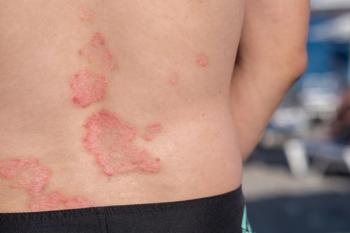
Discover insights from the Horizons in Advanced Practice meeting on type 2 inflammation and psoriasis management.

Psoriasis impacts physical and emotional health, with hidden burdens like trauma and IPV affecting quality of life and care access.
Heap discusses promising phase 3 results for zasocitinib, an oral TYK2 inhibitor, showcasing its efficacy and safety in psoriasis therapy.
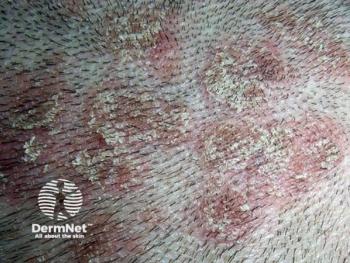
The National Psoriasis Foundation (NPF) redefines psoriasis severity, emphasizing disease impact over extent, enhancing treatment access, and aligning clinical practice with patient needs.
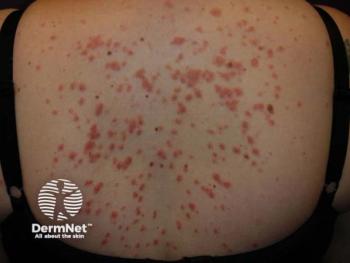
Zasocitinib emerges as a highly selective and potent allosteric tyrosine kinase 2 (TYK2) inhibitor, showing promise for treating immune-mediated inflammatory diseases.
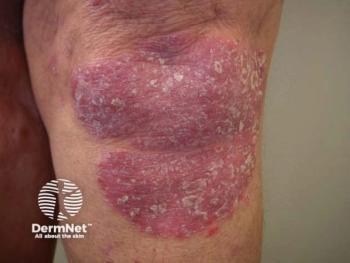
Oruka Therapeutics reveals promising interim results for ORKA-002 and launches the EVERLAST-B trial for ORKA-001, targeting chronic skin diseases.

Explore how precision dermatology leverages immune pathways to enhance treatment for inflammatory skin diseases.
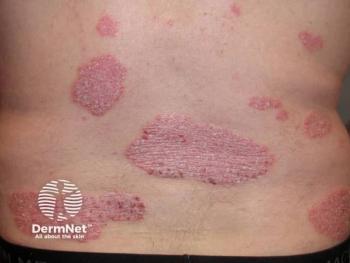
Envudeucitinib shows promising results as a new oral therapy for psoriasis, achieving high skin clearance rates and rapid symptom improvement in clinical trials.
Chronic skin diseases like psoriasis and AD are linked to high smoking and other addiction rates, highlighting the need for integrated psychosocial support.

Explore the latest French guidelines for systemic psoriasis therapy, highlighting new treatments and tailored management strategies for diverse patient needs.
Discover the latest advancements in psoriasis treatment, including innovative therapies and personalized care options for improved patient outcomes in 2025.

In part 3 of this Case-Based Roundtable supplement, experts discuss psoriatic therapies for hair-baring areas.

Omar Noor, MD, recently presented 3 cases of psoriasis in older patients at Horizons in Advanced Practice to discuss available treatment options and considerations for Medicare and in-office injections.
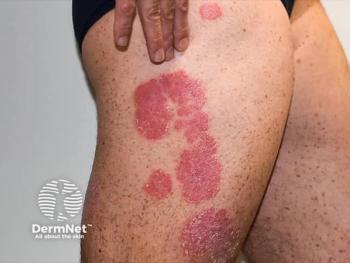
Zasocitinib emerges as a promising oral therapy for psoriasis, achieving significant skin clearance and favorable safety in recent phase 3 trials.
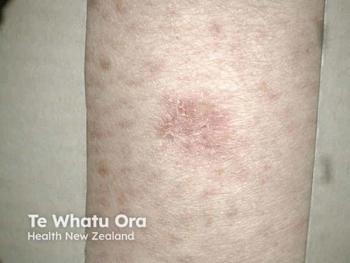
Soligenix reveals promising results from its phase 2a study of SGX302, a novel therapy for mild-to-moderate psoriasis, enhancing patient experience and efficacy.

Discover the latest breakthroughs in atopic dermatitis and psoriasis treatments for 2025, enhancing patient care and individualizing therapy options.

At the Horizons in Advanced Practice meeting, Douglas DiRuggiero, DMSc, MHS, PA-C, discussed psoriasis in high-impact sites, overall psoriatic disease, and available therapies.
In part 2 of this Case-Based Roundtable supplement, experts discuss therapeutic options for psoriasis when considering involvement of special areas.
In part 1 of this Case-Based Roundtable supplement, experts discuss biologic treatment options for psoriasis and balancing efficacy with patient needs.
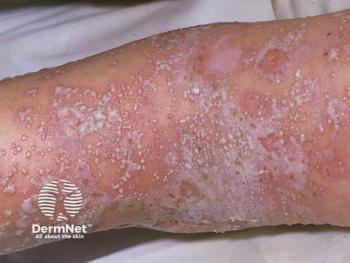
The BLA is supported by phase 3 data demonstrating rapid skin clearance and sustained disease control in patients with GPP.
A meta-analysis of over 800,000 patients shows JAK inhibitors are generally as safe as TNF antagonists for various purposes.
Discover the efficacy and safety of topical roflumilast 0.3% for psoriasis, highlighting its rapid results and potential for sensitive skin areas.

A study reveals high rates of intimate partner violence among women with psoriasis, linking it to poorer quality of life and increased PTSD symptoms.

New long-term findings reveal guselkumab (TREMFYA) as the only IL-23 inhibitor effectively preventing joint damage in active psoriatic arthritis.
Advertisement
Advertisement
Trending on Dermatology Times
1
Icotrokinra Sustains Skin Clearance at High-Impact Psoriasis Sites Through 2 Years
2
EADV 2026 Day 3: Long-Term Psoriasis Data and Emerging Therapeutic Targets Take Focus
3
Ritlecitinib Improves Repigmentation in Nonsegmental Vitiligo
4
EADV 2026 Day 2: Long-Term AD Data, GLP-1 Nail Findings, and Emerging Treatments Take Center Stage
5