Faculty from the Cutaneous Oncology Workshop answer practical questions spanning skin cancer prevention, diagnosis, treatment, and follow-up.
Christopher Bunick, MD, PhD, urged clinicians to move beyond therapeutic inertia and transition patients to advanced systemic therapies.
At the
Bunick emphasized that dermatology is entering a new era defined by targeted treatment goals and measurable disease control. Clinical recommendations increasingly call for physicians to guide patients toward optimal treatment targets, including metrics such as itch reduction (NRS 0/1), Investigator Global Assessment (IGA 0/1), or EASI-90 for skin clearance. Achieving “minimal disease activity,” he noted, represents a critical benchmark for improving patient quality of life.
A central focus of the session was overcoming therapeutic inertia—the delay or reluctance to adjust treatment when patients fail to meet clinical goals. Bunick pointed to both clinical trial data and real-world evidence showing that many patients remain undertreated, often cycling through corticosteroids or biologics without achieving full disease control.
He highlighted the importance of recognizing when to transition to advanced systemic therapies, including JAK inhibitors, which address the heterogeneous cytokine pathways involved in AD, extending beyond Th2 cytokines to interleukins such as IL-22 and interferon-γ.
Bunick also discussed a recently published consensus statement in the Journal of Investigative Dermatology defining “short-term” oral corticosteroid use as less than 4 weeks, and “long-term” use as 4 weeks or longer. The consensus panel emphasized minimizing prolonged systemic corticosteroid use in AD, citing data showing that roughly 1 in 5 moderate to severe patients still receive oral steroids—with nearly one-third of those treated beyond 30 days.
He underscored that in the modern treatment era, oral corticosteroids should not be the default option, particularly given the availability of 6 FDA-approved advanced systemic therapies. Even short steroid courses, he noted, carry risks of infection, cardiovascular events, and other systemic adverse effects.
Parallel efforts are underway to address topical corticosteroid overuse. Expert panels are developing guidance to define topical treatment failure and promote nonsteroidal topical alternatives. The International Psoriasis Council (IPC), for example, recently identified 2 consecutive 4-week topical treatment failures as a benchmark for escalating to systemic therapy in psoriasis—a framework that may inform similar approaches in AD.
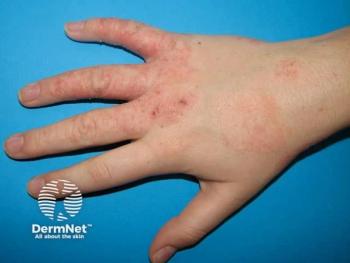
Emerging therapies, including delgocitinib (a topical JAK inhibitor approved for chronic hand eczema) and systemic JAK inhibitors such as upadacitinib, offer steroid-sparing pathways with encouraging efficacy. New biologics, such as lebrikizumab and others under investigation, are also expanding treatment options for chronic hand and foot eczema.
Bunick concluded that dermatology is shifting toward a precision-based model of care—where clinical targets, evidence-based treatment transitions, and steroid minimization define success. As forthcoming consensus guidelines continue to evolve through 2026, the field appears poised to set new standards that balance efficacy, safety, and long-term patient outcomes in atopic dermatitis management.