




Psoriasis
Latest News
Advertisement
Latest Videos






Advertisement
More News

An expert how managing psoriasis in active travelers requires considering dosing frequency, insurance transitions from commercial to Medicare coverage, and selecting biologics with longer intervals between treatments.
An expert discusses how treating older patients with psoriasis, such as a 72-year-old retired teacher, requires addressing cognitive decline, dexterity issues, and comorbidities by considering in-office biologic administration and buy-and-bill processes for Medicare accessibility.

O'Dowd discusses J&J's recent NDA submission for icotrokinra in psoriasis.

Tina Bhutani, MD, shares vital insights on psoriasis management, sleep's role in dermatology, and new alopecia areata treatments at Elevate-Derm Summer 2025.

Sun Pharma reveals promising phase 3 results for tildrakizumab (Ilumya) in treating PsA, showing significant symptom improvement in patients.

Matthew Zirwas, MD, discusses the complexities of safety analysis in psoriasis clinical trials, advocating for exposure-adjusted incidence rates to enhance risk communication.

Johnson & Johnson submitted an NDA for icotrokinra, a promising new treatment for moderate to severe plaque psoriasis in adults and adolescents.
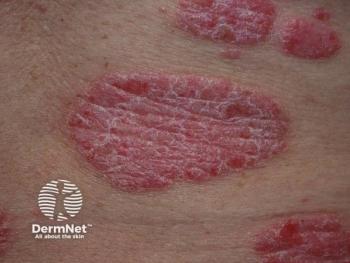
A retrospective case series found that apremilast induced complete remission in 6 men with treatment-resistant genital psoriasis.

At a recent Dermatology Times Case-Based Roundtable event, David Cotter, MD, PhD, reviewed treatment considerations for older patients with moderate to severe PsO who are candidates for biologic therapy.

The pharmaceutical companies announced an exclusive global license and transfer agreement for the advancement and commercialization of Spevigo.
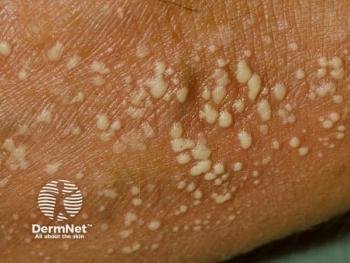
Spesolimab effectively targets the IL-36 receptor, reducing inflammation and preventing flares in generalized pustular psoriasis, offering new hope for patients.

Although bimekizumab carries a precaution for suicidal ideation and behavior, current data suggest it may improve mental health outcomes for patients with psoriasis.

VYNE Therapeutics updates on VYN202, revealing promising early results in psoriasis treatment despite a clinical hold due to safety concerns.
An expert discusses how managing psoriasis requires personalizing treatment based on patient adherence challenges, access issues, comorbidities such as depression, and practical considerations such as injection comfort and frequency.

A poster from SDPA 2025 showed brodalumab maintains a consistent safety profile with no completed suicides and low infection rates.

Subcutaneous spesolimab maintained durable GPP control for 12 months after rapid clearance from IV spesolimab in a high-risk elderly patient.

Remission is now defined as 0% BSA or IGA 0 for ≥6 months on treatment, per a Delphi consensus led by the National Psoriasis Foundation.

Explore the latest insights on IL-17 inhibitors for psoriasis, highlighting their mechanisms, real-world benefits, and future treatment strategies.

New research reveals that early discontinuation of adjuvant immunotherapy for melanoma does not lead to worse outcomes.

Aaron Farberg, MD, led a panel exploring the challenges of diagnosing and treating generalized pustular psoriasis and the promise of targeted therapies.

Zasocitinib emerges as a promising oral therapy for psoriasis and psoriatic arthritis, showcasing superior selectivity and safety compared to traditional JAK inhibitors.

The National Psoriasis Foundation Seal of Recognition program has expanded to prescription drugs, making roflumilast the first to achieve the indication.

Ben Lockshin, MD, FAAD, covered ways in which GLP-1 RAs can be utilized when treating psoriatic disease.

Put your dermatology expertise to the test with Dermatology Times’ interactive quiz series!

Celltrion's Yuflyma gains full FDA interchangeability, enhancing patient access and affordability for various inflammatory conditions.
Advertisement
Advertisement
Trending on Dermatology Times
1
Icotrokinra Sustains Skin Clearance at High-Impact Psoriasis Sites Through 2 Years
2
EADV 2026 Day 3: Long-Term Psoriasis Data and Emerging Therapeutic Targets Take Focus
3
Ritlecitinib Improves Repigmentation in Nonsegmental Vitiligo
4
EADV 2026 Day 2: Long-Term AD Data, GLP-1 Nail Findings, and Emerging Treatments Take Center Stage
5