




Psoriasis
Latest News
Advertisement
Latest Videos



Advertisement
More News
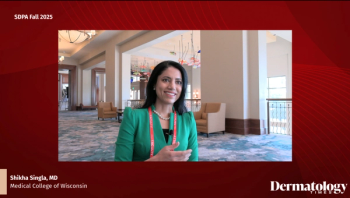
Explore the latest insights on psoriatic arthritis and psoriasis management from Shikha Singla, MD, emphasizing multidisciplinary care and early screening strategies.

At a Case-Based Roundtable event, Cory Rubin, MD, discussed real-world strategies for optimizing systemic therapy in patients with moderate to severe psoriasis.
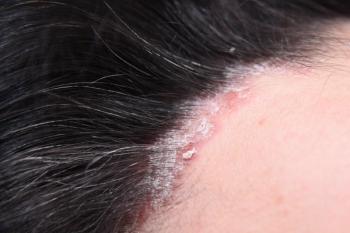
ORKA-001 by Oruka Therapeutics offers promising yearly dosing for psoriasis, showcasing extended efficacy and safety in early clinical trials.
Christopher Bunick, MD, PhD, urged clinicians to move beyond therapeutic inertia and transition patients to advanced systemic therapies.

Stephanie Alvarez, marketing director of Cognivia, details her experience with psoriasis and why she believes clinical trials should reflect more real-world patients and scenarios.

At Fall Clinical, new findings from the ENCOMPASS study revealed significant unmet needs in psoriasis care, highlighting a strong preference for effective oral therapies among patients and providers.

Bristol Myers Squibb reveals promising data on deucravacitinib's efficacy for psoriatic arthritis and systemic lupus erythematosus, highlighting its potential as a new treatment option.
Benjamin Lockshin, MD, noted long half-life biologics may allow patients to maintain remission with minimal injections.
At Fall Clinical 2025, Ron Vender, MD, discussed the evolving psoriasis treatment landscape and the persistent challenge of managing palmoplantar pustulosis.
At Fall Clinical 2025, Marc Serota, MD, discussed how GLP-1 therapies, new CSU treatments, and hybrid care models are reshaping dermatologic practice heading into 2026.

New data presented at Fall Clinical 2025 reveal that patients in socioeconomically disadvantaged areas are significantly less likely to initiate biologic or small molecule treatments.

New data from Johnson & Johnson's ICONIC-TOTAL study reveals icotrokinra's promising long-term efficacy and safety for treating challenging plaque psoriasis.

Data from Fall Clinical 2025 detailed the results from the phase 2 STRIDE and ongoing open-label extension studies demonstrating the efficacy and safety of envudeucitinib, a selective TYK2 inhibitor.

A new IPC-endorsed framework simplifies psoriasis severity into “topical” versus “systemic” categories to guide treatment more effectively, according to James Song, MD.

James Del Rosso, DO; April Armstrong, MD, MPH; Mark Nestor, MD, PhD; Mark Lebwohl, MD; Linda Stein Gold, MD; and Darrell Rigel, MD, MS, presented some of the biggest updates in dermatology to close out the year.

Explore real-world strategies with Leigh Ann Pansch, MSN, FNP-BC, DCNP, for managing psoriasis, emphasizing patient-centered care, and implementing individualized biologic treatment approaches.

Vimal Prajapati, MD, FRCPC, DABD, highlights the durable efficacy of guselkumab, reassuring safety, and quality-of-life improvements in pediatric patients with moderate to severe plaque psoriasis.

Andrew Mastro, MS, PA-C, moderated a recent Dermatology Times Case-Based Roundtable event to present 3 complex cases of moderate to severe psoriasis treated with biologics.

Vimal Prajapati, MD, FRCPC, DABD, highlights guselkumab’s ability to achieve high levels of skin clearance in pediatric patients with moderate to severe plaque psoriasis.

Mark Kaufmann, MD, discusses how patient realities shape psoriasis treatment choices.

Researchers found new patients incurred 40% higher consultation costs due to longer clinician interaction times.

A study reveals ixekizumab's effectiveness in treating mild to moderate plaque psoriasis, showing superior PASI responses and improved long-term outcomes.

Psoriasis complicates wound healing due to systemic inflammation, affecting recovery and requiring tailored clinical approaches for optimal patient outcomes.
Explore real-world psoriasis management insights from Anthony Nuara, MD, PhD, focusing on patient-centered approaches and innovative treatments like tildrakizumab.

Discover the latest IPC consensus on psoriasis severity reclassification, enhancing treatment strategies for better patient outcomes and quality of life.
Advertisement
Advertisement
Trending on Dermatology Times
1
Icotrokinra Sustains Skin Clearance at High-Impact Psoriasis Sites Through 2 Years
2
EADV 2026 Day 3: Long-Term Psoriasis Data and Emerging Therapeutic Targets Take Focus
3
Ritlecitinib Improves Repigmentation in Nonsegmental Vitiligo
4
EADV 2026 Day 2: Long-Term AD Data, GLP-1 Nail Findings, and Emerging Treatments Take Center Stage
5