Two-year oral IL-23 data, GLP-1 biomarker findings, and a nonsurgical option for superficial basal cell carcinoma headline the sessions covered in Las Vegas.
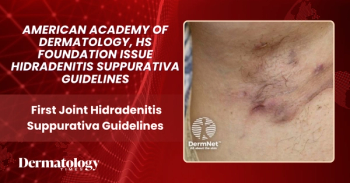
UCB shares 3-year BIMZELX (bimekizumab) data in HS, showing sustained hidradenitis suppurativa lesion clearance and major severity reductions.
UCB has reported new three-year outcomes for bimekizumab (BIMZELX) in moderate to severe hidradenitis suppurativa (HS), highlighting sustained inflammatory lesion resolution and marked reductions in overall disease severity.1 The data, drawn from the phase 3 BE HEARD clinical program and its open-label extension, will be presented at the 15th Conference of the European Hidradenitis Suppurativa Foundation (EHSF) in San Giljan, Malta, and provide some of the longest-duration efficacy observations to date for an IL-17A/IL-17F–targeting therapy in HS.
The three-year analyses focus on patients with moderate to severe HS who were randomized to bimekizumab in the 48-week, double-blind, placebo-controlled BE HEARD I and II trials and subsequently entered the BE HEARD open-label extension (BE HEARD EXT). Of 1,014 participants enrolled across the pivotal studies, 556 patients originally assigned to bimekizumab completed week 48 and entered the extension. Among these, 367 had lesion count assessments available at year 3. After the controlled period, patients received open-label bimekizumab 320 mg every 2 weeks or every 4 weeks, with all participants ultimately transitioning to Q4W dosing by the end of year 3.
Using the clinician-rated International HS Severity Score System (IHS4), substantial long-term improvements in inflammatory lesion burden were observed. At 3 years, 40.1% (147/367) of assessed patients achieved IHS4-100, indicating complete resolution of inflammatory lesions, including nodules, abscesses, and draining tunnels. High levels of near-complete response were also reported: 59.1% (217/367) achieved IHS4-90 and 77.4% (284/367) achieved IHS4-75. These response thresholds reflect at least 90% and 75% improvement, respectively, from baseline IHS4 scores.
Beyond response rates, analyses demonstrated a pronounced shift in overall disease severity distribution over time. At baseline, 87.4% (486/556) of patients in the bimekizumab total group were categorized as having severe HS by IHS4 criteria. By year 3, this proportion had declined to 14.7% (54/367). Conversely, the proportion of patients with mild or inactive disease (IHS4 ≤3) increased from 0% at baseline to 59.4% (218/367) at 3 years. These findings suggest that a majority of patients experienced a transition from moderate or severe HS to a milder disease state during long-term treatment.
Draining tunnels, which are associated with chronic tissue damage, scarring, and significant morbidity, also decreased substantially. Mean draining tunnel count fell from 3.8 (4.3) at baseline to 0.9 (2.0) after 3 years. Given the structural and symptomatic burden of tunnels, their reduction is clinically meaningful and aligns with the reported rates of IHS4-100 response. In addition to objective lesion and severity measures, a separate analysis indicated sustained, meaningful improvements in a key health-related quality-of-life outcome through 3 years, underscoring the broader impact of long-term inflammatory control in HS.
“The inflammatory lesions seen in HS, particularly draining tunnels, can be devastating for people living with this disease – not only because of the pain and profound impact on daily life, but also due to the long-term structural damage and scarring they often cause,” Professor Thrasyvoulos Tzellos, head physician in the Department of Dermatology at Nordland Hospital Trust in Bodø, Norway, said in the press release. “These data show that bimekizumab delivers high long-term resolution rates of these lesions, underscoring its sustained control of inflammation and potential to avoid structural damage and disease progression.”1
Bimekizumab is the first and only monoclonal antibody that selectively inhibits both interleukin (IL)-17A and IL-17F, key cytokines implicated in the pathophysiology of several chronic inflammatory diseases. In November 2024, the therapy received US FDA approval for adult patients with moderate-to-severe HS at a dosing regimen of 320 mg every 2 weeks to week 16, followed by 320 mg every 4 weeks thereafter.2
“The data at EHSF showed bimekizumab’s ability to reduce HS disease severity over an extended three-year period. The depth and durability of efficacy reinforces its importance for both people living with HS and the clinical community,” Donatello Crocetta, MD, MBA, UCB’s Chief Medical Officer, added in a statement. “We are proud to begin 2026 with more robust long-term clinical evidence that reflects UCB’s commitment to delivering unique treatment options, and we look forward to sharing additional bimekizumab data at AAD later this quarter.”1
References
1. UCB showcases three-year hidradenitis suppurativa data at EHSF: BIMZELX® (bimekizumab) achieved inflammatory lesion resolution and substantial disease severity improvements. News release. UCB. Published February 4, 2026. Accessed February 4, 2026.
2. UCB receives US FDA approval for BIMZELX® (bimekizumab-bkzx) as the first IL-17A and IL-17F inhibitor for adults with moderate-to-severe hidradenitis suppurativa. News Release. UCB. Published November 20, 2024. Accessed February 4, 2026.