

News|Videos|October 26, 2025
Integrating GLP-1 Therapy, Advancing CSU Care, and Expanding Access
Key Takeaways
- Obesity exacerbates inflammatory skin diseases; GLP-1 receptor agonists can reduce psoriasis activity by addressing metabolic and dermatologic aspects.
- CSU management is returning to dermatology with new treatments like dupilumab and remibrutinib, expanding therapeutic options.
At Fall Clinical 2025, Marc Serota, MD, discussed how GLP-1 therapies, new CSU treatments, and hybrid care models are reshaping dermatologic practice heading into 2026.
Advertisement
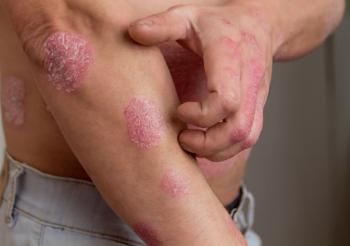
“When you walk in a patient room and they have psoriasis plaques all over their skin, and then you also see that they are an obese body habitus, you should make the connection that those adipocytes are part of the source of the inflammation on their skin,” said Marc Serota, MD, in an interview with Dermatology Times at the
Serota, a dermatologist, allergist-immunologist, pediatrician, and obesity medicine specialist practicing at Epiphany Dermatology in Littleton, Colorado, shared key insights about emerging intersections in dermatologic care. His discussion spanned the use of GLP-1 receptor agonists in psoriasis management, evolving understanding and treatment of chronic spontaneous urticaria (CSU), and the changing landscape of care delivery heading into 2026.1,2
GLP-1 Receptor Agonists and Psoriasis
According to Serota, dermatologists should recognize obesity as a chronic inflammatory condition that often exacerbates inflammatory skin diseases such as psoriasis. “If your patient is overweight or obese, they deserve to be offered a GLP-1—whether or not they have psoriasis,” he said. “But in the dermatology world, combining those 2 therapies yields better outcomes.”
He explained that hypertrophic adipocytes suffer from relative hypoxia and necrosis, triggering the release of proinflammatory cytokines that can fuel systemic and cutaneous inflammation. By reducing adipose tissue mass and inflammatory signaling, GLP-1 receptor agonists not only promote weight loss but may indirectly reduce psoriasis activity. Serota emphasized that treating both the metabolic and dermatologic aspects of disease provides a dual benefit: “We want to target and treat both conditions to give patients the best outcome—not only for their skin, but also for their long-term health.”
CSU Returns to the Dermatology Office
Serota highlighted the resurgence of CSU management within dermatology practices. Historically referred to allergists, patients with chronic hives are now being recognized as having an autoallergic or autoimmune process rather than an external allergic trigger. “You can diagnose CSU in the dermatology office—defined as hives lasting more than 6 weeks, with individual lesions resolving within 24 hours—and now confidently treat them,” he said.
While omalizumab was the longstanding mainstay, newer options have expanded the therapeutic landscape. Dupilumab is now FDA-approved for CSU, and remibrutinib, the
Looking Ahead to 2026
For the next year, Serota is focused on evolving care delivery models. The COVID-19 pandemic accelerated telehealth adoption, but now, he said, the industry is finding balance between virtual and in-person care. “We’re seeing partnerships between pharmaceutical companies, employers, and health systems that expand access to board-certified specialists via telemedicine,” he explained.
This hybrid model allows routine and follow-up care to occur virtually while reserving in-person visits for procedures and complex cases. “It’s not all about telemedicine or all about in-person care,” Serota said. “We're seeing a major trend and a major shift in the health care industry where it's not all about telemedicine, it's not all about in-person care, it's a combination of those 2 things.”
References
- Boh E, Lal K, Serota M. Optimizing psoriatic disease outcomes with GLP-1 receptor agonists. Presented at: 2025 Fall Clinical Dermatology Conference: October 23-26, 2025; Las Vegas, NV.
- Serota M, Tarbox M. Tips and tricks to advancing chronic spontaneous urticaria care. Presented at: 2025 Fall Clinical Dermatology Conference: October 23-26, 2025; Las Vegas, NV.
Advertisement
Related Content
Advertisement


Advertisement
Advertisement
Trending on Dermatology Times
1
How Emerging Androgenetic Alopecia Therapies Target DHT at the Scalp Level
2
Tildrakizumab Partially Reverses Epigenetic Aging in Psoriasis, Pilot Study Shows
3
Field-Directed Therapy Favored for Actinic Keratosis Management
4
Diet Linked to Improved Chronic Idiopathic Urticaria Control
5