

Feature|Videos|October 15, 2025
Guselkumab Demonstrates Robust Efficacy and Safety in Pediatric Psoriasis
Key Takeaways
- The PROTOSTAR trial showed guselkumab's efficacy in pediatric plaque psoriasis, with 56% achieving PASI 90 and 66% reaching IGA 0/1 at week 16.
- Safety profiles in pediatric patients were consistent with adult data, with no new major safety signals identified.
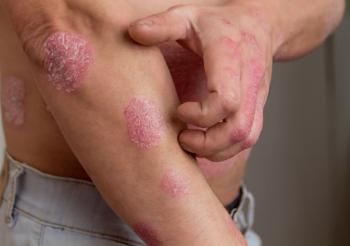
Vimal Prajapati, MD, FRCPC, DABD, highlights guselkumab’s ability to achieve high levels of skin clearance in pediatric patients with moderate to severe plaque psoriasis.
Advertisement
“What is most meaningful to me is that about two-thirds of pediatric patients achieved clear or almost clear skin within 16 weeks, and about over half of pediatric patients achieved 90% improvement in PASI within 16 weeks,” said Vimal Prajapati, MD, FRCPC, DABD, in a recent interview with Dermatology Times.
Prajapati, clinical associate professor at the University of Calgary, co-founder and co-director of the Skin Health & Wellness Centre, Dermphi Centre, Dermphi Shop, and Dermatology Research Institute, and study investigator, discussed new data from the phase 3 PROTOSTAR trial, which evaluated guselkumab (Tremfya; Janssen) for the treatment of moderate to severe plaque psoriasis in pediatric patients aged 6 to 17 years. The FDA
The PROTOSTAR study (
At week 16, the co-primary end points—PASI 90 and IGA 0/1—were both met with clinically meaningful improvements. Prajapati highlighted 3 key efficacy findings:
- 56% of pediatric patients receiving guselkumab achieved PASI 90, compared with 16% on placebo.
- 66% achieved an IGA score of 0 or 1, versus 16% on placebo.
- Nearly 40% achieved complete clearance (IGA 0), compared with 4% on placebo.
From a safety standpoint, adverse events (AEs) were reported in 42% of patients treated with guselkumab and 68% of those treated with placebo, with no new major safety signals identified, which is consistent with the established adult safety profile.
When asked about the most clinically meaningful outcomes, Prajapati emphasized the importance of achieving skin clearance in pediatric patients:
“It is very important to strive for high levels of skin clearance. Mediocrity just does not exist in my world,” Prajapati said.
At week 16, 76% of pediatric patients achieved PASI 75, 56% reached PASI 90, and approximately two-thirds achieved IGA 0/1. Notably, the rates of complete clearance (PASI 100 and IGA 0) in pediatric patients were comparable to those observed in adult trials, highlighting guselkumab’s efficacy consistency across age groups.
Overall, the PROTOSTAR study supports guselkumab as a highly effective, well-tolerated, and reliable biologic option for pediatric psoriasis, expanding therapeutic possibilities for clinicians managing younger patients with moderate to severe disease.
References
- U.S. FDA approves TREMFYA (guselkumab) for the treatment of pediatric plaque psoriasis and active psoriatic arthritis, marking a first and only approval for an IL-23 inhibitor. News release. Johnson & Johnson. September 29, 2025. Accessed October 15, 2025.
https://www.jnj.com/media-center/press-releases/u-s-fda-approves-tremfya-guselkumab-for-the-treatment-of-pediatric-plaque-psoriasis-and-active-psoriatic-arthritis-marking-a-first-and-only-approval-for-an-il-23-inhibitor - Prajapati V, Seyger M, Wilsmann-Theis D, et al. Guselkumab for the treatment of moderate to severe plaque psoriasis in pediatric patients: results of a phase 3, randomized, placebo-controlled study. Poster presented at: 2025 American Academy of Dermatology Annual Meeting; March 7-11, 2025; Orlando, Florida.
Advertisement
Related Content
Advertisement



Advertisement
Advertisement
Trending on Dermatology Times
1
How Emerging Androgenetic Alopecia Therapies Target DHT at the Scalp Level
2
Tildrakizumab Partially Reverses Epigenetic Aging in Psoriasis, Pilot Study Shows
3
Field-Directed Therapy Favored for Actinic Keratosis Management
4
Diet Linked to Improved Chronic Idiopathic Urticaria Control
5