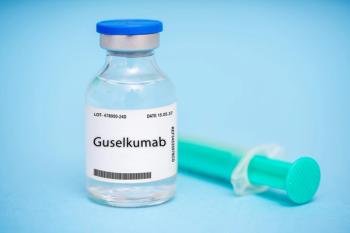
Week 28 data from the phase 2a EVERLAST-A trial showed PASI 100 responses increased to 71.4% despite no additional ORKA-001 dosing after week 4.
Explore real-world psoriasis management insights from Anthony Nuara, MD, PhD, focusing on patient-centered approaches and innovative treatments like tildrakizumab.
In this Dermatology Times Community Case Forum event, Anthony Nuara, MD, PhD, a board-certified dermatologist and Mohs surgeon at Arizona Dermatology in Phoenix, led a practical and engaging discussion on the management of psoriasis, emphasizing real-world challenges and a patient-centered approach. Drawing on more than a decade of clinical experience and a personal connection to the disease, Nuara highlighted how treatment decisions must consider more than just medications. Cost, access, patient preferences, comorbidities, and cognitive or physical limitations all play significant roles.
Evolution of Psoriasis Therapies
The session opened with a historical perspective, underscoring the relatively recent advancements in therapeutics for psoriasis. Despite the continued widespread use of topical corticosteroids, the risks of chronic use are well known. Nonsteroidal topicals such as roflumilast and tapinarof were highlighted as effective alternatives for sensitive or limited areas.
Nuara then walked through the evolution of systemic therapies, from coal tar and phototherapy to conventional disease-modifying antirheumatic drugs and the current era of targeted biologics. IL-17 and IL-23 inhibitors, particularly tildrakizumab, were noted for efficacy, safety, and convenience, especially in patients with adherence challenges. Tildrakizumab’s every-12-week dosing and sustained Psoriasis Area and Severity Index (PASI) 90 and PASI 100 responses make it especially suitable for patients who struggle with frequent administration.
Case 1: Poor Adherence and Cognitive Decline
The first case Nuara shared was that of a 73-year-old man with cognitive decline, poor adherence to topicals and orals, and significant plaque burden. Given these factors, tildrakizumab was selected to improve disease control and quality of life with minimal management burden. Real-world data from the reSURFACE trial support this approach, showing durable responses and a low incidence of serious adverse events.
Additional discussion addressed practical barriers, including Medicare restrictions, patient assistance programs, buy-and-bill logistics, and the importance of office infrastructure for in-clinic administration. Nuara and attendees emphasized the need to tailor therapy not only to disease severity but also to the patient’s life—whether that means accommodating limited mobility, navigating insurance, or addressing psychological resistance to self-injection.
Case 2: Plaque Psoriasis and Metabolic Syndrome
The next case involved a 63-year-old woman with chronic plaque psoriasis localized primarily to her back, whose disease had become increasingly burdensome despite previous topical and systemic therapies. Notably, her medical history included obesity, type 2 diabetes, hypertension, and hyperlipidemia, placing her firmly within the metabolic syndrome spectrum. These factors prompted a discussion not only about skin-directed efficacy but also broader systemic inflammatory control and long-term safety.
The attendees emphasized the importance of selecting biologic agents that could holistically address the cutaneous and systemic dimensions of psoriasis. Tildrakizumab was favored due to its low rates of adverse events, ease of administration, and long-term durability, making it a strong fit for older patients with multiple comorbidities. Nuara also cited data from the phase 3 reSURFACE 1 (NCT01722331) and reSURFACE 2 (NCT01729754) trials, demonstrating that patients showed improvements in PASI score regardless of metabolic syndrome status. Some even exhibit improvements in systemic inflammatory markers, including high-sensitivity C-reactive protein.
Case 3: Long-Standing Disease in Hard-to-Treat Areas
Turning to special site disease, participants discussed the final case of a 42-year-old woman with long-standing plaque psoriasis now affecting her scalp and fingernails, which puts her at risk for developing psoriatic arthritis. Scalp response data from biologic trials were reviewed by Nuara, showing comparable efficacy among agents like tildrakizumab and secukinumab by week 12, with sustained responses up to 1 year. Approximately 4 of 5 early responders maintained benefit long-term. This patient was previously treated with topical corticosteroids, ustekinumab, and secukinumab.
For nail psoriasis, the attendees acknowledged the limitations of early end points given the slow growth of the nail plate. Modified Nail Psoriasis Severity Index data showed modest improvements (15%-25%) across multiple agents between 16 and 28 weeks, with IL-17 inhibitors potentially offering stronger outcomes in nail matrix disease. Some questioned why manufacturers report nail scores so early, noting that more distal involvement may require tailored scoring systems.
Safety, tolerability, and practical issues remained key factors in choosing a treatment. Tildrakizumab was noted to have comparable efficacy to other IL-23s by 6 months, based on both clinical trial and real-world data, with the added benefit of infrequent dosing. Because of the patient’s busy lifestyle and career, she opted to try tildrakizumab for every-12-week dosing, administered by a provider.
Final Thoughts
In today’s therapeutic landscape, psoriasis is one of the most gratifying conditions to manage. Nuara emphasized the significance of the events in fostering conversation and sharing practical pearls among the community.
“Discussion-based events help to foster just that...meaningful discussion,” he concluded. “With so many wonderful tools at our disposal, it is beneficial to hear how others approach the same patient and what features or challenges affect their treatment choice. There is still an art to medicine, and everyone paints the same scene, just a little differently.”