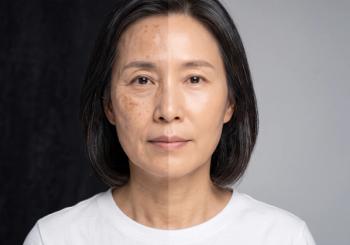
Dermatology’s growing focus on skin longevity demands clear definitions, validated outcomes, and rigorous evidence beyond anti-aging claims.
Explore the complexities of shampoo types, from dry to dandruff solutions, and discover the best options for your unique hair needs.
A trip down the shampoo aisle can be a bewildering experience. There are bottles for fine hair, dry hair, thin hair, dyed hair, damaged hair, natural hair, and curly hair. What happens if you have fine, dry, thin, dyed, and damaged curly hair? Should you buy a bottle of each? Shampooing the hair is a complex physical and chemical interaction between surfactants and a natural mammal-produced fiber. Washing of the scalp hair is a daunting task, as 100,000 to 150,000 individual hairs, covering 4 to 8 m2 of surface area, must be hygienically cleansed. This article examines some of the more commonly used shampoo formulations.
Dry shampoos are regaining popularity, especially among women who style their hair with heat. Water contact reverses heat-created curls or straightening so that dry shampoo can cleanse the scalp without damaging the hairstyle. Dry shampoo is also used to clean the scalp when elaborate braids or plaited locks could be undone by water contact, prolonging the time between braid removal. Finally, water contact can hasten hair dye fading, so dry shampoo can keep hair dye vibrant longer.
Dry shampoo is available as a powder or an aerosol and contains an absorbent material, such as rice or cornstarch, to absorb sebum, combined with borax or sodium bicarbonate. The powder is applied preferentially to the scalp and removed with brushing. Dry shampoo simply absorbs sebum from the scalp and does not clean the hair. It is best used to extend the time between traditional shampooing, but not to replace traditional shampooing methods.
Clarifying shampoos are deep-cleaning shampoos designed to thoroughly remove sebum, and they include hair-styling products, such as hair spray, hair gel, etc. These shampoos typically use sodium lauryl sulfate, a strong detergent, to dissolve the polymer film left on hair shafts. There has been a recent move among shampoo manufacturers to remove sulfate detergents (sodium lauryl sulfate and sodium laureth sulfate) from shampoos. The claim on the packaging will say “sulfate-free.” Rather than developing new consumer claims through the development of new ingredients, it is also possible to create new claims by stating what is not in the formulation, which is much easier. Although sodium lauryl sulfate is a strong detergent, it does have a place in shampoos designed to remove styling residue from the hair shafts.
Two-in-one shampoos are so named because they fulfill 2 hair needs: cleansing and conditioning. How can these 2 dissimilar activities occur with a single product? The 2-in-one shampoo is typically applied to wet hair when the shampoo concentration is high and the water concentration is low. It is during this time that the cleansing occurs. The shampoo is then rinsed from the hair, and the shampoo concentration is low while the water concentration is high. It is during this phase that the conditioning occurs. The environmental soils, sebum, and residual styling product bind to the amphiphilic detergent and rinse down the drain. Conditioning occurs when the silicone, soybean oil, or quaternary ammonium compounds, for example, are deposited on the hair shafts. Two-in-one shampoos do not cleanse or condition well, but the 1-step hair cleansing is very popular among men who shampoo frequently and have short hair. Two-in-one shampoos operate on the same principle as moisturizing body washes.
Baby shampoos are a unique shampoo category. This technology is based on the betaine category of detergents, such as cocamidopropyl betaine. The betaines have been identified as possible contact allergens in 3% to 7.2% of the population; however, in actual use, the incidence of allergy to baby shampoo is quite low because the shampoo has only short contact with the skin prior to rinsing. The unique attribute of the betaines is the anesthetic properties if accidentally introduced into the eye. Although the shampoo should be rinsed immediately if it enters the eye, the shampoo will initially sting, and then the pain will disappear as the shampoo anesthetizes the cornea. Baby shampoos possess mild cleansing properties, which are appropriate for children with low sebum production or adults who need minimal hair cleansing.
Dandruff shampoos are over-the-counter (OTC) drugs, not cosmetic shampoos, unlike the categories previously discussed. OTC drugs are governed by monographs that list approved ingredients and their relative concentrations. The monograph system in the United States is under revision, but no replacement has been introduced at present. If one of the approved ingredients is contained in the shampoo, claims regarding dandruff improvement can be made on the packaging. The 2 most commonly used active ingredients in dandruff shampoos are zinc pyrithione and selenium sulfide. These ingredients are then placed in a clarifying shampoo base, as discussed previously. Both zinc pyrithione and selenium sulfide are mild antifungals formulated in a shampoo that removes sebum thoroughly, which results in dandruff improvement.
Zoe Diana Draelos, MD, is a clinical faculty member in the Department of Dermatology at Duke University School of Medicine in Durham, North Carolina; president of Dermatology Consulting Services in High Point, North Carolina; and Dermatology Times’ editor in chief emeritus.