

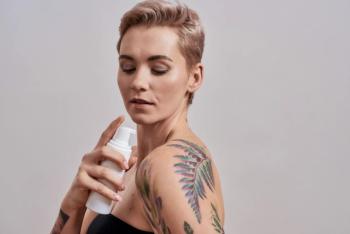
Tattoo science goes skin deep, from ink placement and healing to adverse reactions, aftercare, and the dermatologic effects of pigment.

Zoe Diana Draelos, MD, is a clinical faculty member in the Department of Dermatology at Duke University School of Medicine in Durham, North Carolina; president of Dermatology Consulting Services in High Point, North Carolina; and Dermatology Times’ editor in chief emeritus.
Tattoo science goes skin deep, from ink placement and healing to adverse reactions, aftercare, and the dermatologic effects of pigment.

In this Cosmetics Conundrums column, learn why the cosmeceutical vehicle drives 80% of skin care results, shaping feel, film, and active delivery for visible benefits.

Innovations in packaging, formulation design, and alternative preservation strategies may reduce preservative concentrations, but they are unlikely to eliminate the need for preservatives entirely.

Zoe Diana Draelos, MD, discusses how to clinically distinguish Malassezia folliculitis from acne vulgaris and when to consider antifungal therapy.

Zoe Diana Draelos, MD, FAAD, discussed the clinical rationale for incorporating plant adaptogen-based skin care into rosacea management, including how an OTC serum performed alongside prescription therapies.

Phages, or bacteriophages, are viruses that selectively infect bacteria and may offer a new way to treat bacterial skin diseases without antibiotics.
Although microbes inhabit many body sites, the skin is one of the most densely populated areas after the gastrointestinal tract.

Despite declining skin care sales post-pandemic, fragrance products remain strong, prompting increased investment from cosmetic companies.

Aging hair fibers become finer in diameter, increasing vulnerability to chemical and physical damage.

Even without deep penetration, peptide moisturizers can improve the skin’s appearance through hydration and smoothing effects.
Explore the complexities of shampoo types, from dry to dandruff solutions, and discover the best options for your unique hair needs.
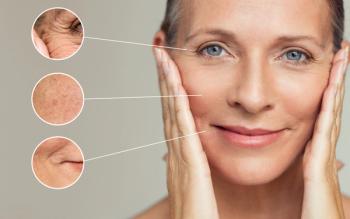
Explore how skin aging and cellular senescence impact overall health, revealing insights into anti-aging strategies and cosmetic conundrums.
Explore the latest cosmetic trends for 2025, including artificial freckles, antiaging sunscreens, and IV NAD+ infusions, as discussed by Zoe Diana Draelos, MD.

Panelists discuss how dermatologists play a vital role in helping patients navigate the overwhelming variety of skin care products by emphasizing simple, gentle, and fragrance-free routines focused on cleansing, moisturizing, and protection—highlighting that consistency and patience are key to restoring skin barrier health, especially in sensitive skin. They also stress that effective skin care does not require expensive products, and tailoring regimens with evidence-supported ingredients like polymeric surfactants and lipid-based moisturizers improves adherence and outcomes.
Panelists discuss a recent study showing that once-daily application of a moisturizer over 4 weeks significantly improved skin hydration, texture, and radiance, with benefits persisting even after discontinuation—highlighting the lasting impact of well-formulated products on skin barrier health. They also emphasize the importance of tailoring moisturizer types, such as lighter gels for acne-prone skin and richer creams for dry or compromised skin, to address specific patient needs and sensitivities for optimal outcomes.
Panelists discuss recent studies on advanced moisturizers that not only provide immediate hydration but also stimulate the skin’s natural production of key proteins and lipids, such as aquaporin-3 and filaggrin, leading to sustained improvements in barrier function and skin health—benefits that are particularly important for individuals with sensitive or compromised skin and support the need for consistent, targeted moisturizing in clinical care.
Panelists discuss recent research highlighting the benefits of polymeric surfactant–based cleansers, which preserve key skin barrier functions and the microbiome while providing a gentle yet effective cleansing experience that supports patient adherence—especially important for sensitive skin conditions like eczema and rosacea—and emphasize the complementary role of moisturizers rich in lipids and humectants to restore and maintain barrier health across diverse patient needs.
Panelists discuss a recent study demonstrating that cleansers formulated with hydrophobically modified polymers significantly improve skin condition and patient comfort in individuals with clinically diagnosed sensitive skin, highlighting their ability to cleanse gently while supporting barrier repair without disrupting the skin’s microbiome.

Panelists discuss the benefits of hydrophobically modified polymer surfactants, highlighting their gentle cleansing action that effectively removes impurities while preserving the skin barrier, making them ideal for sensitive and compromised skin.
Panelists discuss the importance of choosing gentle, pH-balanced surfactants in cleansers to protect the skin barrier while balancing patient preferences for foaming and sensory experiences.
Panelists discuss the importance of a gentle, minimalist skin care routine tailored to support the skin barrier in sensitive or compromised skin, emphasizing the use of pH-balanced cleansers, barrier-repairing moisturizers, and condition-specific strategies to reduce irritation and promote long-term skin health.
transepidermal water loss as a key indicator of skin barrier integrity, highlighting its relevance in both clinically diagnosed and self-perceived sensitive skin, and emphasizing the importance of barrier-supportive skin care to reduce water loss, promote repair, and manage sensitivity effectively.
Panelists discuss the structure and function of the skin barrier, highlighting key components like filaggrin and aquaporins, and emphasizing the need to protect against both environmental and lifestyle-related stressors—collectively known as the exposome—to maintain hydration and support long-term skin health.
Panelists discuss the critical role of maintaining a healthy skin barrier in managing sensitive skin, emphasizing the importance of gentle, evidence-based cleansing and moisturizing practices to prevent irritation, support barrier repair, and improve dermatologic outcomes.

Discover how bond-building hair care treatments enhance hair strength and resilience, utilizing innovative technologies for healthier, more vibrant locks.

AI revolutionizes skin care by personalizing product recommendations, enhancing customer satisfaction, and transforming dermatologist-patient interactions for better outcomes.

Trendy manicures like Russian nails and 3D art may complicate diagnosis or cause damage, making them important for dermatologists to recognize.

A new study highlights the significant long-term improvements in lesions and scarring of a clindamycin phosphate 1.2%, adapalene 0.15%, and benzoyl peroxide 3.1% formulation.

Explore the latest advancements in senotherapeutics, targeting aging through senolytics and senomorphics for enhanced skin health and healing.

October 15th 2020

September 28th 2021

June 2nd 2022

December 15th 2022

July 22nd 2020

March 10th 2022