

Dermatology has more over-the-counter (OTC) drug formulations than many areas of medicine, most of which are covered under drug monographs. Zoe Diana Draelos, M.D., discusses the drug monographs used in dermatology in this article.

Zoe Diana Draelos, MD, is a clinical faculty member in the Department of Dermatology at Duke University School of Medicine in Durham, North Carolina; president of Dermatology Consulting Services in High Point, North Carolina; and Dermatology Times’ editor in chief emeritus.
Dermatology has more over-the-counter (OTC) drug formulations than many areas of medicine, most of which are covered under drug monographs. Zoe Diana Draelos, M.D., discusses the drug monographs used in dermatology in this article.

What is the medical value of disposable paper face masks? Is there an effective cosmetic treatment for black dot follicles? Dr. Zoe Diana Draelos answers these questions and more in this month's Cosmetic Conundrums column.

In this month's Cosmetic Conundrums, Zoe Diana Draelos, M.D., addresses treatments for nail ridges, the safety of gel nails and minimizing the pain of onycholysis.
What is micellar water? And what is the best way to increase skin water content and moisturization? Dr. Zoe Diana Draelos answers these questions and more in this month's Cosmetic Conundrums.
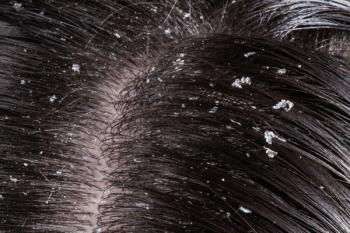
In this month's Cosmetic Conundrums, Dr. Zoe Diana Draelos answers questions on hair care, including treatments for dandruff, seborrheic dermatitis and oily hair.

Do dermatologists possess the knowledge base to effectively use over-the-counter products? Zoe Diana Draelos, M.D. tackles this question and more in this article.

In this month's Cosmetic Conundrums, Dr. Draelos explains cleanser mildness, the chemical characteristics of mild cleansers and how these cleansers are tested.

Are cosmetics really tested for efficacy? If so, how are they tested? Dr. Zoe Diana Draelos answers these questions in this month's Cosmetic Conundrums column.

Some believe that all skincare products should be approved by the FDA, but is the regulation of cosmetics really necessary?
In this month's Cosmetic Conundrums column, Dr. Draelos addresses cosmeceutical peptides and the differences between carrier peptides, signal peptides and neurotransmitter peptides.

In this month's Cosmetic Conundrums column, Dr. Draelos addresses “tight skin,” the use of menthol in skin care products and over-the-counter itch relieving products.

False eyelashes and hair extensions could become a problem if it becomes representative of the “ideal” woman.

In this month's Cosmetic Conundrums column, Dr. Draelos addresses why fatty acids are essential in skin health, how best to treat estrogen deficient skin and she asks, "What is the skin natural moisturizing factor?"

The skin care industry promotes products designed for sensitive skin, yet dermatologists are concerned about the use of skin care products for skin disease.

The adoption of business concepts into medical practice creates challenges for physicians who have little business background. It places too much focus on the business of medicine and not enough on the practice of medicine.
An oil-based cleaning system, oil cleansing balms are creams similar to cold cream in consistency , says Dr. Zoe Diana Draelos in her monthly Dermatology Times column, "Cosmetic Conundrums."

Cleansing oils are making a comeback, says Dr. Zoe Diana Draelos in her monthly Dermatology Times column, "Cosmetic Conundrums."
Many new products for cleansing have entered the cosmetic market, but the most innovative product is micellar water, says Dr. Zoe Diana Draelos in her monthly Dermatology Times column, "Cosmetic Conundrums."
Cleansing is a profound mechanical and chemical skin event. The challenge is to achieve skin hygiene without damaging the skin barrier, but smart surfactants are not yet reality.
Not really, says Dr. Zoe Draelos in this month's Cosmetic Conundrums. Toners are present in most commercial skin care products, but originally it was intended as a cleanser.
The microbiome is one of the most popular areas of skin research at present. Many dermatologic diseases are accompanied by abnormal microbiomes beginning with atopic dermatitis, says Dr. Zoe Diana Draelos in her monthly column, Cosmetic Conundrums.
Dermatologists will need to understand new device technologies and incorporate them judiciously into disease treatment where appropriate.
An expert goes over the pros and cons of some of the available OTC acne products.
An expert discusses available types of facial foundations and their effect on the skin in regards to acne.
Facial care advice for patients with acneWhile both benzoyl peroxide acne preparations and vitamin C products carry benefits in acne treatment, it’s wise to recall the characteristics of each element in advising patients on caring for their skin. Vitamin C is rapidly oxidized with exposure to air. Benzoyl peroxide is an oxidant. This is how Dr. Draelos suggests these products be used.
Many dermatologists may have wondered, however, why patients who use noncomedogenic products still develop acne.
It is sometimes challenging to pick a facial cleanser for acne patients because skin irritation and dryness can be magnified by improper cleansing techniques.
Most patients that complain of acne within 48 hours of applying sunscreen probably are not experiencing true acne with follicular rupture, but rather irritant follicular contact dermatitis or possibly miliaria rubra and miliaria pustulosa. It may be worthwhile to suggest patients try a spray formulation.
Antiperspirants and not deodorants are the culprit in skin irritation. The antiperspirant decreases sweating while the deodorant simply provides a pleasant scent to the armpit.
Glycomics is the study of glycans, which are sugars. Sugars are very important in cell-to-cell communication and represent the newest frontier in skin biology.