Dermatitis-related adverse events vary widely across atopic dermatitis systemic trials, driven by disease fluctuation and reporting differences, informing patient counseling and flare definitions.
Discover the latest breakthroughs in atopic dermatitis and psoriasis treatments for 2025, enhancing patient care and individualizing therapy options.
Remarkable progress has been made in the past year for the management of chronic inflammatory skin diseases, specifically atopic dermatitis (AD) and psoriasis. Several new FDA regulatory approvals across both adult and pediatric populations have expanded treatment options. 2025 has been marked by a growing emphasis on individualization of treatment and aiming for optimal therapeutic targets. These advancements underscore a shift toward pathogenesis-based, patient-centered approaches that are redefining standards of care and long-term disease management.
AD has seen a continuous evolution in the treatment landscape. In 2025, biologics, including dupilumab (Dupixent; Sanofi, Regeneron Pharmaceuticals) and lebrikizumab (Ebglyss; Eli Lilly and Company), demonstrated persistent efficacy and safety for moderate to severe AD. Integrated analyses from multiple phase 3 clinical trials (> 7000 patient-years) of dupilumab for the treatment of children, adolescents, and adults with AD demonstrated a sustained safety profile.1 Dupilumab, an inhibitor of IL-4 and IL-13, also showed efficacy in a phase 4 open-label trial including patients with skin of color. At 24 weeks, 76% of patients achieved Eczema Area and Severity Index improvement of 75% or more (EASI 75), and 53% achieved reduction of 4 points or more on the peak pruritus numerical rating scale (PP-NRS), with improvements in both these end points being seen as early as 2 weeks.1 Further, data from long-term extension trials for lebrikizumab showed 2-year maintenance of Investigator’s Global Assessment (IGA) score of 0/1, EASI 75, and PP-NRS improvement of 4 points or more for dosing every 2 weeks and every 4 weeks.2 Lebrikizumab, a selective IL-13 inhibitor, also demonstrated improvements in patients with skin of color, as 78.4% of patients achieved EASI 75 and approximately 60% achieved a PP-NRS reduction of 4 points or more.3 Notably, findings from a phase 3 extension trial reported that 79% of patients taking lebrikizumab every 8 weeks achieved or maintained EASI 75, providing evidence for longer dosing intervals.4
This past year also saw an expansion in efficacy and safety data for the Janus kinase (JAK) inhibitor upadacitinib (Rinvoq; AbbVie). For more than 2.5 years, patients with AD treated with upadacitinib 15 mg and 30 mg maintained EASI 75 and EASI 90, as well as other efficacy outcomes, along with consistent safety profiles, compared with analyses at weeks 16 and 52.5 These data are particularly important as the fast onset of symptom relief is now supported by the maintenance of efficacy.
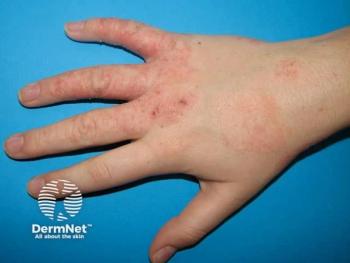
In addition to systemic agents, advanced targeted topical therapies have demonstrated breakthroughs in therapeutic capabilities. Delgocitinib (Anzupgo; LEO Pharma), a topical JAK inhibitor, received FDA approval to become the first and only treatment of moderate to severe chronic hand eczema in adults.6 Chronic hand eczema is a debilitating condition affecting 1 in 10 adults worldwide, but there has not been a therapeutic specifically targeting this condition until now. Delgocitinib has demonstrated the ability to substantially improve patients’ quality of life. Other topicals also received expanded FDA approvals for pediatric patients. Roflumilast cream 0.05% (Zoryve; Arcutis Biotherapeutics), a PDE4 inhibitor, received FDA approval for the treatment of AD in children aged 2 to 5 years.7 Findings from a phase 3 clinical trial found that after only 4 weeks of treatment, EASI 75 was achieved by almost 40% of patients (compared with 20% with vehicle), and there was a significant improvement in itch within 24 hours after the first application.8 Further, ruxolitinib cream 1.5% (Opzelura; Incyte), a JAK inhibitor, received FDA approval for children aged 2 to 11 years.9 Findings from a phase 3 clinical trial reported significantly more patients achieved IGA treatment success with ruxolitinib cream 1.5% (56.5%) compared with vehicle (10.8%).10 These advancements highlight a pivotal shift toward increasing safe and effective nonsteroidal topical options for younger patients, addressing a long-standing unmet need in pediatric AD. The expanding range of both topical and systemic therapies has strengthened the therapeutic armamentarium for AD across all age groups, providing clinicians with greater opportunity to individualize treatment strategies based on disease severity, patient characteristics, and long-term management goals.
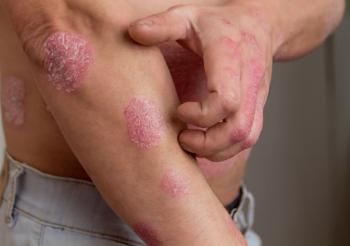
Treatment of psoriasis saw continued growth this past year, with enhanced efficacy and safety data for multiple therapeutics aiming for full-clearance outcomes and targeting difficult-to-treat sites. Bimekizumab (Bimzelx; UCB), an inhibitor of IL-17A and IL-17F, demonstrated high maintenance of response over 4 years. Approximately two-thirds of patients treated with bimekizumab maintained complete skin clearance for 4 years, indicating its durability as a long-term therapy.11 Bimekizumab was also shown to result in complete resolution of nail psoriasis in approximately 80% of patients over a 3-year period, marking a substantial advancement in the treatment of this difficult-to-treat site.12
Further, guselkumab (Tremfya; Janssen Biotech) became the first IL-23 inhibitor to receive FDA approval for pediatric plaque psoriasis and active psoriatic arthritis.13 In findings from a phase 3 clinical trial, 56% of patients receiving guselkumab achieved a Psoriasis Area and Severity Index improvement of 90% or more (PASI 90) and 66% achieved IGA score of 0/1 at week 16.14 Psoriasis can have substantial short- and long-term effects on pediatric patients, and given there are limited therapies available for this population, clinicians now have an option that can produce earlier, safer, and more effective disease control.
Icotrokinra (Johnson & Johnson), a first-in-class investigational oral IL-23 inhibitor, has received increasing attention this past year. Data from a phase 3 study revealed that 65% of patients treated with icotrokinra achieved an IGA score of 0/1 and 50% achieved PASI 90 at week 16 (both significantly greater than placebo), increasing to 65% achieving PASI 90 at week 24.15 There have been no safety signals reported, but a complete safety profile is still being explored. Icotrokinra has also demonstrated high rates of site-specific psoriasis clearance affecting difficult-to-treat areas of the body, such as the scalp, genitals, and hands/feet.16 Although additional research is ongoing, these findings are promising, suggesting this therapy may offer a highly effective oral option for the treatment of psoriatic disease.
Topical formulations have also improved treatment versatility for psoriasis involving both the scalp and body. The FDA approval of roflumilast foam 0.3% provides a nonsteroidal, once-daily option with efficacy and tolerability in hair-bearing and sensitive areas, marking a significant improvement in patient convenience and likelihood of adherence.
Due to the growing availability of advanced therapies for AD and psoriasis, 2025 has seen a trend to redefine corticosteroid use. As such, the standard of care is shifting away from topical and systemic corticosteroids for inflammatory diseases. Expert panels and international councils have outlined what constitutes topical and systemic treatment failure and are providing recommendations for the transition to advanced targeted topical therapies, as well as biologics and JAK inhibitors when appropriate.17-19
Looking ahead to 2026, there is growing anticipation for additional advancements in the treatment of inflammatory skin diseases. Emerging therapeutic targets, including oral IL-23 and TYK2 inhibitors for psoriasis and OX40/OX40L inhibitors for AD, are expected to further expand and refine available treatment options.
Joshua Burshtein, MD, is a resident physician in the Department of Dermatology at the University of Illinois Chicago.
References
1. Dupixent (dupilumab) data at Revolutionizing Atopic Dermatitis (RAD) Conference reinforce use in atopic dermatitis patients with skin of color. News release. Regeneron Pharmaceuticals. June 7, 2025. Accessed November 3, 2025. https://investor.regeneron.com/news-releases/news-release-details/dupixentr-dupilumab-data-revolutionizing-atopic-dermatitis-rad
2. Guttman-Yassky E, Weidinger S, Simpson EL, et al. Two-year efficacy and safety of lebrikizumab in patients with moderate-to-severe atopic dermatitis: a long-term extension (ADjoin). Dermatol Ther (Heidelb). 2025;15(8):2217-2232. doi:10.1007/s13555-025-01452-9
3. Alexis A, Moiin A, Waibel J, et al. Efficacy and safety of lebrikizumab in adult and adolescent patients with skin of color and moderate-to-severe atopic dermatitis: final 24-week results from the phase 3b, open-label ADmirable study. Presented at: Revolutionizing Atopic Dermatitis Conference 2025; June 6-7, 2025; Nashville, TN.
4. Silverberg J, Laquer V, Lio P, et al. Lebrikizumab dosed every 8 weeks as maintenance provides long-lasting response in patients with moderate-to-severe atopic dermatitis. Presented at: 2025 Fall Clinical Dermatology Conference; October 23-26, 2025; Las Vegas, NV.
5. Irvine AD, Prajapati VH, Guttman-Yassky E, et al. Efficacy and safety of upadacitinib in patients with moderate-to-severe atopic dermatitis: phase 3 randomized clinical trial results through 140 weeks. Am J Clin Dermatol. 2025;26(6):1003-1016. doi:10.1007/s40257-025-00975-3
6. LEO Pharma announces FDA approval of Anzupgo (delgocitinib) cream in the U.S. News release. LEO Pharma. July 25, 2025. Accessed November 3, 2025. https://nationaleczema.org/blog/leo-pharma-announces-fda-approval-of-anzupgo-delgocitinib-cream-in-the-u-s/
7. FDA approves Arcutis’ Zoryve (roflumilast) cream 0.05% for the treatment of atopic dermatitis in children ages 2 to 5. News release. Arcutis Biotherapeutics. October 6, 2025. Accessed November 3, 2025. https://www.arcutis.com/fda-approves-arcutis-zoryve-roflumilast-cream-0-05-for-the-treatment-of-atopic-dermatitis-in-children-ages-2-to-5/
8. Eichenfield LF, Serrao R, Prajapati VH, et al. Efficacy and safety of once-daily roflumilast cream 0.05% in pediatric patients aged 2-5 years with mild-to-moderate atopic dermatitis (INTEGUMENT-PED): a phase 3 randomized controlled trial. Pediatr Dermatol. 2025;42(2):296-304. doi:10.1111/pde.15840
9. Incyte announces additional FDA approval of Opzelura (ruxolitinib) cream in children ages 2-11 with atopic dermatitis. News release. Incyte. September 18, 2025. Accessed November 3, 2025. https://investor.incyte.com/news-releases/news-release-details/incyte-announces-additional-fda-approval-opzelurar-ruxolitinib
10. Eichenfield LF, Stein Gold LF, Simpson EL, et al. Efficacy and safety of ruxolitinib cream in children aged 2 to 11 years with atopic dermatitis: results from TRuE-AD3, a phase 3, randomized double-blind study. J Am Acad Dermatol. 2025;93(3):689-698. doi:10.1016/j.jaad.2025.05.1385
11. Blauvelt A, Langley RG, Lebwohl M, et al. Bimekizumab durability of efficacy through 196 weeks and safety through 4 years in patients with moderate to severe plaque psoriasis: results from the BE BRIGHT open-label extension trial. J Am Acad Dermatol. 2025;93(3):644-653. doi:10.1016/j.jaad.2025.04.038
12. Bimzelx (bimekizumab) data in moderate-to-severe plaque psoriasis at EADV showed four-year sustained remission, and potential to reduce psoriatic arthritis progression risk. News release. UCB. September 17, 2025. Accessed November 3, 2025. https://www.ucb.com/newsroom/press-releases/article/bimzelxrv-bimekizumab-data-in-moderate-to-severe-plaque-psoriasis-at-eadv-showed-four-year-sustained-remission-and-potential-to-reduce-psoriatic-arthritis-progression-risk
13. U.S. FDA approves Tremfya (guselkumab) for the treatment of pediatric plaque psoriasis and active psoriatic arthritis, marking a first and only approval for an IL-23 inhibitor. News release. Johnson & Johnson. September 29, 2025. Accessed November 3, 2025. https://www.jnj.com/media-center/press-releases/u-s-fda-approves-tremfya-guselkumab-for-the-treatment-of-pediatric-plaque-psoriasis-and-active-psoriatic-arthritis-marking-a-first-and-only-approval-for-an-il-23-inhibitor
14. Prajapati VH, Seyger MMB, Wilsmann-Theis D, et al. Guselkumab for the treatment of moderate-to-severe plaque psoriasis in paediatric patients: results of the phase III randomized placebo-controlled PROTOSTAR study. Br J Dermatol. 2025;192(4):618-628. doi:10.1093/bjd/ljae502
15. Icotrokinra results show potential to set a new standard of treatment in plaque psoriasis. News release. Johnson & Johnson. March 10, 2025. Accessed November 4, 2025. https://innovativemedicine.jnj.com/emea/newsroom/icotrokinra-results-show-potential-to-set-a-new-standard-of-treatment-in-plaque-psoriasis?utm_source=chatgpt.com
16. Lain E, Warren R, Gooderham M, et al. Durability of response to the targeted oral peptide icotrokinra for high-impact site psoriasis: one-year ICONIC-TOTAL findings. Presented at: 2025 Fall Clinical Dermatology Conference; October 23-26, 2025; Las Vegas, NV.
17. Burshtein J, Chovatiya R, Golant A, et al. Risks of topical corticosteroid therapy and role for advanced targeted topical treatments for inflammatory skin diseases: an expert consensus panel. Dermatol Online J. 2025;31(1):10.5070/D331164978. doi:10.5070/d331164978
18. Burshtein J, Bunick CG, Vleugels RA, et al. Systemic corticosteroid use in atopic dermatitis: a position paper to inform safer clinical practice and policy. J Invest Dermatol. 2025;145(12):2947-2949. doi:10.1016/j.jid.2025.08.002
19. Strober BE, Blauvelt A, van de Kerkhof PCM, et al. International Psoriasis Council psoriasis disease severity reclassification: update on validity, acceptance, and implementation. J Am Acad Dermatol. 2025;93(4):1154-1157. doi:10.1016/j.jaad.2025.05.1445