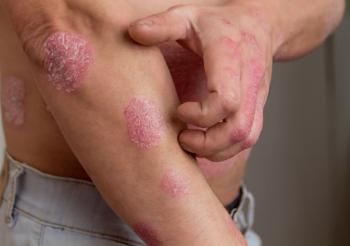
Takeda’s investigational oral TYK2 inhibitor is supported by phase 3 LATITUDE data demonstrating significant skin clearance versus placebo and apremilast.
New long-term findings reveal guselkumab (TREMFYA) as the only IL-23 inhibitor effectively preventing joint damage in active psoriatic arthritis.
New 48-week results from Johnson & Johnson’s phase 3b APEX trial highlight the durable joint-protective effects and symptomatic benefits of guselkumab (TREMFYA) in adults with active psoriatic arthritis (PsA).1 Presented last week at the
“These long-term data show that TREMFYA has set a new benchmark as the only IL-23 inhibitor proven to inhibit structural damage in active psoriatic arthritis, which can develop in up to 30% of people living with psoriasis,” said Leonard Dragone, MD, PhD, Vice President, Rheumatology and Autoantibody Disease Area Leader at Johnson & Johnson Innovative Medicine. “Its durable efficacy and established safety make TREMFYA an attractive first-line treatment option for patients with psoriatic disease.”1
The randomized, placebo-controlled study evaluated guselkumab administered every 4 weeks or every 8 weeks in adults with active disease. At week 24, guselkumab demonstrated a 2.5-fold greater inhibition of joint structural damage compared with placebo, measured using the PsA-modified van der Heijde–Sharp (vdH-S) scoring method. This radiographic benefit was consistent across both dosing regimens. Importantly, the week 24 inhibition of structural damage was maintained through week 48 and no new safety signals were recorded.
Patients originally assigned to placebo and switched to guselkumab at week 24 also experienced a marked reduction in progression. Their mean vdH-S score progression decreased by 57%, from 0.96 during the initial 24 weeks to 0.41 during weeks 24 to 48. These findings suggest that guselkumab may slow structural damage even when introduced after early progression has begun, an important consideration for patients who present with established PsA or delayed diagnosis.
Symptomatic improvement paralleled the radiographic findings. ACR50 responses (a 50% improvement in joint symptoms) continued to rise from week 24 to week 48 in both guselkumab dosing arms. More than half of guselkumab-treated patients achieved this level of response by week 48. Placebo-to-active switch patients also demonstrated clinically meaningful gains: nearly half achieved ACR50 by week 48 despite showing progression earlier in the trial. These results reinforce guselkumab’s capacity to improve joint signs and symptoms across a range of disease presentations and treatment timelines.
TREMFYA is a fully human monoclonal antibody with a unique dual-acting mechanism: it selectively inhibits IL-23 and also binds CD64, a receptor expressed on IL-23-producing antigen-presenting cells. This dual targeting supports upstream interruption of IL-23–mediated inflammatory signaling, central to both plaque psoriasis and PsA pathogenesis. While this dual mechanism has been demonstrated in vitro, the clinical significance of CD64 binding remains to be fully understood.
Psoriatic arthritis affects up to 30% of individuals with psoriasis, often emerging silently before overt joint symptoms occur. Early joint inflammation can lead to persistent structural injury, highlighting the importance of prompt diagnosis and treatment initiation, as dermatologists are often the first to detect psoriatic disease activity.
“Psoriatic arthritis is a chronic condition where joint damage can begin early and progress quickly if left untreated,” said Christopher Ritchlin, MD, MPH of the University of Rochester Medical Center and APEX study investigator. “The APEX study results show that guselkumab can inhibit this process, even once it has begun, making it a valuable treatment option for both initiating treatment early and for patients who already show signs of joint damage.”1
These new joint-structural findings support Johnson & Johnson’s supplemental Biologics License Application (sBLA) with the US Food and Drug Administration to update the guselkumab label to include evidence for inhibition of structural damage progression in active PsA. This was submitted in
References
1. New long-term data reinforces TREMFYA® (guselkumab) as the only IL-23 inhibitor proven to substantially inhibit structural joint damage in active psoriatic arthritis. News release. Johnson and Johnson. Published November 17, 2025. Accessed November 21, 2025.
2. Johnson & Johnson files with U.S. FDA to include new evidence in TREMFYA® (guselkumab) label as the only IL-23 inhibitor to demonstrate significant inhibition of joint structural damage in active psoriatic arthritis. News release. Johnson and Johnson. Published July 29, 2025. Accessed November 21, 2025.