







Artificial intelligence diagnostics are less accurate on skin of color than light skin, even when trained on equal numbers of images.
Artificial intelligence diagnostics are less accurate on skin of color than light skin, even when trained on equal numbers of images.
In part 2 of this skin cancer report from the American Academy of Dermatology Virtual Meeting Experience 2021 (AAD VMX), an expert shares pearls on regular medication reviews.
More detailed tumor classifications, patient data advance surveillance strategies for the high-risk patient population.

With the summer months quickly approaching, we’re discussing the importance of skin cancer screenings, as well as encouraging regular sun protection usage among patients. This episode also touches on the role of telemedicine in skin cancer screenings, top product recommendations for sun protection and tips on managing patient expectations if the patient is diagnosed with skin cancer.
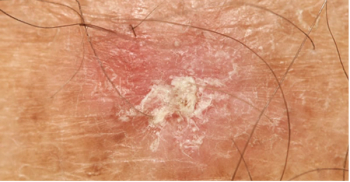
Todd Schlesinger, MD, FAAD, outlines his research on newly FDA-approved topical tirbanibulin (Klisyri, Almirall) for treatment of actinic keratosis (AK), as well as compares it to another topical treatment for AK, 5-fluorouracil.
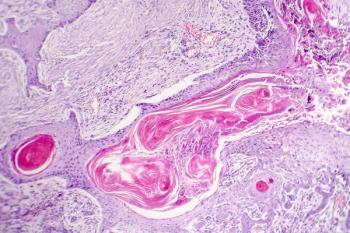
Single-agent pembrolizumab yielded robust antitumor activity in patients with locally advanced or recurrent/metastatic cutaneous squamous cell carcinoma.
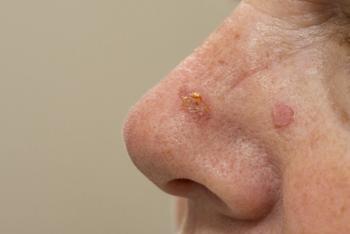
Biofrontera announces it is seeking FDA-approval for its new BF-RhodoLED XL lamp to be used in combination with topical aminolevulinic acid hydrochloride gel 10% for the treatment of actinic keratosis.
Cancer staging systems for squamous cell carcinoma have helped improve dermatologists’ ability to accurately stage the cancer, according to one expert.

Almirall announces the launch of tirbanibulin (Klisyri), a novel microtubule inhibitor for the topical treatment of actinic keratosis on the face or scalp.

Topical microtubule inhibitor, tirbanibulin (Klisyri, Almirall), demonstrates positive results for treating actinic keratosis (AK) of the face and scalp, according recently published data from two phase 3 studies.

The FDA has approved cemiplimab-rwlc as the first immunotherapy for use in patients with advanced basal cell carcinoma that has previously been treated with a hedgehog pathway inhibitor (HHI) or for whom a HHI is not appropriate.

A recent study found states' Medicare per-beneficiary spending between actinic keratosis and skin cancer differs widely.

While Mohs micrographic surgery is well established as a safe and effective therapeutic modality in adult patients, it is not as commonly used in pediatric populations. There are unique challenges to performing Mohs surgery on pediatric patients, especially with patient cooperation. Multidisciplinary planning may be needed.
Investigators of a recent study found a 40-gene expression profile (40-GEP) test helps improve identification of high risk for metastatic disease in patients with cutaneous squamous cell carcinoma (cSCC).
Superficial radiation offers a newer, FDA-approved office-based option that is safe. Steven A. Davis, M.D., shares his experience using surface radiotherapy to treat his patients with non-melanoma skin cancer.
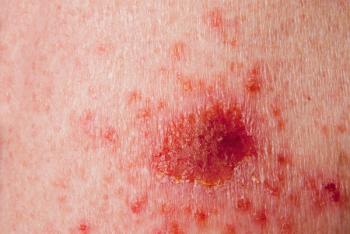
Promising outcomes are being reported from clinical trials investigating Nano-Pulse Stimulation technology to treat nodular basal cell carcinoma and cutaneous, non-genital warts.

Michelle Nguyen, M.D., MPH, sits down with Dermatology Times to discuss her recent presentation at the 2020 American Society for Dermatologic Surgery (ASDS) virtual meeting regarding the representation of women dermatologic surgeons in the U.S.

A recent study showed that curettage and cryotherapy, and electrodesiccation and curettage are two techniques that have comparable cure rates. The study’s findings highlight the efficacy and reliability of these treatment approaches for minimally invasive cutaneous carcinomas.

A recent study underscores the need for a consistent scale to grade risk levels of cutaneous squamous cell carcinoma (SCC), particularly poorly differentiated tumors, according to study authors who presented at the 2020 virtual American Society for Dermatologic Surgery (ASDS) meeting.

A recent survey shows that many consumers are confused about sunscreen labeling claims regarding sun protection factor (SPF), allergenicity and other features.
Cutaneous squamous cell carcinoma (cSCC) patients need close clinical follow-up after being diagnosed with the skin cancer because subsequent cSCC development is likely in the following months and years.

A recent study from the University of Missouri School of Medicine investigates when is the best time to make post-operative phone calls to patients following Mohs micrographic surgeries.

Castle Biosciences announces the launch of DecisionDx-SCC, a prognostic gene expression profile test for patients with high-risk cutaneous squamous cell carcinoma (cSCC).
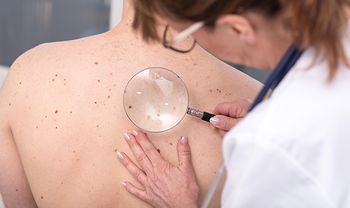
The International Skin Imaging Collaboration is an academic and industry partnership designed to facilitate the clinical application of digital skin imaging, with an initial focus on melanoma. The group is developing standards for dermatologic imaging and building a public archive of clinical and dermoscopic images for use in developing artificial intelligence diagnostic algorithms.

Findings from a survey of college students examining beliefs about UV exposure and sunscreen use and their associations with skin cancer risk and UV protective behaviors provide some insights for patient counseling.