



Non-Melanoma Skin Cancers
Latest News
Advertisement
Latest Videos



Advertisement
More News

The Skin Cancer Foundation's gala raises over $800,000, featuring Christie Brinkley and highlighting vital skin cancer awareness initiatives and personal stories.

The Photobiology Committee also issues a public safety warning regarding sun protection misinformation amid growing rates of skin cancer in the U.S.

Additionally, BCC surgery candidates have been older with more comorbidities since the pandemic began.
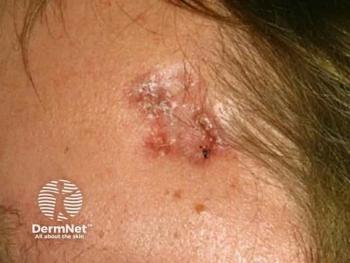
High response rates and no systemic toxicity in multiple nonmelanoma skin tumors were observed in this vulnerable patient population.

John Strasswimmer, MD, PhD, spoke on the difficulty of managing adverse effects, the role of interdisciplinary clinical relationships, and the challenges in complex and older patients.

In October's cover feature, Nicole A. Negbenebor, MD, FAAD, discusses the benefits of intralesional 5-fluorouracil injection for older patients with squamous cell carcinoma who may elect to delay therapy or are not ideal candidates for surgery.

Farberg discusses data recently published in Geriatrics demonstrating low rates of recurrence.

The study, published in Dermato, showed that 92% of NMSC tumors showed measurable changes in depth of invasion from one image to the next.
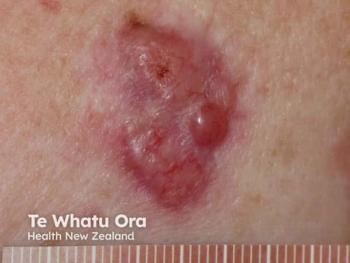
To improve overall outcomes for patients with large basal cell carcinomas, it has been beneficial to employ the use of vismodegib as a neoadjuvant and/or adjuvant treatment.
Jacob Scott, MD, president and chairman of DaRT, shares highlights of the guidelines and what he hopes clinicians can glean from them.

Margins < 1 mm also do not increase the risk of cutaneous squamous cell carcinoma recurrence risk if the galea aponeurotica is not involved.
The guidelines for BCC and SCC treatment with IGSRT detail diagnosis, staging, contraindications, protocols, and emphasize the essential role of a multidisciplinary team.

From our March cover feature: Vulnerable populations such as the prison population should have access to Mohs surgery to prevent the increased risk of morbidity and mortality from skin cancer.

New data on the devices will be available at the 2024 American Academy of Dermatology Annual Meeting.
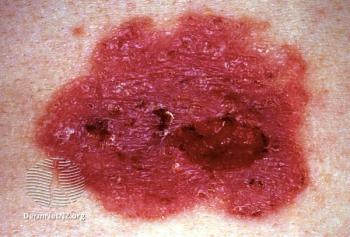
In this study, researchers treated 37 basal cell carcinoma (BCC) lesions from 30 patients, with follow-ups at 5 time points after baseline examination.

SKNJCT-003 is expected to enroll up to 60 patients.

The study evaluated the efficacy of AIV001 in superficial, nodular, and mixed BCC tumors.

One of the specific areas of focus will be non-melanoma skin cancer.

Study results were presented at the 2023 American Society for Dermatologic Surgery Annual Meeting in Chicago, Illinois.

Jonathan S Zager, MD, FACS, FSSO reviews the clinical trial data relating to the BOLT study examining the use of sonidegib treatment in patients with locally advanced basal cell carcinoma, highlighting the critical differences in study design and data readouts between the BOLT and EVRIANCE trials.

Learn more about the in-depth topics covered in the September 2023 Frontline Forum BCC management supplement of Dermatology Times.

Andrew Weinstein, MD, MPH, FAAD and Jonathan S Zager, MD, FACS, FSSO explore the potential rationale behind observed variations in the and GLI and PTCH expression data within the EVRAINCE trial and comment on potential factors contributing to bias within the study.

Lilia Correa-Selm, MD, FAAD, FACMS, reviews the clinical trial data relating to the EVRIANCE study examining the use of vismodegib treatment in patients with locally advanced basal cell carcinoma, highlighting key efficacy and safety endpoints.
In the final part of this Frontline Forum series, Brent Moody, MD; Sarah Arron, MD, PhD; Justine Cohen, DO; Emily Ruiz, MD, MPH; and Todd Schlesinger, MD, review 4 real-world clinical cases of BCC and the treatments they utilized.
In part 3 of this Frontline Forum series, Brent Moody, MD; Sarah Arron, MD, PhD; Justine Cohen, DO; Emily Ruiz, MD, MPH; and Todd Schlesinger, MD, discuss non-surgical treatment options for the management of BCC, dose adjustments for systemic treatments, combining hedgehog pathway inhibitors with immunotherapy, and more.
Advertisement
Advertisement
Trending on Dermatology Times
1
FDA Approves Baricitinib for Adolescents With Severe Alopecia Areata
2
Tremfya Meets Primary, Major Secondary Endpoints in Phase 4 STAR Study of Axial PsA
3
Alopecia Areata Awareness Month: 2026 in Review
4
From Mechanism to Management: Navigating Male Pattern Hair Loss and New Topical Therapies
5