


Explore common pediatric summer skin issues, from rashes to sun sensitivity, and learn effective prevention and management strategies for healthy skin.
Explore common pediatric summer skin issues, from rashes to sun sensitivity, and learn effective prevention and management strategies for healthy skin.
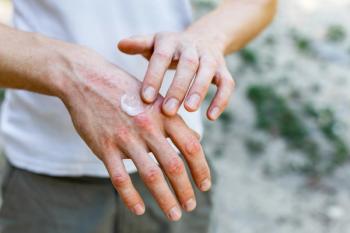
Our May cover story explores NIH’s new findings on topical steroid withdrawal, a condition now under scientific scrutiny as a distinct entity.

Review emerging therapies for vitiligo, melasma, PIH, and albinism, including topical, systemic, light-based, and laser treatments.

Pediatric melanoma, though rare, is the deadliest skin cancer in children, with 300-500 US cases annually.

The WHO underscores the significance of addressing scabies as a neglected skin disease, especially in regions with limited health care access.
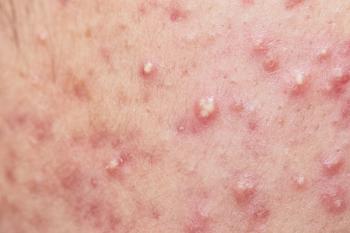
Researchers have explored whether the adverse effects of tazarotene are exacerbated during the colder winter months and whether there is variation in treatment efficacy and tolerability between cold vs warm seasons.

Jordan Bui and Bernard A. Cohen, MD, review a case of a young patient with vitiligo.

Vitiligo and psychiatric disorders share a strong connection, with up to 90% of vitiligo patients having comorbid psychiatric conditions.

During pregnancy and lactation, physiological changes occur in the body that can impact the development and management of acne.

In one-third of cases of psoriasis, disease onset occurs in the first or second decade of life, although it may not be diagnosed until the patient has reached adulthood.

The clinical and histologic subtypes encompassed by granulomatous dermatitis include palisaded neutrophilic granulomatous dermatitis and interstitial granulomatous dermatitis. This review compares the features of each cutaneous eruption.

It has been hypothesized that some lipid-lowering drugs are disease-modifying for psoriasis, and the use of lipid-lowering drugs in the management of psoriasis symptoms is currently being explored

Granulomatous dermatitis includes a group of reactive dermatologic disorders characterized by distinct histopathological patterns, clinical manifestations, and associated diseases.
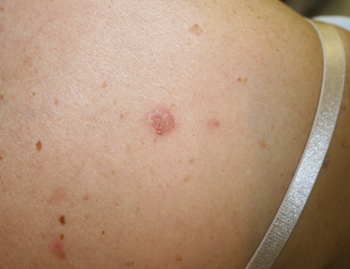
Pemphigus is defined as a group of autoimmune, blistering disorders caused by circulating autoantibodies that bind to desmogleins, proteins that are vital to epidermal intercellular adhesion.

This review will explore various leukemia-related cutaneous findings and discuss the diagnosis and management of these conditions.

A variety of topicals and biologics are now available to treat children affected by this challenging condition.
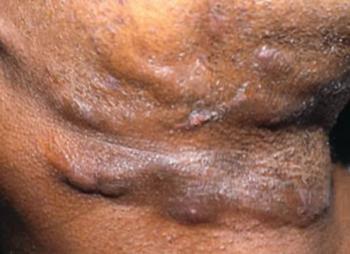
Hidradenitis suppurativa is a chronic inflammatory skin condition that presents with painful, deep, and inflamed lesions found in flexural, apocrine gland-bearing sites.

Argyria is a rare dermatologic condition that presents with blue or grey mucocutaneous discoloration following cutaneous exposure or ingestion of silver.

Epidermolysis bullosa is a broad term used to identify a group of genetic disorders that result in skin blistering and fragility.

Erythropoietic protoporphyria (EPP) is a life-long and debilitating disorder resulting from defects in the enzymes in heme synthesis. Patients with the disease are cast indoors due to extreme photosensitivity.

MD is a type of delusional parasitosis where patients report that their skin contains parasites, toxins, fibers, or other foreign material.

Acne, molluscum, atopic dermatitis, and other dermatological disorders can be detrimental to quality of life for children and their families.
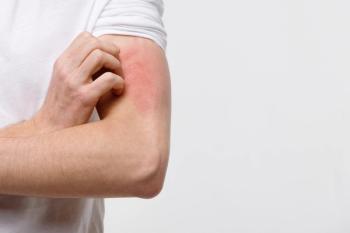
It is crucial to better understand, diagnose, and manage this skin condition associated with significant quality-of-life impairment.
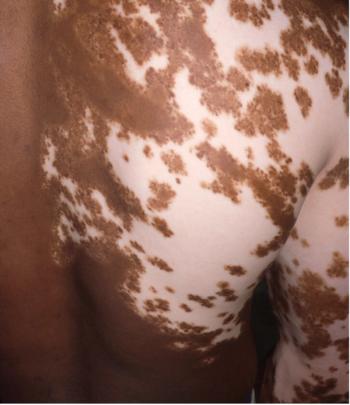
A case study reviewed an 11-year-old male for loss of pigmentation of the right side of his back and right arm.
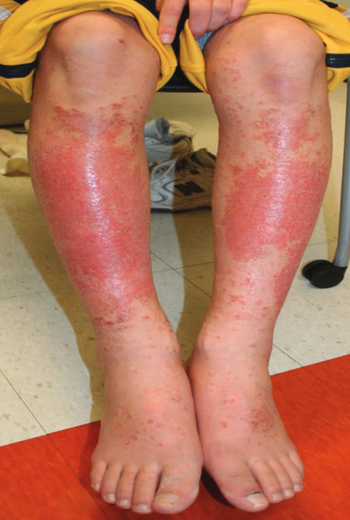
A new allergen, acetophenone azine with generalized autoeczematization, is the cause of “shin guard dermatitis.”

A healthy 14-year old boy was evaluated for an intensely pruritic shin rash that developed 2 weeks prior and had been treated with oral antibiotics for 10 days.

It effects most teenagers and can lead to mental distress. Here are 5 important facts about acne vulgaris in adolescents.

A presentation from the 2021 virtual American Academy of Pediatrics Conference & Exhibition urges including examination of the scalp and nails during any skin exam.

A 17-year-old male patient presents with multiple lesions developed on his trunk, face, and extremities that had previously been solitary, red expanding lesion on his right arm at the site of a tick bite that occurred during a hike.
November 2nd 2022

July 28th 2022

November 2nd 2022

October 12th 2022

December 3rd 2021

January 30th 2023