






The overgrowth of fungi could cause the immune system to stop fighting cancer, according to a study.
The overgrowth of fungi could cause the immune system to stop fighting cancer, according to a study.

The topical HDAC inhibitor remetinostat demonstrated favorable tolerability and clinically significant efficacy in reducing disease burden in patients with basal cell carcinoma, according to results from a phase 2 trial.

New study data shows positive data for Image-Guided Superficial Radiotherapy (IGSRT) in treating basal cell carcinoma and squamous cell carcinoma.

Skin cancer rates have been increasing worldwide, and climate change factors – like depleting ozone layers – may be a factor.

It has been 20 years since the FDA approved a new sunscreen filter. However, a recent study evaluating curcumin could change that.
There are an increasing number of novel immunotherapies available for patients with skin cancer, however, their numerous adverse events must be addressed.

Part 1 of Dermatology Times®’ coverage of a strategic look at superficial radiation therapy (SRT) presented at the recent Music City SCALE Symposium for Cosmetic Advances & Laser Education 16th Annual Meeting in Nashville, Tennessee, showcases this therapy’s efficacy in treating keratinocytic skin cancers.

Curcumin has a long history as an effective treatment for everything from chronic pain to skin infections. Nanoparticle encapsulation shows promise in meeting that challenge and opening the way for a safe, effective adjuvant to sunscreen.
A phase 2 clinical trial on remetinostat for the treatment of BCC in adult patients has been published in the Clinical Cancer Research journal and shows promising results.

In this video interview, David Light, CEO of Valisure, shares his thoughts on the recent sunscreen recall from Johnson & Johnson due to benzene contamination and reveals how the FDA and sun protection companies can make sure this never happens again.

In this exclusive video interview, Christopher Bunick, MD, PhD, gives Dermatology Times an update on benzene contamination being detected in various sunscreens and after-sun care products, as well as a recent recall by Johnson & Johnson.

Christopher Bunick, MD, PhD, provides an update on benzene contamination in sunscreen, including a recent recall from Johnson & Johnson.
The FDA has expanded the label for pembrolizumab for use as a monotherapy in the treatment of patients with locally advanced cutaneous squamous cell carcinoma that is not curable by surgery or radiation.

The European Commission has approved cemiplimab for the treatment of locally advanced or metastatic basal cell carcinoma in adults.

In this video interview, Ted Lain, MD, discusses the causes and effects of actinic keratosis, as well as the unmet needs, how to diagnose, and what treatments are currently available.

In this exclusive interview, Ted Lain, MD, dives into the management of field cancerization, including its biggest challenges, available and emerging treatment options, tips on treatment approach, and more.

The Journal of the American Academy of Dermatology has published new recommendations for the treatment of actinic keratosis (AK).

New regulations, latest absorption data, and updates on environmental and health impacts are shaping the world of photoprotection.

BCC, SCC treatments take advantage of refinements in established techniques and new technology.
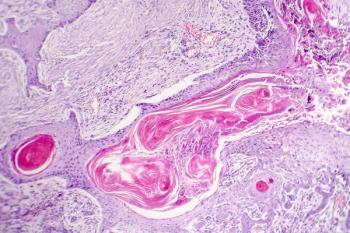
The anti–PD-L1, fully human monoclonal antibody cosibelimab will be examined in a cohort of patients with metastatic cutaneous squamous cell carcinoma (cSCC) as part of an ongoing phase 1 study.

Christopher Bunick, MD, PhD, associate professor of dermatology, Yale University and Dermatology Times® editorial advisory board member, weighs in on a recent report revealing certain batches of various sunscreen and after-sun care products were contaminated with benzene, a carcinogen.
This episode will highlight some breaking news coming out of the sun protection world with a report by Valisure, which found in a recent test that 78 different sunscreen and after-sun care products were contaminated with benzene, a potential carcinogen.

David Light, founder and CEO of Valisure, the independent lab that discovered the presence of benzene in multiple brands and batches of sunscreen, sits down with Dermatology Times to discuss the reports' findings and the impact this news will have on the sun protection industry.

A recent test found various brands and batches of sunscreen and after-sun care products contained benzene, a potential carcinogen.

Content-aware image restoration (CARE) technology demonstrated improvement in examining cellular details of skin.