

News|Videos|February 24, 2026
Standardization Key to Efficient Photodynamic Therapy
Key Takeaways
- A reproducible, end-to-end PDT protocol standardizes consultation, education, insurance verification, preprocedure calls, and follow-up, enabling consistent delivery in time-constrained clinical settings.
- Day-of workflow reliability is enhanced by maintaining staff continuity, physician-led lesion preparation, photosensitizer application, incubation, blue light activation, and postprocedure cleansing with sunscreen.
In an interview with Dermatology Times, Michael O’Donoghue, MD, describes how a standardized protocol supports efficient and consistent delivery of photodynamic therapy.
Advertisement
Episodes in this series
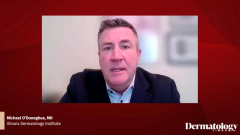
In a continuing conversation with Dermatology Times, Michael O’Donoghue, MD, a community dermatologist practicing outside Chicago and in Northwest Indiana, outlined a pragmatic, protocol-driven approach to incorporating photodynamic therapy (PDT) into everyday medical dermatology. A member of the American Academy of Dermatology and several regional dermatologic societies, O’Donoghue brings a practical perspective shaped by high-volume clinical care.
For clinicians familiar with PDT—most commonly used for actinic keratoses and field cancerization—the discussion will resonate less for its technical nuance and more for its emphasis on operational consistency and patient experience.
Building a Repeatable System
O’Donoghue attributes success with PDT to a clearly defined, reproducible protocol. From the first patient interaction, each step is standardized: initial physician consultation, educational materials, coordinated insurance verification, and structured follow-up communication. Staff members contact patients in advance to review the process, setting expectations before treatment day.
On the day of the procedure, workflow remains tightly organized. The same medical assistant who previously connected with the patient brings them back, reinforcing rapport and continuity. The physician performs lesion preparation—typically gentle curettage or scraping—followed by application of the photosensitizing agent. After the incubation period, blue light activation is initiated, with post-procedure cleansing and sunscreen application before discharge.
While the individual clinical steps are familiar, O’Donoghue emphasizes that minimizing variability is key. “There isn’t a lot of time, and there isn’t a lot of variation,” he notes. The simplicity of PDT becomes an operational advantage when supported by disciplined adherence to protocol.
Communication as Risk Management
For experienced clinicians, adverse effects such as erythema, crusting, and post-procedure discomfort are expected components of therapy. O’Donoghue underscores that proactive communication, repeatedly and clearly delivered, directly influences patient tolerance of these outcomes.
By reviewing risks and benefits multiple times and encouraging staff to discuss “the pluses and minuses” of PDT, the practice reduces uncertainty. Patients who understand the expected inflammatory response are more likely to interpret it as therapeutic rather than alarming. In this sense, communication functions as both informed consent and preventive risk management.
Staff Engagement and Patient-Centered Care
Perhaps most striking is O’Donoghue’s emphasis on culture. He identifies hiring knowledgeable, patient-focused staff as the most important determinant of success. In his view, a team that treats patients as a person rather than a procedural slot improves satisfaction, adherence, and ultimately clinical outcomes.
For dermatology practices considering expanding PDT services, the take-home message is straightforward: technical proficiency alone is insufficient. Standardized workflow, strict adherence to process, and consistent, transparent communication may be as important as the photochemistry itself. When operational execution aligns with patient-centered care, O’Donoghue suggests, both outcomes and practice sustainability follow.
Advertisement
Related to this article

SYX-5219 improved disease severity and itch in a Phase 1b trial of adults with moderate to severe atopic dermatitis.

In a survey of 301 employed adults, overall work impairment attributable to CHE was 31.8%, and quality of life worsened in step with self-reported disease severity.

An analysis of 633 skincare brands found gaps in evidence, safety information, and claim support, raising questions about what patients can verify online.

Can “Botox in a bottle” really rival injectable neuromodulators? We examine the evidence behind topical peptide serums and Argireline.

Dermatology clinicians at a Case-Based Roundtable in Austin, Texas, discussed real-world strategies for sequencing topical therapy, phototherapy, and ruxolitinib cream across pediatric and adult vitiligo cases.

Christophe Piketty discusses 3-year ARCADIA data demonstrating sustained efficacy and long-term safety of nemolizumab in atopic dermatitis.

Two claims analyses of hidradenitis suppurativa showed similar symptom prevalence in males and females and lower dermatologist access among rural patients than urban patients.
Day 3 of Fall Clinical 2026 featured roflumilast data in genital psoriasis, long-term JAK inhibitor safety in atopic dermatitis, and expert insights on setting expectations in HS, treating advanced cSCC, and screening aesthetic patients.
Advertisement
Advertisement
Trending on Dermatology Times
1
First-in-Class Oral PKM2 Modulator Shows Early Efficacy in Atopic Dermatitis
2
Hidradenitis Suppurativa Claims Data: Sex Parity and Rural Care Gaps
3
No Observed Skin Lesion Flares After Switching to Upadacitinib in Atopic Dermatitis
4
JAK Inhibitor Safety in Atopic Dermatitis: Long-Term Epidemiology Data
5