

News|Videos|March 12, 2026
Anthony Rossi, MD, FAAD, FACMS, on the Practical Benefits of Photodynamic Therapy
Key Takeaways
- Field-directed PDT with aminolevulinic acid and light activation enables standardized, clinician-controlled dosing across photodamaged skin, capturing subclinical AK burden that lesion-directed cryotherapy can miss.
- Short, predictable recovery—typically erythema, edema, and crusting resolving in 5–7 days—contrasts with 2–4 weeks of topical therapy–related inflammation that drives premature discontinuation.
Compared with topical regimens, Rossi notes PDT provides a shorter recovery window and fewer adherence challenges.
Advertisement
Episodes in this series

Photodynamic therapy (PDT) has long been used to treat actinic keratoses (AKs), but its practical advantages in the clinic are increasingly shaping how dermatologists approach field-directed treatment. According to Anthony Rossi, MD, FAAD, FACMS, PDT offers a clinician-controlled alternative that can simplify treatment while improving adherence.
Rossi notes that while lesion-directed approaches such as cryotherapy remain useful for isolated lesions, they may not address the broader landscape of actinic damage. “Yes, we can freeze a single spot,” he said, “but we really need to think holistically about the whole picture.” PDT allows clinicians to treat visible and subclinical lesions across an entire field of photodamaged skin.
One key advantage is patient compliance. Topical field therapies such as 5-fluorouracil and imiquimod can produce inflammatory reactions—including erythema, crusting, and peeling—that persist for weeks and often discourage patients from completing treatment. In contrast, PDT is performed in-office using a photosensitizing agent such as aminolevulinic acid followed by light activation, allowing clinicians to control dosing and ensure the treatment is completed as intended.
“With PDT, patients come in, have the procedure, and then go home and heal,” Rossi explained. Most patients experience redness, swelling, and crusting that resolve within about five to seven days. Topical regimens, by comparison, may require 2 to 4 weeks of continuous application, often leading to interruptions or incomplete courses.
Rossi also noted that cost-effectiveness analyses that incorporate adherence can shift the value equation. When compliance is factored into treatment outcomes, PDT can compare favorably with repeated cryotherapy sessions or partially completed topical regimens.
Beyond AKs, Rossi uses PDT in a variety of settings. He has applied the therapy to the arms, legs, trunk, and even more sensitive areas such as the genital region in select cases involving superficial malignancies. Cosmetic improvements are also frequently reported by patients, who often notice smoother or more refreshed skin after healing.
Technological advances may further expand PDT’s clinical utility. Larger red-light panels now allow dermatologists to treat broader areas—such as both arms or an entire back—in a single session. Rossi has also used red light off-label for inflammatory acne, where activation of the photosensitizer can help reduce sebaceous gland activity.
Even outside of PDT, red light devices may have additional roles in dermatology practices. Rossi often uses them to support photobiomodulation and healing after procedures such as laser resurfacing, and similar light therapies have been used in oncology settings to manage inflammatory conditions like oral graft-versus-host disease.
For clinicians considering integrating red light systems into their practice, Rossi suggests thinking beyond PDT alone. “If you have a red light device,” he said, “you should be using it for more than one purpose.”
Advertisement
Related to this article

SYX-5219 improved disease severity and itch in a Phase 1b trial of adults with moderate to severe atopic dermatitis.

In a survey of 301 employed adults, overall work impairment attributable to CHE was 31.8%, and quality of life worsened in step with self-reported disease severity.

An analysis of 633 skincare brands found gaps in evidence, safety information, and claim support, raising questions about what patients can verify online.

Can “Botox in a bottle” really rival injectable neuromodulators? We examine the evidence behind topical peptide serums and Argireline.

Dermatology clinicians at a Case-Based Roundtable in Austin, Texas, discussed real-world strategies for sequencing topical therapy, phototherapy, and ruxolitinib cream across pediatric and adult vitiligo cases.
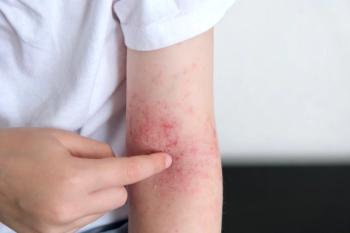
Christophe Piketty discusses 3-year ARCADIA data demonstrating sustained efficacy and long-term safety of nemolizumab in atopic dermatitis.

Two claims analyses of hidradenitis suppurativa showed similar symptom prevalence in males and females and lower dermatologist access among rural patients than urban patients.
Day 3 of Fall Clinical 2026 featured roflumilast data in genital psoriasis, long-term JAK inhibitor safety in atopic dermatitis, and expert insights on setting expectations in HS, treating advanced cSCC, and screening aesthetic patients.
Advertisement
Advertisement
Trending on Dermatology Times
1
First-in-Class Oral PKM2 Modulator Shows Early Efficacy in Atopic Dermatitis
2
Hidradenitis Suppurativa Claims Data: Sex Parity and Rural Care Gaps
3
JAK Inhibitor Safety in Atopic Dermatitis: Long-Term Epidemiology Data
4
No Observed Skin Lesion Flares After Switching to Upadacitinib in Atopic Dermatitis
5