

News|Videos|February 19, 2026
A Team-Based Model for Efficient PDT Delivery
Key Takeaways
- Assigning PDT to a shared laser/treatment room and scheduling under MA templates limits physician time to 5–10 minutes, preserving high-volume general dermatology throughput.
- Standardized 30-minute start intervals with 90–120-minute incubation coordination reduces bottlenecks, enabling predictable patient flow across the multi-step protocol.
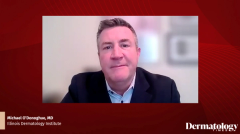
Michael O’Donoghue, MD, outlines how delegating PDT workflows to trained medical assistants can preserve physician time while maintaining treatment quality.
Advertisement
Episodes in this series
In a recent conversation with Dermatology Times, Michael O'Donoghue, MD, outlined a pragmatic, team-based approach to integrating photodynamic therapy (PDT) into a busy general dermatology practice. His model offers a practical blueprint for clinicians seeking to expand field therapy for actinic damage while maintaining clinic efficiency and patient satisfaction.
O’Donoghue, who practices in the Chicago metropolitan area and northwest Indiana, emphasized that successful PDT implementation begins with workflow design. In his office, PDT is assigned to a dedicated treatment room shared with laser procedures. Importantly, PDT visits are scheduled under the medical assistant (MA) template rather than the physician’s schedule. The physician’s direct involvement is limited to focused tasks, such as lesion preparation and application of the photosensitizing agent, typically totaling 5 to 10 minutes. The MA manages patient intake, incubation timing, blue light exposure, and much of the education process.
This delegation structure allows PDT to function as a streamlined, multi-step protocol without disrupting physician throughput. Initial appointments are staggered at 30-minute intervals, with return times coordinated around the incubation period, usually 90 minutes to 2 hours. By standardizing these intervals and centralizing responsibility with trained staff, the practice minimizes delays and scheduling bottlenecks.
Beyond logistics, O’Donoghue underscored that patient communication is central to treatment acceptance and adherence. During the initial consultation, he frames PDT primarily in terms of long-term risk reduction—specifically decreasing the likelihood of future nonmelanoma skin cancers in patients with significant actinic damage. Written materials reinforce this discussion after the visit, when patients may better process the information. Insurance verification and follow-up calls from staff provide an additional layer of reassurance and logistical clarity.
Notably, he is deliberate in how he addresses discomfort. Rather than foregrounding pain, he describes treatment-related discomfort as a biologic signal of therapeutic effect—damaged cells responding to light activation. While not minimizing the experience, he contextualizes it in terms of benefit. During illumination, an MA remains in the room to provide real-time coaching and distraction, a step he considers essential for patient tolerance and completion of therapy.
Post-treatment expectations are also clearly defined. Patients are counseled to anticipate several days of erythema and downtime, typically manageable and self-limited. Repetition of these expectations—during consultation, scheduling calls, and the treatment visit itself—helps reduce anxiety and after-hours concerns.
For dermatology practices managing high volumes of actinic keratoses, this structured, communication-driven approach highlights how PDT can be delivered efficiently without sacrificing patient-centered care.
Advertisement
Related to this article

SYX-5219 improved disease severity and itch in a Phase 1b trial of adults with moderate to severe atopic dermatitis.

In a survey of 301 employed adults, overall work impairment attributable to CHE was 31.8%, and quality of life worsened in step with self-reported disease severity.

An analysis of 633 skincare brands found gaps in evidence, safety information, and claim support, raising questions about what patients can verify online.

Can “Botox in a bottle” really rival injectable neuromodulators? We examine the evidence behind topical peptide serums and Argireline.

Dermatology clinicians at a Case-Based Roundtable in Austin, Texas, discussed real-world strategies for sequencing topical therapy, phototherapy, and ruxolitinib cream across pediatric and adult vitiligo cases.

Christophe Piketty discusses 3-year ARCADIA data demonstrating sustained efficacy and long-term safety of nemolizumab in atopic dermatitis.

Two claims analyses of hidradenitis suppurativa showed similar symptom prevalence in males and females and lower dermatologist access among rural patients than urban patients.

Day 3 of Fall Clinical 2026 featured roflumilast data in genital psoriasis, long-term JAK inhibitor safety in atopic dermatitis, and expert insights on setting expectations in HS, treating advanced cSCC, and screening aesthetic patients.
Advertisement
Advertisement
Trending on Dermatology Times
1
First-in-Class Oral PKM2 Modulator Shows Early Efficacy in Atopic Dermatitis
2
Hidradenitis Suppurativa Claims Data: Sex Parity and Rural Care Gaps
3
No Observed Skin Lesion Flares After Switching to Upadacitinib in Atopic Dermatitis
4
JAK Inhibitor Safety in Atopic Dermatitis: Long-Term Epidemiology Data
5