

Feature|Videos|May 15, 2026
Why Treating Beyond the Tumor Is the Key to Long-Term Skin Cancer Prevention
Neal Bhatia, MD, explains why photodynamic therapy's ability to target subclinical damage across the entire field makes it one of dermatology's most powerful chemopreventive tools.
Advertisement
Episodes in this series
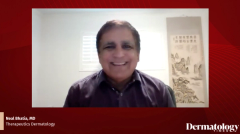
In this most recent Dermatology Time
"No matter how good a clinician we are, there's still an iceberg effect of every tumor that we see — probably 10% or 20% of the visible tumor, and everything else is still under the microscope or under the hood," Bhatia said.
That subclinical burden, driven by cumulative UV exposure, can give rise to additional actinic keratoses and basal cell carcinomas over time. Bhatia used an analogy of termites to explain the rising risk of additional skin cancers: “You see one, there’s 10 more.... So, whatever is coming is the way of thinking about how you want to take care of what you see today. If we're not treating in a way that's preventative or at least aggressive to the field of damage, I think we're not being complete in our approach of treating what we see in front of us.”
PDT as Chemopreventive Strategy
For Bhatia,
"Photodynamic therapy, in this way of thinking, is probably the most effective chemo prevention agent we have," he said, noting the absence of FDA-approved chemopreventive strategies and declining patient interest in systemic retinoids.
By targeting the entire zone of UV-damaged skin, not just the confirmed tumor, PDT addresses both what is visible and what may be emerging. For patients with significant photodamage or a history of actinic keratoses, this field-directed approach offers a meaningful long-term advantage in reducing skin cancer risk.
Cosmetic Outcomes and the Case for Non-Surgical Treatment
PDT's appeal extends beyond oncologic efficacy. In cosmetically sensitive areas such as the face, chest, and dorsal hands, the modality delivers clearance of lesions while simultaneously improving the appearance of the surrounding skin.
"PDT has really good data with the reduction of not only the lesion count for actinic keratoses or the clearance of tumor, but also the improvement in the cosmetic subunits — the sallow skin, the wrinkling, the dyschromia — all of that gets improved," Bhatia noted. Both red and blue light PDT carry comparable cosmetic potential, a contrast to cryotherapy, which carries a meaningful risk of dyschromia.
For patients dealing with surgical fatigue or tumors in aesthetically sensitive locations, PDT offers what Bhatia describes as the opportunity to treat "a little bit more conservatively, but yet also thoroughly."
Completing the Algorithm
Bhatia frames field treatment not as optional, but as an obligation of comprehensive care. Adjunctive strategies, including retinoid serums, polypodium leucotomos extract, and diligent sun protection, help maintain the gains achieved with PDT. But the modality itself remains foundational.
"If we're not treating in a way that's preventative or at least aggressive to the field of damage," he concluded, "I think we're not being complete in our approach of treating what we see in front of us."
View the full series
Advertisement
Related to this article

SYX-5219 improved disease severity and itch in a Phase 1b trial of adults with moderate to severe atopic dermatitis.

In a survey of 301 employed adults, overall work impairment attributable to CHE was 31.8%, and quality of life worsened in step with self-reported disease severity.

An analysis of 633 skincare brands found gaps in evidence, safety information, and claim support, raising questions about what patients can verify online.

Can “Botox in a bottle” really rival injectable neuromodulators? We examine the evidence behind topical peptide serums and Argireline.

Dermatology clinicians at a Case-Based Roundtable in Austin, Texas, discussed real-world strategies for sequencing topical therapy, phototherapy, and ruxolitinib cream across pediatric and adult vitiligo cases.
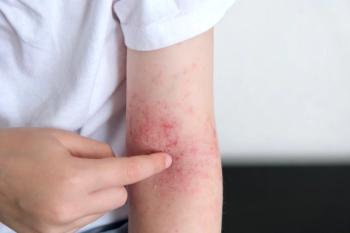
Christophe Piketty discusses 3-year ARCADIA data demonstrating sustained efficacy and long-term safety of nemolizumab in atopic dermatitis.

Two claims analyses of hidradenitis suppurativa showed similar symptom prevalence in males and females and lower dermatologist access among rural patients than urban patients.
Day 3 of Fall Clinical 2026 featured roflumilast data in genital psoriasis, long-term JAK inhibitor safety in atopic dermatitis, and expert insights on setting expectations in HS, treating advanced cSCC, and screening aesthetic patients.
Advertisement
Advertisement
Trending on Dermatology Times
1
First-in-Class Oral PKM2 Modulator Shows Early Efficacy in Atopic Dermatitis
2
Hidradenitis Suppurativa Claims Data: Sex Parity and Rural Care Gaps
3
No Observed Skin Lesion Flares After Switching to Upadacitinib in Atopic Dermatitis
4
JAK Inhibitor Safety in Atopic Dermatitis: Long-Term Epidemiology Data
5