


Kristen Lo Sicco, MD, shares why scarring alopecia can’t wait as LPP demands early treatment to prevent permanent hair loss amid limited FDA-approved options.
Kristen Lo Sicco, MD, shares why scarring alopecia can’t wait as LPP demands early treatment to prevent permanent hair loss amid limited FDA-approved options.
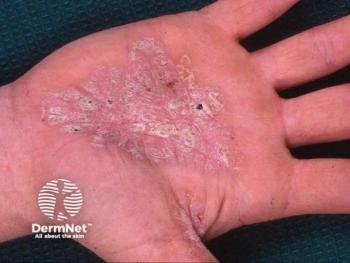
Among systemic-experienced patients, delgocitinib cream still achieved statistically significant efficacy advantages over cream vehicle across all measured outcomes.
GLP-1 therapy may calm psoriasis and hidradenitis suppurativa beyond weight loss, and holistic metabolic care can address aesthetic concerns, according to Walker.


Applications are now open for Allergan Aesthetics' women's entrepreneurship initiative, which provides coaching, community, and grants of up to $20,000 to qualifying business owners.

Dermatologists are exploring GLP-1 drugs for psoriasis and HS, but evidence is early—weight-loss benefits may help as add-ons, not replacements.

The combination of rapid onset and durable response positions zumilokibart as a potentially attractive first-line biologic option.

A cross-sectional study of 403 acne patients found that higher impulsivity scores were significantly associated with both the presence and severity of acne scars.

This review of the latest dermatological studies includes insights on acne in women with hyperandrogenism, fractional CO2 laser and gold microneedling for scarring, oxygen plasma acne treatment, and more.

At AAD 2026, Lauren Madigan, MD, presented long-term PIONEER trial extension data and urged clinicians to sharpen their recognition of 2 clonally driven inflammatory diseases: indolent systemic mastocytosis and VEXAS syndrome.

A new study details the effectiveness of non-invasive HFUS and CDFI technologies for revealing residual disease not captured by clinical evaluation in patients with acne.

Emerging acne therapies like narrow-spectrum antibiotics, hormonal agents, and immunomodulators are promising, more personalized alternatives to isotretinoin, according to new research.
Christopher Bunick, MD, PhD, and Kristian Reich, MD, PhD, discuss phase 3 data presented at AAD showing patients moving from very severe disease at baseline to absent or mild disease by week 40.

Around 80% of clinical trials face enrollment delays, and for rare genodermatoses with small patient pools, AI-generated synthetic control arms may offer a practical path to adequately powered studies.
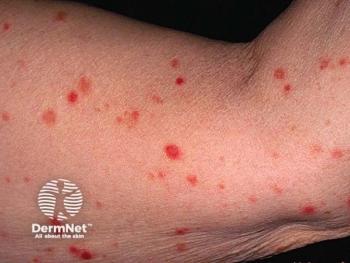
Patients who are needle-averse may soon have effective non-injectable options with biologic-like results.
At AAD 2026, Diego Ruiz Dasilva, MD, makes the case that the black box warning on JAK inhibitors shouldn't deter appropriate prescribing.

A new review examined the bone–vascular axis in psoriasis and how the current therapeutic toolbox can influence cardiovascular and skeletal health.

The inaugural DermVIP Summit will be held from May 8 to 9 at the New York Academy of Medicine.

Steven Daveluy, MD, discusses how this approval helps close a critical gap in care for adolescents living with HS.

Put your dermatology expertise to the test with Dermatology Times’ interactive quiz series.

Explore the top headlines of the week, including insights on the latest clinical trials, therapeutic updates, and more.

In case you missed it, this week we had news on phase 3 AD SHORE trials for amlitelimab, the expansion of coverage for tirbanibulin, the start of a phase 2b/3 of brepocitinib for LPP, and more.

This week, we feature top articles from our sister publications on regulatory updates, clinical trial insights, and more.

Every week, we cut through the noise to bring clinicians the trial results, approvals, and emerging therapies that are actually moving the needle.
Hope Mitchell, MD, shared practical strategies for protecting and cultivating an online presence at the 2026 American Academy of Dermatology Annual Meeting.

Mark Jackson, MD, of Evommune, provides a therapeutic update on the investigational atopic dermatitis drug, citing strong efficacy and safety after just 2 doses, with phase 2b research on the way.

Patricia M. Delgado, DNP, AGPCNP, DCNP, PMHNP, and Mohammad Jafferany, MD, discuss how integrating mental health and dermatologic care can improve outcomes for patients with chronic skin conditions.

AAD honors Henry W. Lim, MD, FAAD, with the Academy's highest honor for his work in photodermatology advances, skin of color care, and global leadership.

Offers must pair strong compensation with operational and cultural support to succeed.
Steven Daveluy, MD, reviews long-term trial data for bimekizumab in psoriasis and hidradenitis suppurativa presented at the 2026 AAD Annual Meeting.