


LEO Pharma presented 3 AAD posters on the efficacy of tralokinumab in various AD subgroups across the 12-month TRACE program.
LEO Pharma presented 3 AAD posters on the efficacy of tralokinumab in various AD subgroups across the 12-month TRACE program.
New sunscreen filters, AI tools, and immunotherapies are reshaping skin cancer prevention and treatment, improving precision and long-term survival.

During the late-breaking research session at the 2026 AAD Annual Meeting 2026, Mary Spellman, MD, shared successful news about intratumoral PH762 for cutaneous carcinomas.
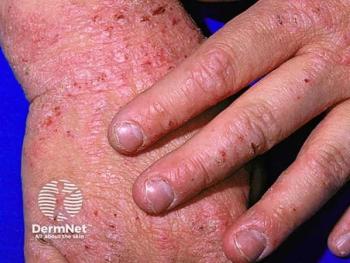
Eight in ten ADlong patients achieved clinical response without steroid rescue, strengthening the case for lebrikizumab as a standalone, long-term management option.
At AAD 2026, Helen He, MD, highlights how minimally invasive molecular profiling distinguishes photoexposed and photoprotected aging trajectories.
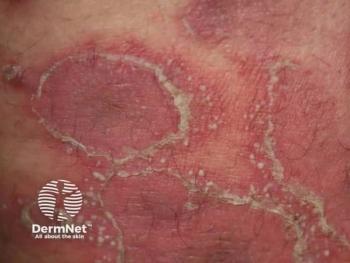
LEO Pharma shared 2 posters with data from the ongoing EFFISAYIL ON program, supporting long-term use of spesolimab for generalized pustular psoriasis.

Daniel C. Butler, MD, discusses adherence challenges, medication risks, and practical strategies to optimize dermatologic care in older adults.
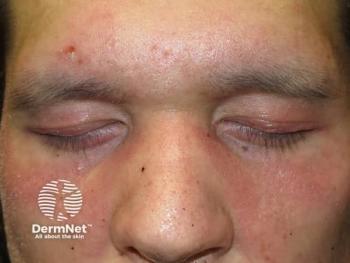
The FDA has granted Priority Review to brepocitinib's NDA for dermatomyositis, with a Q3 2026 PDUFA date that could make it the first drug specifically approved for this indication.
Catch up on coverage from the second day of the 2026 American Academy of Dermatology Annual Meeting held in Denver, Colorado.
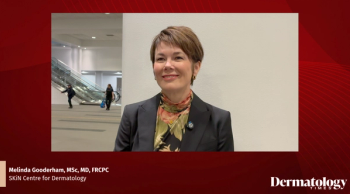
At AAD 2026, Melinda Gooderham, MSc, MD, FRCPC, reviewed late-breaking zasocitinib data for psoriasis, noting that 70% of patients reached sPGA 0/1.

Missed the late-breaking sessions? Review our quick guide of all the need-to-know data from AAD 2026.
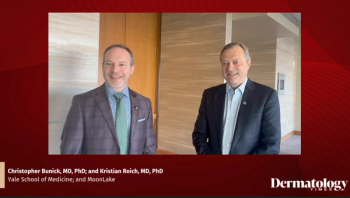
Christopher Bunick, MD, PhD, and Kristian Reich, MD, PhD, discuss the long-term efficacy of sonelokimab, with more than 60% of patients achieving HiSCR75 and approximately 30% reaching HiSCR100.

Phase 3 data presented at AAD 2026 show once-daily oral therapy clears skin as early as week 4, offering a fast-acting option for patients.

This portion of the AMETHYST trial is the second successful phase 2 study of litifilimab, an investigational monoclonal antibody for CLE.

Late-breaking data shared at AAD 2026 supports oral TYK2 envudeucitinib's efficacy and safety in moderate-to-severe plaque psoriasis.
At AAD 2026, Christopher Bunick, MD, PhD, and Patrick Burnett, MD, PhD, discuss late-breaking data of roflumilast cream's improvements in infants with AD.
Pelage’s PP405 novel topical reawakens dormant follicle stem cells, showing signs of terminal regrowth and fueling late-stage alopecia research.
Late-breaking phase 2 findings presented at AAD show nemolizumab achieved high EASI-90 rates and rapid itch relief in pediatric patients with atopic dermatitis.
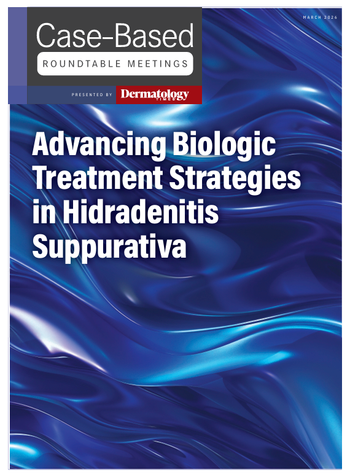
Panelists discuss the role of communication, follow-up, and safety monitoring in optimizing long-term biologic therapy outcomes.
Catch up on coverage from the first day of the 2026 American Academy of Dermatology Annual Meeting held in Denver, Colorado.
Nicole Negbenebor, MD, highlights the clinical and professional impact of community-driven education and evidence-based focus in skin of color dermatology.
Christopher Bunick, MD, PhD, interviews medical student Sabine Obagi on the value of conference participation, mentorship, and early exposure for aspiring dermatology clinicians at AAD 2026.
Melanoma cases keep rising, but AI-aided screening, gene profiling, and newer immunotherapies boost early diagnosis and long-term survival, according to Darrell Rigel, MD, MS.

This year’s AAD poster awards highlight studies advancing skin cancer prevention, inflammatory disease management, and complex dermatology care.

BE HEARD extension data underscore the importance of early diagnosis and treatment initiation to optimize long-term outcomes in hidradenitis suppurativa.

With 80% of trial participants being children, this analysis provides some of the most robust early-response data available for a non-steroidal topical in pediatric AD.
Read more on how to navigate all the opportunities at this year’s AAD meeting, which starts today in Denver, Colorado.

The GLODERM Pre–AAD meeting emphasized that global skin health progress now depends on translating policy into scalable, equitable care delivery.

At the pre-AAD meeting, Regina Benjamin, MD, MBA, discussed the role of clinicians as leaders in addressing social determinants of health, emphasizing prevention, education, and culturally responsive care.

In a patient with longstanding Hailey-Hailey disease, lebrikizumab was associated with rapid improvement in symptoms and quality of life.