Translational takeaways cuts through weekly dermatology data releases to isolate what meaningfully changes clinical decision-making—focusing on signals of durability, differentiation, and real-world impact you can bring back to the clinic on Monday.
The phase 2a EVERLAST-A data for ORKA-001 (Oruka Therapeutics) introduce a potentially disruptive variable: time. A PASI 100 rate of 63.5% at week 16—already competitive with best-in-class IL-23s—matters less than the pharmacokinetic signal suggesting therapeutic levels sustained for up to a year after a single dose.1
Translationally:
If durability holds through week 52, this reframes adherence and persistence. The real-world problem in psoriasis isn’t induction—it’s maintenance. Annual or biannual dosing could:
- Collapse adherence variability
- Reduce payer friction tied to frequent dosing cycles
- Shift biologic selection toward durability over marginal efficacy gains
The caveat: Cross-trial comparisons rather than head-to-head can inflate expectations. Clinicians should watch for response decay curves, not peak PASI metrics.
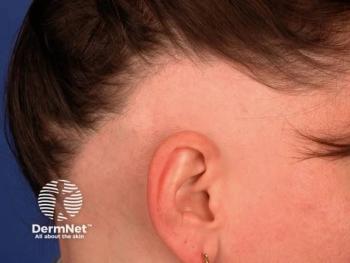
Upadacitinib’s (Rinvoq; AbbVie) phase 3 data show SALT ≤20 in ~45–55% at week 24, climbing further by week 52, with complete regrowth (SALT=0) approaching ~30–37%.2
Translationally:
This is less about efficacy—already established for JAKs—and more about regulatory normalization and patient selection:
- Broader labeling (adolescents included) could push JAK inhibitors earlier in the treatment algorithm
- The magnitude of complete regrowth strengthens the case for treat-to-target endpoints (SALT=0) rather than partial improvement
The practical tension remains unchanged: risk tolerance vs. disease burden. What may shift is how aggressively dermatologists frame that tradeoff in severe AA.
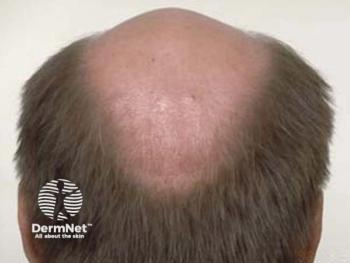
VDPHL01’s (Veradermics) phase 2/3 data finally formalize what has been an off-label reality: oral minoxidil works—but now with controlled pharmacokinetics and trial-grade evidence.3
Key signal: ~30 hairs/cm² increase vs. ~7 with placebo at 6 months, with early separation by month 2.
Translationally:
This could:
- Legitimize oral minoxidil as a first-line systemic option, not a “dermatology workaround”
- Reduce variability in dosing and safety monitoring due to extended-release design
- Increase uptake among more conservative prescribers who avoided compounded/immediate-release versions
If approved, expect rapid integration—especially in patients failing topical therapy or declining finasteride.
The supplemental NDA for roflumilast cream down to 3 months of age addresses a longstanding gap: safe, chronic-use, non-steroidal therapy in infants.4
Translationally:
The key shift isn’t efficacy—it’s timing of intervention:
- Earlier use of non-steroidals may reduce cumulative steroid exposure during a critical developmental window
- Rapid itch reduction (within hours) introduces a behavioral/sleep quality benefit that may influence caregiver adherence
This expands proactive management in infancy, rather than reactive steroid cycling.
CASE: A 42-year-old with moderate-to-severe plaque psoriasis, historically inconsistent with biologic adherence, currently controlled on an IL-23 inhibitor dosed every 8 weeks.
POLL:
If ORKA-001 demonstrates sustained PASI 90+ at 52 weeks with annual dosing, how would you adapt?
References
- Oruka Therapeutics announces positive week 16 data for ORKA-001 from the ongoing EVERLAST-A phase 2a trial in moderate-to-severe plaque psoriasis. News release. Oruka Therapeutics. Published April 27, 2026. Accessed May 1, 2026. https://ir.orukatx.com/news-releases/news-release-details/oruka-therapeutics-announces-positive-week-16-data-orka-001
- AbbVie submits application to FDA for upadacitinib (Rinvoq) for adults and adolescents with severe alopecia areata. News release. AbbVie. April 28, 2026. Accessed May 1, 2026. https://news.abbvie.com/2026-04-28-AbbVie-Submits-Application-to-FDA-for-Upadacitinib-RINVOQ-R-for-Adults-and-Adolescents-with-Severe-Alopecia-Areata
- Veradermics’ oral VDPHL01 achieved early, consistent, and robust hair growth in positive phase 2/3 ‘302’ clinical trial in male pattern hair loss. News release. Veradermics. April 27, 2026. Accessed May 1, 2026. https://ir.veradermics.com/news-releases/news-release-details/veradermics-oral-vdphl01-achieved-early-consistent-and-robust
- Arcutis submits supplemental new drug application to the FDA for ZORYVE® (roflumilast) cream 0.05% to expand indication for treatment of atopic dermatitis to infants down to 3 months. News release. Arcutis. April 27, 2026. Accessed May 1, 2026. https://www.arcutis.com/arcutis-submits-supplemental-new-drug-application-to-the-fda-for-zoryve-roflumilast-cream-0-05-to-expand-indication-for-treatment-of-atopic-dermatitis-to-infants-down-to-3-months/