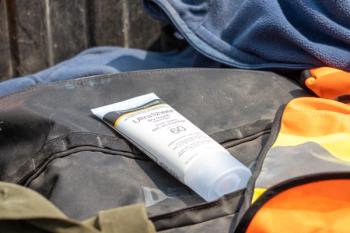
Two new Neutrogena facial sunscreens incorporate bemotrizinol, the first new sunscreen active ingredient added to the US OTC monograph in decades.
Real clinical case scenarios with progressive diagnostic clues challenge dermatology clinicians to think on their feet, sharpen their diagnostic reasoning, and apply practice-changing takeaways at the point of care.
A 50-year-old immunocompetent woman presented to the emergency department with a 4-day history of severe left thigh pain and progressively limited weight-bearing. She reported associated fever, fatigue, generalized myalgias, and diarrhea. Notably, she denied any antecedent trauma, wound, or visible skin changes to the affected extremity. Her recent history was significant for an episode of tonsillitis approximately 10 days prior, empirically treated with a 7-day course of amoxicillin-clavulanate; no throat culture was obtained to confirm the causative organism.1
On physical examination, the left thigh demonstrated only minimal erythema with exquisite tenderness to palpation over the medial aspect — cutaneous findings that were, by all appearances, disproportionately mild relative to the patient's reported pain. She arrived hemodynamically stable, but within hours of admission rapidly deteriorated, developing tachycardia to 120 bpm and hypotension to 79/50 mmHg. Laboratory evaluation revealed leukocytosis at 17.1 K/UL and an elevated serum creatinine of 4.6 mg/dL, raising concern for sepsis-associated acute renal injury. Blood cultures returned negative.
Imaging workup was initiated. Bedside ultrasound of the left thigh was unremarkable. CT imaging demonstrated soft tissue edema in the anterior compartment without gas formation, fascial thickening, or other radiographic hallmarks of deep tissue destruction. The clinical picture — hemodynamic collapse, leukocytosis, acute renal failure, and pain markedly out of proportion to the skin exam — prompted broad-spectrum antimicrobial coverage with vancomycin, piperacillin-tazobactam, and clindamycin while the care team pursued a definitive diagnosis.
Given the degree of clinical concern, a decision was made to proceed directly to surgical exploration rather than await further imaging or laboratory data. Intraoperatively, the thigh revealed edema localized to the sartorius muscle with no frank necrosis identified — findings that, in the context of the overall clinical presentation, nonetheless confirmed the suspected diagnosis.
Wound cultures were obtained and the area was lavaged; the patient was discharged after clinical improvement on oral step-down therapy. Six days later, she re-presented with recurrent thigh pain. Repeat sensitivities confirmed susceptibility to the same agent she had been prescribed — yet she had failed twice on oral antibiotics. The treating team was now confronting a pathogen behaving in a way its culture results did not predict.
Surgical exploration confirmed early necrotizing fasciitis (NF2) secondary to group A Streptococcus (GAS). The twice-observed failure of oral antibiotic therapy — despite confirmed in vitro susceptibility — was attributed to a highly virulent antigenic variant of the GAS M-protein, a surface virulence factor that facilitates bacterial persistence in host tissues by impairing phagocytosis by polymorphonuclear leukocytes. With over 200 known serotypes, M-protein variability can produce strains capable of evading host immune clearance even in immunocompetent patients.2 Successful eradication ultimately required a prolonged course of high-dose intravenous ceftriaxone combined with oral linezolid. This case underscores 2 critical clinical imperatives: maintaining a high index of suspicion for NF in the setting of disproportionate soft tissue pain and hemodynamic instability — even when cutaneous findings and imaging appear reassuring — and recognizing that in vitro antibiotic sensitivity does not always predict in vivo treatment success when a virulent M-protein variant is in play.1
References