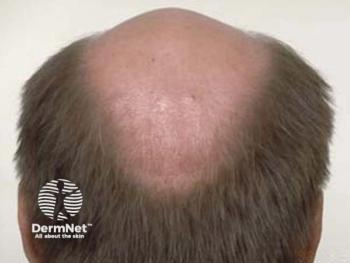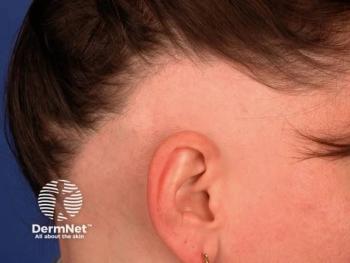
The FDA approval, based on 36-week data from the phase 3 BRAVE-AA-PEDS trial, extends baricitinib access to patients as young as 12 years old with severe alopecia areata.
Jillian Rork, MD, discusses how Down syndrome is increasingly being understood through the lens of immunology and inflammatory skin disease.
In this episode of Don’t Be Rash, host Andrew C. Krakowski, MD, welcomes pediatric dermatologist Jillian Rork, MD, to discuss an area receiving increasing attention within dermatology: the cutaneous manifestations of Down syndrome and the evolving understanding of their underlying biology.
To start the conversation, Rork describes how early exposure to patients with intellectual and developmental disabilities eventually led her toward a clinical and research focus on Down syndrome, particularly after recognizing how frequently significant dermatologic disease was being underrecognized in this population.
For many dermatologists, familiar associations with Down syndrome may include conditions such as alopecia areata, atopic dermatitis, hidradenitis suppurativa, elastosis perforans serpiginosa, and early-onset onychomycosis. But the discussion highlights how the field is moving beyond cataloging clinical associations toward understanding mechanistic drivers of disease.
A major theme throughout the episode is the concept of gene dosage. With trisomy 21, patients carry an additional copy of chromosome 21, creating what Rork describes as a “1.5× gene dose.” Increasingly, researchers are connecting this altered genomic landscape to immune dysregulation and inflammatory skin disease. Particular attention has focused on interferon signaling, as 4 of the 6 known interferon receptor genes are located on chromosome 21. This may help explain the heightened inflammatory phenotype observed in many patients with Down syndrome, including increased susceptibility to autoimmune and follicular disorders.
The conversation also touches on amyloid precursor protein and other chromosome 21–linked pathways that may contribute not only to neurologic disease, such as early-onset Alzheimer disease, but also potentially to cutaneous manifestations. For dermatologists, these discoveries are reframing conditions once viewed as isolated clinical observations into part of a broader immunogenetic picture.
Krakowski reflects on how rapidly the field has evolved, noting that many questions previously considered unanswered are now being clarified through translational research. That evolution is particularly evident in disorders such as folliculitis and hidradenitis-like disease in patients with Down syndrome, where increasing attention is being paid to both pathophysiology and targeted therapeutic approaches.
Ultimately, the discussion underscores a broader shift occurring across dermatology: the move from descriptive diagnosis toward mechanism-based understanding. In Down syndrome specifically, the intersection of genomics, immunology, and clinical dermatology is beginning to provide a clearer framework for both disease recognition and future treatment strategies.
Have a topic you think we should talk about? Email us at