Faculty from the Cutaneous Oncology Workshop answer practical questions spanning skin cancer prevention, diagnosis, treatment, and follow-up.
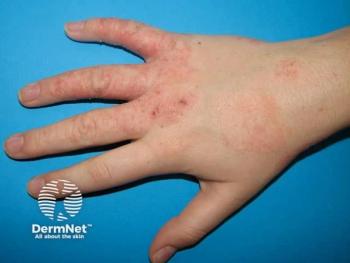
A 24-week trial shows ruxolitinib cream sustains control and itch relief in moderate atopic dermatitis when steroids fail, with a positive safety profile.
New 24-week data from the phase 3 TRuE-AD4 trial (
The randomized, double-blind, vehicle-controlled phase 3b study enrolled 241 adults with moderate AD affecting 10% to 20% body surface area (BSA), excluding the scalp. Eligible participants had an Investigator Global Assessment (IGA) score of 3 and an Eczema Area and Severity Index (EASI) score greater than 7 at screening and baseline. All patients had documented inadequate response, intolerance, or contraindication to TCSs and TCIs within the previous 12 months.
Participants were randomly assigned 2:1 to receive ruxolitinib cream or vehicle cream applied twice daily. At week 8, patients achieving at least a 50% improvement in EASI score (EASI 50) continued double-blind treatment on an as-needed basis through week 24.
The coprimary end points were achievement of EASI 75, defined as at least 75% improvement from baseline in EASI score, and IGA treatment success (IGA-TS), defined as an IGA score of clear or almost clear with at least a 2-point improvement from baseline after 8 weeks.
Among those continuing treatment, 84.3% achieved EASI 75 at week 24, closely matching the week 8 rate of 83.5%. Similarly, 70.6% achieved IGA-TS at week 24 vs 74.4% at week 8. Affected BSA also remained low over time, as mean BSA involvement was 2.5% at both week 8 and week 24. Pruritus improvement was also maintained. After 24 weeks, 64.7% of patients achieved at least a 4-point improvement on the Itch Numeric Rating Scale vs 74.3% at week 8.
Ruxolitinib cream, a topical selective Janus kinase 1 (JAK1)/JAK2 inhibitor, was generally well tolerated throughout the 24-week treatment period. Few application site reactions were reported, occurring in 1.7% of patients. No new safety signals emerged during longer-term treatment. The most common treatment-emergent adverse events were upper respiratory tract infection (10.6%) and nasopharyngitis (6.3%).
The TRuE-AD4 data add to growing evidence supporting ruxolitinib cream as a nonsteroidal topical option for a clinically challenging population of patients who are unable to adequately manage disease with standard topical therapies.
“We are pleased to share these results, which demonstrate sustained disease control over 24 weeks in adults with moderate AD and further reinforce the well-tolerated safety profile of Opzelura,” Pablo J. Cagnoni, MD, president and global head of research and development at Incyte, said in a statement. “We look forward to continuing to work with EU regulatory authorities to bring this differentiated, nonsteroidal treatment option to European adults with moderate AD who have progressed on standard topical therapies.”1
Full regulatory feedback on the European application is expected during the first half of 2026.
References
1. Incyte announces 24-week long-term data from phase 3 TRuE-AD4 trial of Opzelura (ruxolitinib) cream in adults with moderate atopic dermatitis. News release. Incyte. May 7, 2026. Accessed May 7, 2026.
2. Carrascosa JM, et al. Efficacy and safety of ruxolitinib cream in adults with moderate atopic dermatitis: results from TRuE-AD4, a phase 3b, randomized, double-blind, vehicle-controlled study. Presented at: 15th Georg RAJKA International Symposium on Atopic Dermatitis; October 24–26, 2025; Melbourne, Australia.