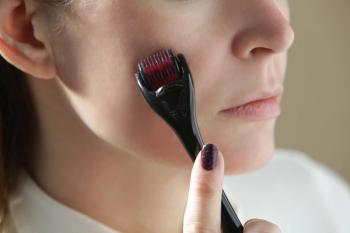
Can at-home dermarollers give the same results as in-office microneedling or is that just a myth? Read more about the latest social media trend and learn how to counsel your patients in the clinic.
Turmeric and curcumin supplements used for hair loss are increasingly associated with rare but serious cases of liver injury.
Turmeric and its active compound, curcumin, continue to gain traction among patients seeking alternative therapies for hair loss.1 As noted in a recently published article by Paz et al, "turmeric, and its associated active ingredient curcumin, has long been regarded for its anti-inflammatory and antioxidant properties and has gained popularity as a nutraceutical for hair loss." Interest has been driven by proposed anti-inflammatory and antioxidant effects, along with potential modulation of androgen signaling pathways. Use has expanded despite limited high-quality evidence supporting efficacy in alopecia. Recent findings outlined in the publication raise concern about safety, particularly the risk of drug-induced liver injury associated with turmeric-containing supplements.2
A growing body of case-based evidence links turmeric supplementation to hepatotoxicity. Reports include a 10-case series from the Drug-Induced Liver Injury Network as well as individual case reports describing clinically significant liver injury.3 Presentations vary, including hepatocellular, cholestatic, and mixed patterns of injury. Patients have developed symptoms such as jaundice and laboratory evidence of transaminitis. Severity ranges from mild, self-limited cases to acute liver failure.
In the 10-case series, investigators behind the recent publication noted that, "of the 10 Drug-Induced Liver Injury Network cases, 5 resulted in hospitalization and all but 1 resolved following discontinuation, with the remaining case progressing to acute liver failure and resulting in death." Additional reports describe patients requiring corticosteroid therapy or liver transplantation.2 These findings establish turmeric as a probable cause of liver injury in susceptible individuals, even though the overall incidence appears low.
The mechanism of turmeric-induced hepatotoxicity remains unclear, according to the publication. Curcumin has historically been viewed as hepatoprotective in experimental models, which complicates interpretation of these adverse events. One proposed factor involves piperine, a black pepper extract frequently added to supplements to enhance curcumin bioavailability. Piperine inhibits hepatic and intestinal glucuronidation, increasing systemic exposure to curcumin. Some investigators suggest this enhanced absorption may amplify hepatotoxic risk. Cases of liver injury have also been reported in the absence of piperine, indicating that curcumin itself or other supplement components may contribute.
Variability in supplement composition presents an additional challenge. Dietary supplements are not subject to the same premarket approval standards as pharmaceuticals. As highlighted by Paz et al, "recognition and regulation of turmeric-associated liver injury are complicated by the lack of FDA premarket approval for supplements, resulting in variable formulations, inconsistent labeling, and undeclared ingredients." Formulations may differ in curcumin concentration, bioavailability enhancers, and the presence of undeclared ingredients. Labeling inconsistencies further complicate risk assessment. These factors limit the ability to identify causative components and hinder reproducibility in research settings.
Hair loss patients represent a population particularly likely to use nutraceuticals. Many perceive these therapies as safer alternatives to conventional treatments. This perception may lead to underreporting of supplement use during clinical encounters. Dermatologists may not routinely inquire about over-the-counter products unless prompted by adverse events. The emerging data highlight the need for more comprehensive medication histories that include dietary supplements.
Clinical recognition of turmeric-associated liver injury requires a high index of suspicion. Presentations may mimic other causes of hepatic dysfunction. Temporal association with supplement initiation can provide an important clue. Improvement following discontinuation supports the diagnosis, although causality assessment remains complex. Liver biopsy findings are nonspecific and not routinely required.
Management primarily involves cessation of the offending agent. Most patients experience resolution of symptoms and normalization of liver enzymes over time. Severe cases may require hospitalization and supportive care. Corticosteroids have been used in select cases, though evidence supporting their role is limited. Referral to hepatology is appropriate when significant liver injury is suspected.
The risk-benefit profile of turmeric supplementation in hair loss remains uncertain. Evidence supporting efficacy is limited and largely derived from small or heterogeneous studies. In contrast, the potential for serious adverse effects, although rare, is increasingly recognized. This imbalance warrants caution when discussing treatment options with patients.
Patient counseling should address both the lack of robust efficacy data and the possibility of adverse events. Emphasis on evidence-based therapies remains appropriate. For patients who choose to use turmeric supplements, clinicians may consider advising avoidance of high-dose formulations or products containing bioavailability enhancers such as piperine. Monitoring for symptoms of liver dysfunction may be prudent, particularly in the early phases of use.
The findings also underscore broader regulatory gaps in the supplement industry. Increased oversight could improve product consistency and safety. Standardization of formulations and clearer labeling would facilitate both clinical care and research efforts. Post-marketing surveillance systems may help identify emerging safety signals more rapidly.
Further investigation is needed to clarify the incidence, mechanisms, and risk factors associated with turmeric-induced liver injury. Larger observational studies and pharmacovigilance data may provide additional insight. Identification of susceptible populations could inform risk stratification and guide clinical recommendations.
Turmeric remains widely perceived as a benign, natural therapy. Recent evidence challenges this assumption. Dermatologists play a central role in identifying adverse effects, educating patients, and promoting safe treatment practices. Awareness of supplement-associated hepatotoxicity is essential as the use of nutraceuticals continues to expand in dermatologic care.
References