Phase 2 data presented at EADV 2026 showed daxdilimab significantly reduced disease activity and improved response rates in treatment-refractory DLE.

The SWF Clinical Care Network now includes 27 validated US sites assessed objectively for multidisciplinary capacity across dermatology, neurology, ophthalmology, mental health, and transitional care.
For clinicians who regularly encounter port-wine birthmarks, the dermatologic presentation is familiar—but for families navigating a new diagnosis, the visible lesion is often only the entry point into a far more complex journey. That reality sits at the heart of a recent
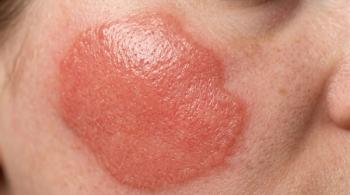
Port-wine stains are capillary vascular malformations caused by a somatic GNAQ mutation—acquired, not inherited. In isolation, they're manageable. When accompanied by ipsilateral ocular and leptomeningeal involvement, the triad defines Sturge-Weber syndrome (SWS), a condition carrying real stakes: glaucoma with vision-threatening potential and seizures that can range from nuisance to life-altering. Both Ball and Terrell arrived at the foundation not as healthcare professionals, but as mothers of daughters born with the syndrome, and that experiential foundation shapes everything the organization does.1
Ball founded SWF nearly 4 decades ago after her daughter was born with glaucoma and underwent her first surgical intervention at 1 week old. Terrell followed a similar path 17 years ago, eventually joining the foundation full-time. Their shared message to clinicians: early ophthalmologic evaluation is non-negotiable. "That glaucoma is a sneaky little sucker," Ball noted, pointing out that families often prioritize the birthmark's visible cosmetic burden over the silent threat to vision. Early neurologic baseline imaging matters equally—and the foundation recommends families connect with SWF on day one, before Google fills the gap with noise.2
For clinicians, one of the foundation's most practically useful contributions is its Clinical Care Network, now comprising 27 validated sites across the US. Designation is earned through objective assessment of multidisciplinary capacity—dermatology, neurology, ophthalmology, mental health, and transitional care—not through application fees. The network enables patients to access informed, coordinated care closer to home, a meaningful consideration when many SWS children are too medically fragile for routine long-distance travel.
On the research side, the SWF operates New Horizon grants targeting trainees and early investigators and Catalyst grants of approximately $50,000—modest by NIH standards, but with a demonstrated record of seeding projects that have gone on to attract larger federal funding. The foundation recently completed a 15-year Brain Vascular Malformation Consortium grant and is now converting that infrastructure into a globally accessible patient registry.
One challenge Ball flagged remains unsolved and open to the field: progressive soft-tissue overgrowth of the lip and cheek in affected patients. It's a standing invitation for clinicians with ideas to reach out.
For more information or to connect families with support, visit
Have a topic you think we should talk about? Email us at
References