

Feature|Videos|May 22, 2026
Why EPP's Pain Profile Sets It Apart From Common Photosensitivity Disorders
Key Takeaways
- Erythropoietic protoporphyria often presents with minimal or absent rash during and after flares, making a paucity of cutaneous findings a key diagnostic clue rather than a reassuring sign.
- Polymorphous light eruption, solar urticaria, chronic actinic dermatitis, and cutaneous lupus typically show pruritic or eczematous morphology, wheals, lichenification, or malar/scaly patterns that EPP lacks.
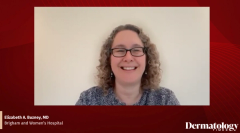
Elizabeth Buzney, MD, outlines the clinical hallmarks that separate erythropoietic protoporphyria from other photosensitivity disorders, starting with what clinicians won't see on exam.
Advertisement
Episodes in this series
In this Dermatology Times
When evaluating patients with photosensitivity, clinicians often anchor their diagnosis to visible skin findings. In EPP, that instinct can mislead. Unlike most primary photodermatoses, EPP produces strikingly few objective findings — during a flare or after one.
"EPP [has] very little in the way of skin findings during the flare, or afterwards," Buzney said.
This absence of rash is one of EPP's most diagnostically important features, and one that sets it apart from conditions that frequently appear on the differential.
How EPP Compares to Other Photodermatoses
Polymorphous light eruption (PMLE), one of the most commonly encountered photosensitivity disorders, presents with papules and plaques accompanied by intense pruritus. Solar urticaria produces wheals in response to light exposure — again, a visible, itch-driven reaction. Chronic actinic dermatitis manifests as persistent eczematous changes with lichenification. Lupus photosensitivity carries its own hallmarks: malar distribution, scale in subacute cutaneous lupus, and post-inflammatory changes.
As Buzney said, EPP fits none of these patterns.
Pain as the Defining Feature
What EPP patients do experience is pain. Not the itch-predominant discomfort of most photodermatoses, but a severe, deep, neuropathic-like burning that is disproportionate to any visible findings.
"The patients may say that they cannot continue exposure for another second — they have to get out of the sun immediately," Buzney noted.
Critically, this pain can persist for hours to days following even brief light exposure, distinguishing EPP from a typical sunburn. EPP is also driven predominantly by visible light rather than ultraviolet wavelengths, a distinction that further separates it from PMLE and solar urticaria, which are more commonly triggered by UV exposure.
Recognizing this clinical profile of absent rash, severe pain, prolonged duration, and visible-light sensitivity is essential for timely and accurate EPP diagnosis.
Advertisement
Related Content
Advertisement



Advertisement
Advertisement
Trending on Dermatology Times
1
How Emerging Androgenetic Alopecia Therapies Target DHT at the Scalp Level
2
Tildrakizumab Partially Reverses Epigenetic Aging in Psoriasis, Pilot Study Shows
3
Field-Directed Therapy Favored for Actinic Keratosis Management
4
Diet Linked to Improved Chronic Idiopathic Urticaria Control
5