

Feature|Videos|May 29, 2026
EPP Misdiagnosis: No Visible Rash, Underreporting, and Diagnostic Pitfalls
Key Takeaways
- Lack of cutaneous lesions shifts diagnosis to careful history-taking by parents, pediatricians, and emergency clinicians, particularly when a child is the first affected family member.
- Ordering errors arise when clinicians default to nonspecific porphyrin panels instead of erythrocyte protoporphyrin fractionation, a specialized test requiring send-out logistics and awareness.
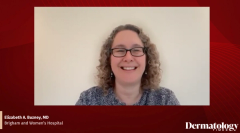
Elizabeth Buzney, MD, discusses the key reasons erythropoietic protoporphyria is frequently misdiagnosed and the consequences of prolonged diagnostic delay.
Advertisement
Episodes in this series
In this Dermatology Times
Why EPP Goes Unrecognized
According to Buzney, the absence of a visible rash is the primary reason EPP is overlooked. Because EPP most often presents in childhood, the burden of recognition falls on parents, pediatricians, and ER clinicians who must rely on listening carefully to the patient's history rather than looking for lesions. "You can't look for lesions, and again, if you think of who is most often presenting with this, sometimes we do make this diagnosis in adulthood, but I think most often we make this diagnosis in childhood," Buzney said. When a family member carries the diagnosis, identification becomes easier, but a child presenting as the first affected member in the family poses a particular challenge.
A second barrier is clinician discomfort with ordering porphyrin testing. The specific test required is erythrocyte protoporphyrin fractionation, available through Mayo Clinic as a send-out lab. "It's really the only lab in the United States that offers specific protoporphyrin 9 testing for EPP," Buzney noted. Familiarity with this specific test, rather than general porphyrin panels, is essential for accurate diagnosis.
Underreporting and Clinician Awareness Gaps
Patient behavior compounds the diagnostic gap. Many individuals with EPP develop lifelong coping strategies centered on sun avoidance and never seek evaluation for their symptoms. "Patients may under-report their symptoms due to a lifelong coping behavior — they think, 'I'm just sensitive to sun, I just don't go out in the sun,'" Buzney explained. Separately, many clinicians remain unaware EPP pain is immediate and severe even without cutaneous findings, which leads to further missed diagnoses.
Consequences of Diagnostic Delay
The consequences of late diagnosis range from years to decades of delayed care. Buzney described the psychosocial toll on patients who go undiagnosed for extended periods, including effects on schooling, employment, mental health, and daily activities. Beyond quality of life, there is a rare but serious risk of hepatic complications from protoporphyrin accumulation. "It's really incumbent on us to make this diagnosis, and then to follow the liver to make sure the liver doesn't have any ill effects from the protoporphyrin accumulation," she said.
Early diagnosis, Buzney emphasized, allows patients to access support systems and interventions across multiple dimensions of care, while late diagnosis means patients have often already absorbed years of lifestyle limitation and psychosocial burden with no clinical framework for their experience.
Advertisement
Related Content
Advertisement




Advertisement
Advertisement
Trending on Dermatology Times
1
How Emerging Androgenetic Alopecia Therapies Target DHT at the Scalp Level
2
Tildrakizumab Partially Reverses Epigenetic Aging in Psoriasis, Pilot Study Shows
3
Field-Directed Therapy Favored for Actinic Keratosis Management
4
Diet Linked to Improved Chronic Idiopathic Urticaria Control
5