


At the Dermatology Times NP/PA Connect Cutaneous Oncology Workshop in Tampa, Florida, Angad Chadha, MD, discussed his upcoming presentations on gene expression profiling and cutaneous side effects of immunotherapy.


At the Dermatology Times NP/PA Connect Cutaneous Oncology Workshop in Tampa, Florida, Angad Chadha, MD, discussed his upcoming presentations on gene expression profiling and cutaneous side effects of immunotherapy.

Attendees put technique into practice during an interactive suturing session led by Tristan Hasbargen, PA-C, using individual kits and real-world clinical examples.
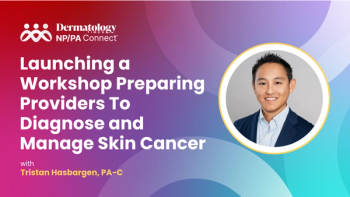
As chair of the new Dermatology Times NP/PA Connect Cutaneous Oncology Workshop, Tristan Hasbargen, PA-C, discusses the program's curriculum and goals live in Tampa, Florida.

New hair-loss therapies aim to block DHT at follicles, using targeted scalp delivery to reduce systemic side effects and improve male pattern baldness outcomes.
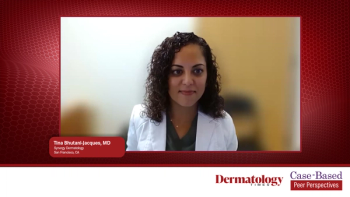
In the concluding episode, Dr. Tina Bhutani-Jacques emphasizes the importance of looking beyond clinical measures such as body surface area when evaluating treatment success in patients with plaque psoriasis.

Closing out the series, each panelist names the combination of therapies they return to most often and delivers a final word on treating HS without hesitation.

Victoria Werth, MD, reviews brepocitinib's boxed warning and expanded treatment options for dermatomyositis.
An oral JAK inhibitor, a BTK inhibitor, and GLP-1 receptor agonists are reshaping what's possible in HS. The panel previews mechanisms it expects to reach patients next.
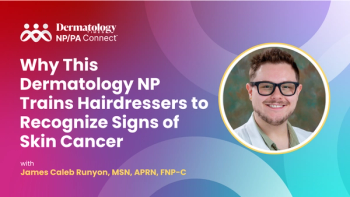
James Caleb Runyon, MSN, APRN, FNP-C, discussed how his Closer Look Project trains personal care professionals to recognize signs of skin cancer.
Victoria Werth, MD, discusses the FDA approval of brepocitinib for dermatomyositis and its supporting VALOR trial data.

Steven Daveluy, MD, discussed mental health screening, patient conversations, and referrals for patients with chronic skin disease.

Amanda Caldwell, MSN, APRN-C, discussed assessing psoriasis beyond body surface area and incorporating patient preferences into treatment decisions.
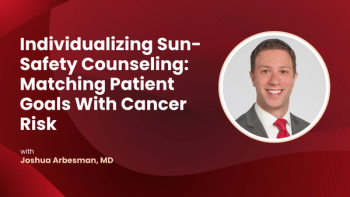
Joshua Arbesman, MD, explains how tailored sun-safety advice balances melanoma risk, aging goals, and quality of life in all types of patients.
In the concluding segment, Dr. Tina Bhutani-Jacques discusses the rationale for initiating tapinarof 1% cream in a patient with localized plaque psoriasis who is unwilling to use topical corticosteroids because of concerns about long-term adverse effects.
In the discussion, Dr. Tina Bhutani-Jacques reviews the management of a 34-year-old man with localized plaque psoriasis who is seeking effective long-term disease control while avoiding topical corticosteroids.

Joshua Arbesman, MD, explains how to promote smarter sun habits, educate on melanoma-risk timelines, ease guilt, and answer sunscreen fears fueled by social media.
New CSU treatments like dupilumab, omalizumab and fast-acting remibrutinib, plus biomarker-driven therapies on the horizon, move beyond antihistamines.
Ultrasound findings suggest inflammation is often present long before it's visible. The panel discusses what it takes for clinicians to treat HS with the same urgency as acne scarring.
With draining tunnels already present, the panel explains why mechanism of action matters, and why every groin exam should also be screening for Crohn's disease.

CSU links to autoimmune disease and mental health burden; learn from Nicholas Brownstone, MD, on key screening tips, symptom clues, and how it differs from inducible hives.
In " Skin Clearance and PsA Prevention with Biologics in Psoriasis," Dr. Strober distills the discussion into practical guidance for the clinic.

In this first episode, Joshua Zeichner, MD, shares how to spot early male pattern thinning, why it affects confidence, and which proven treatments beat social media hype.

Lisa Swanson, MD, joins Don't Be Rash host Andrew C. Krakowski, MD, for Psoriasis Awareness Month to discuss how pediatric psoriasis is often misdiagnosed and when it signals a heightened risk of psoriatic arthritis in kids.
Lisa Weiss, PA, discussed timely immunodermatology education, standout sessions, and the collaborative community at Elevate-Derm.

Shawn Demehri, MD, PhD, discussed immunomodulatory and antigen-directed immunotherapy approaches for skin cancer prevention in a recent Dermatology Times interview.
Eileen Cheever, MPAS, PA-C, discussed patient advocacy, mentorship, and improving dermatologic care across different stages of life.

Kimberly Madison, DNP, discussed how dermatology education can help nurses strengthen documentation, patient education, triage, and access to care.

Daniel Butler, MD, shares practical considerations for NPs and PAs treating psoriasis in older adults, from counseling to treatment access.

Justin Love, PA, discussed the role of emotional intelligence, communication, and preparation when navigating difficult patient conversations.
In the third case, Dr. Tina Bhutani-Jacques introduces a 34-year-old man with longstanding plaque psoriasis involving approximately 2% body surface area who remains frustrated by recurrent flares and visible plaques despite previous treatment with topical corticosteroids.