

Opinion|Videos|September 4, 2026
Addressing Steroid Fear with Non-Steroidal Treatment Options in Psoriasis
Author(s)Tina Bhutani-Jacques, MD
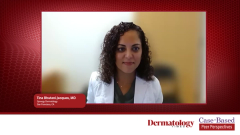
In the concluding segment, Dr. Tina Bhutani-Jacques discusses the rationale for initiating tapinarof 1% cream in a patient with localized plaque psoriasis who is unwilling to use topical corticosteroids because of concerns about long-term adverse effects.
Advertisement
Episodes in this series
In the concluding segment, Dr. Tina Bhutani-Jacques discusses the rationale for initiating tapinarof 1% cream in a patient with localized plaque psoriasis who is unwilling to use topical corticosteroids because of concerns about long-term adverse effects. She explains that tapinarof represents a newer generation of nonsteroidal topical therapies with improved tolerability, patient-friendly formulations, and demonstrated efficacy, making it an appropriate option for patients seeking steroid-sparing treatment. Dr. Bhutani-Jacques emphasizes the importance of helping patients feel optimistic about advances in psoriasis care and encouraging confidence in newer therapeutic options.
The discussion then focuses on practical strategies to support long-term treatment adherence in patients with intermittent disease and previous inconsistent treatment responses. Dr. Bhutani-Jacques recommends encouraging patients to apply tapinarof consistently once daily during active flares to achieve rapid disease control. She also explains that, once lesions have cleared, patients may either temporarily discontinue therapy or transition to a proactive management strategy by applying the medication a few days each week. This approach may help prolong periods of disease remission, reduce the frequency of future flares, and make long-term treatment feel more manageable for patients who may otherwise struggle with daily therapy indefinitely.
Finally, Dr. Bhutani-Jacques reviews her monitoring approach for patients receiving tapinarof. She recommends follow-up approximately every three months while disease remains active to assess treatment response, reinforce adherence, and provide guidance on long-term disease management. As patients achieve sustained disease control, follow-up intervals can be gradually extended to every six months or annually. The episode concludes by reinforcing the importance of individualized treatment plans, proactive maintenance strategies, and ongoing patient engagement to optimize long-term outcomes in plaque psoriasis.
In the next episode, "Why Patient-Reported Outcomes Matter in Psoriasis Care," Dr. Bhutani-Jacques closes the series by explaining what physicians should be asking patients beyond plaque counts - and her message to primary care colleagues about psoriasis care today.
Advertisement
Related to this article

A retrospective claims analysis of 2897 matched pairs found hazard ratios of 0.48 to 0.67 for new atopic disease with dupilumab vs systemic corticosteroids in children.

Disc Medicine reports the phase 3 APOLLO trial met all primary and secondary end points, with whole-blood PPIX reduced 41.4% vs placebo and an NDA resubmission planned by end of 2026.

Castor oil has become a popular social media remedy for thicker, longer hair, but evidence supporting its ability to stimulate hair growth remains limited.
The FDA clearance allows Edesa to expand an ongoing placebo-controlled study of the CXCL10 antibody EB06 to US sites, with topline data expected in the fourth quarter of 2027.

The novel oral helicase-primase inhibitor demonstrated significantly higher rates of complete lesion healing compared with investigator’s choice treatment in the phase 3 PRIOH-1 trial.
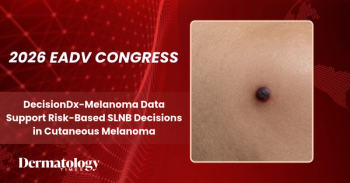
Prospective data suggest DecisionDx-Melanoma may help refine SLNB decisions and identify recurrence risk beyond conventional staging.

Falk G. Bechara, MD, discusses long-term tunnel control, structural damage, and the evolving role of biologics and surgery in HS care.

Galderma has agreed to acquire ZO Skin Health for $1.5 billion, adding the physician-dispensed skincare brand to a portfolio that already includes Cetaphil and Alastin.
Advertisement
Advertisement
Trending on Dermatology Times
1
Bitopertin Meets All End Points in Phase 3 APOLLO Trial for EPP
2
Social Media Mythbusters: Can Castor Oil Really Grow Hair?
3
EADV 2026 Atopic Dermatitis Highlights: Tilrekimig, RAC2 Inhibition, and Level Up Data
4
Dupilumab Associated With Lower Atopic March Risk in Pediatric Atopic Dermatitis
5