Now Playing
Despite advances in systemic and biologic therapy, topical agents remain the primary treatment for most patients with plaque psoriasis. Dr. Bhutani-Jacques reviews the steroidal and non-steroidal armamentarium and the risks associated with prolonged corticosteroid use.
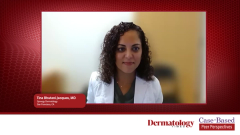
Welcome back to another Dermatology Times Peers & Perspectives series. In this episode titled "The Ongoing Role of Topical Therapy in Plaque Psoriasis Management," moderator Tina Bhutani-Jacques, MD discusses plaque psoriasis. She introduces the role of topical therapies in the modern management of plaque psoriasis, emphasizing that despite the availability of numerous systemic treatments, topical agents remain the foundation of care for many patients. She explains that because most patients have mild-to-moderate disease, topical therapies are often sufficient as first-line treatment, while those with more extensive disease frequently continue to rely on topical medications to manage breakthrough or residual lesions alongside systemic therapy.
Dr. Bhutani-Jacques reviews the current landscape of topical treatment options, highlighting both corticosteroid and nonsteroidal therapies. She discusses traditional nonsteroidal options, including topical calcineurin inhibitors and vitamin D analogs, before describing newer therapies such as roflumilast cream, roflumilast foam, and tapinarof cream. She notes that these newer agents offer improved tolerability, more patient-friendly formulations, and enhanced efficacy, making them valuable options for long-term disease management, particularly in sensitive areas where prolonged corticosteroid use may be problematic.
The discussion also explores the limitations of topical corticosteroids, including skin atrophy, steroid acne, and striae associated with prolonged or inappropriate use. Dr. Bhutani-Jacques further highlights the rare but important risk of systemic absorption and hypothalamic-pituitary-adrenal (HPA) axis suppression when potent corticosteroids are applied over large body surface areas. She emphasizes that these concerns are particularly relevant in pediatric patients, who are more susceptible to systemic exposure. The episode concludes with an introduction to three patient cases that demonstrate how topical treatment selection can be individualized based on disease severity, lesion location, patient preferences, and long-term management goals.
In the next episode, "Case 1: Choosing Non-Steroidal Topicals for Intertriginous Psoriasis," Dr. Bhutani-Jacques opens the first of three patient cases, walking through a 48-year-old man whose psoriasis has spread into the intertriginous areas.