


Hidradenitis Suppurativa
Latest News
Advertisement
Latest Videos





CME Content




Advertisement
More News

Novartis secured the approval through a pharmacokinetic extrapolation strategy rather than a full pediatric RCT, leveraging adult HS trial data and existing pediatric PK modeling from other approved indications.

This FAQ answers top questions of HS therapy: when to escalate to biologics, add surgery, measure success, and support mental health.
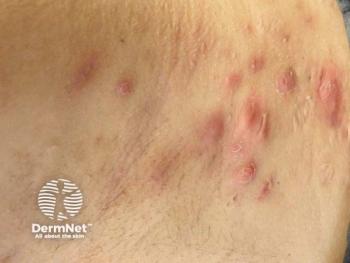
A qualitative study found that hidradenitis suppurativa (HS) significantly influences patients’ daily decisions, emotional health, relationships, and financial stability.

The final case described a young woman with clinically mild hidradenitis suppurativa (HS) but significant emotional and social distress, prompting some of the most passionate discussion across the 3 roundtables.
This case involved a young patient with mild to moderate hidradenitis suppurativa (HS) of the axillae, characterized by intermittent, limited lesions without tunneling or scarring. Although seemingly routine, it prompted deeper reflection.
The first case involved a middle-aged patient with severe, long-standing hidradenitis suppurativa (HS) marked by years of active disease with extensive sinus tracts, dense scarring, chronic drainage, frequent flares, constant pain, limited mobility, and a daily life centered around symptom management.
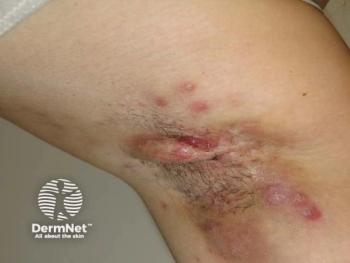
Modern hidradenitis suppurativa (HS) management prioritizes restoration of function and quality of life, not just reduction in lesion counts, according to Barry Resnik, MD.

UCB shares 3-year BIMZELX (bimekizumab) data in HS, showing sustained hidradenitis suppurativa lesion clearance and major severity reductions.

Explore the long-term efficacy of biologics for HS, highlighting bimekizumab's superior outcomes in managing this chronic condition.
Explore the nuanced experiences of drainage in hidradenitis suppurativa (HS), revealing its profound physical and psychological impacts on patients' lives.

Firas G. Hougeir, MD, and clinician attendees discussed how to use real-world patient scenarios to determine optimal timing for biologic initiation for patients with moderate to severe HS.

Topical roflumilast 0.3% cream shows promise in reducing lesions and symptoms of mild hidradenitis suppurativa (HS), offering a well-tolerated treatment option.

Explore the complexities of managing hidradenitis suppurativa (HS) through real-world case studies moderated by Afsaneh Alavi, MD.
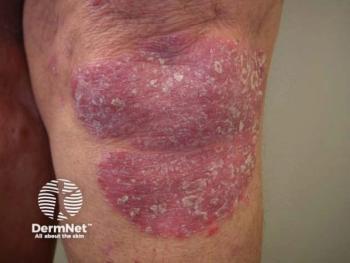
Oruka Therapeutics reveals promising interim results for ORKA-002 and launches the EVERLAST-B trial for ORKA-001, targeting chronic skin diseases.

Navigator Medicines advances NAV-240 and NAV-242, targeting dual inflammation pathways for hidradenitis suppurativa in upcoming clinical trials.

MoonLake Immunotherapeutics shares promising updates on sonelokimab's efficacy for hidradenitis suppurativa.

At the Dermatology Times Horizons in Advanced Practice meeting in Tampa, Florida, conference chair Lakshi Aldredge, MSN, ANP-BC, DCNP, focused a discussion on efficacy data for adalimumab, secukinumab, and bimekizumab.
Discover the latest advancements in hidradenitis suppurativa therapies, including promising biologics and oral treatments reshaping patient care in 2025.

At a recent Case-Based Roundtable event, Harrison Nguyen, MD, MBA, MPH, reviewed 2 HS patient cases and discussed the role of biologics.

Porter leads a dynamic roundtable on hidradenitis suppurativa, exploring innovative treatments and collaborative strategies for improved patient outcomes.

Put your dermatology expertise to the test with Dermatology Times’ interactive quiz series!
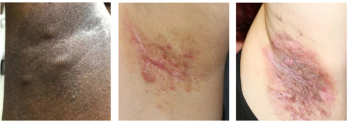
A new global study reveals hidradenitis suppurativa affects 1 in every 100 people, highlighting the need for increased awareness and improved health care strategies.

At a Dermatology Times Case-Based Roundtable event, Joe Gorelick, MSN, FNP-C, reviewed real-world strategies for hidradenitis suppurativa, highlighting growing preference for bimekizumab based on its dual IL-17A/IL-17F inhibition.
Navigator Medicines advances NAV-240, a promising bispecific antibody for HS, targeting dual pathways for enhanced treatment efficacy.

Participants agreed that HS is rarely controlled with monotherapy and often requires coordinated multimodal care.
Advertisement
Advertisement
Trending on Dermatology Times
1
The Value of Precision Medicine in Atopic Dermatitis and Skin Cancers
2
JAK Inhibitor Safety in Atopic Dermatitis: Long-Term Epidemiology Data
3
No Observed Skin Lesion Flares After Switching to Upadacitinib in Atopic Dermatitis
4
HS Treatment Selection and Comorbidity Screening: Practical Tips With Jennifer Hsiao, MD
5