Shannon Trotter, DO, moderated a Dermatology Times Case-Based Roundtable event on how pharmacokinetics, adverse event timing, and trial response criteria should shape hedgehog pathway inhibitor selection in advanced BCC.
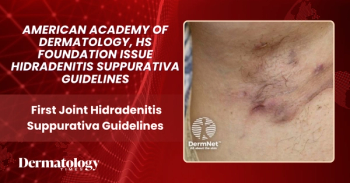
This case involved a young patient with mild to moderate hidradenitis suppurativa (HS) of the axillae, characterized by intermittent, limited lesions without tunneling or scarring. Although seemingly routine, it prompted deeper reflection.
Hidradenitis suppurativa (HS) occupies a unique and challenging space in dermatology. It is common enough that many clinicians encounter it regularly, yet complex enough that management can be varied across practices. The disease is medically challenging, often procedurally intensive, and associated with a significant psychosocial burden for patients, with care frequently shaped by insurance constraints. Importantly, HS is a disease in which timing can play a critical role in long-term outcomes.
Across 3 recent Dermatology Times Case-Based Roundtables—moderated by Martina Porter, MD; Joe Gorelick, MSN, FNP-C; and Steven Daveluy, MD—clinicians explored 3 cases of HS, each with their own complex needs. Though discussed in different locations and through different professional lenses, these cases revealed a consistent theme: Many patients with HS are escalated too late, treated too narrowly, and evaluated too superficially.
Rather than debating abstract guidelines, these roundtables centered on real patients whose disease trajectories reflect the consequences of delayed intervention, the risks of overreliance on antibiotics, and the disconnect that can exist between visible disease and lived experience. Together, the cases depicted how HS often unfolds in real life: early inflammation is underestimated, moderate disease is managed conservatively by nondermatology clinicians, and severe disease is often associated with permanent skin damage.
What emerged from these conversations was not a single preferred drug or protocol but a shared approach of how dermatology clinicians define severity, evaluate readiness for biologics, and incorporate patient-reported burden into decision-making.
This case involved a young patient with mild to moderate HS, primarily affecting the axillae. Lesions were intermittent, limited in number, and not yet associated with tunneling or scarring. The patient reported discomfort and frustration but remained functional. At first glance, this appeared to be a straightforward case—one that many clinicians manage routinely. Yet it was precisely this familiarity that prompted deeper reflection.
Porter used this case to emphasize the importance of patient-reported outcomes in HS management. “The bigger trials use that quality-of-life measure called HiSCR [Hidradenitis Suppurativa Clinical Response],” she said, highlighting how modern HS research increasingly prioritizes pain, function, and daily impact. “If a patient is reorganizing their life around flares, that’s already severe disease, regardless of lesion count,” Daveluy said.
Clinicians agreed that early HS can still be disruptive, particularly when flares are painful, unpredictable, or socially embarrassing. However, the group was careful to distinguish between thoughtful restraint and passive delay.
Initial management strategies focused on topical therapies, including clindamycin and topical corticosteroids. Procedural interventions, particularly laser hair removal and localized deroofing, were highlighted as effective tools for reducing inflammation early and preventing progression. Several attendees repeatedly cited pain, drainage, and flare frequency as early indicators of disease activity that may not yet be reflected in staging. As Daveluy stated, “Hurley staging tells you where the disease is, not where it’s going.”
The consensus was clear: Early HS should not be ignored, but it also should not be reflexively escalated to biologics without careful consideration. What matters most is trajectory. Gorelick left attendees with wise words: “HS outcomes improve when we stop treating what we see in the room and start treating what patients live with every day.”
One of the most pointed discussions centered on the common practice of cycling oral antibiotics in patients like this. Although antibiotics may reduce acute inflammation, attendees agreed that they rarely change a patient’s disease course. “Repeated antibiotics can make us feel like we’re doing something, but they rarely change the long-term story of HS,” Porter said.
Several clinicians admitted that, in retrospect, prolonged antibiotic use often served as a holding pattern—delaying escalation without preventing progression. This case underscored the importance of defining clear benchmarks for response and escalation rather than defaulting to repeated short-term fixes. Ultimately, this patient represented a critical window of opportunity: a chance to intervene early, prevent structural damage, and avoid the outcome seen in the first case.
Taken together, these cases illustrate a specialty in transition. Dermatologists are redefining what constitutes severity, lowering escalation thresholds, and placing greater emphasis on patient experience.
The lesson is clear: When inflammation is allowed to persist, the consequences are lasting. When clinicians listen closely, intervene earlier, and embrace multimodal care, the course of HS can change. These cases were not simply educational exercises; they were reminders that HS is a disease of cumulative damage—and that timing, empathy, and decisive action matter just as much as the therapies themselves.
8 months ago
Optimizing Biologic Therapy in HS: Part 38 months ago
Optimizing Biologic Therapy in HS: Part 1