

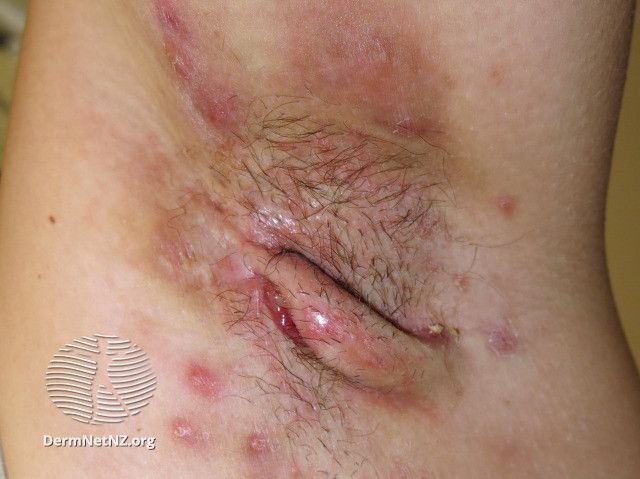
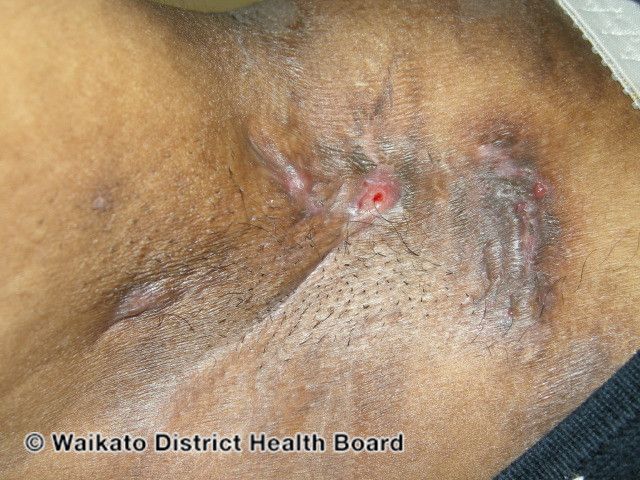
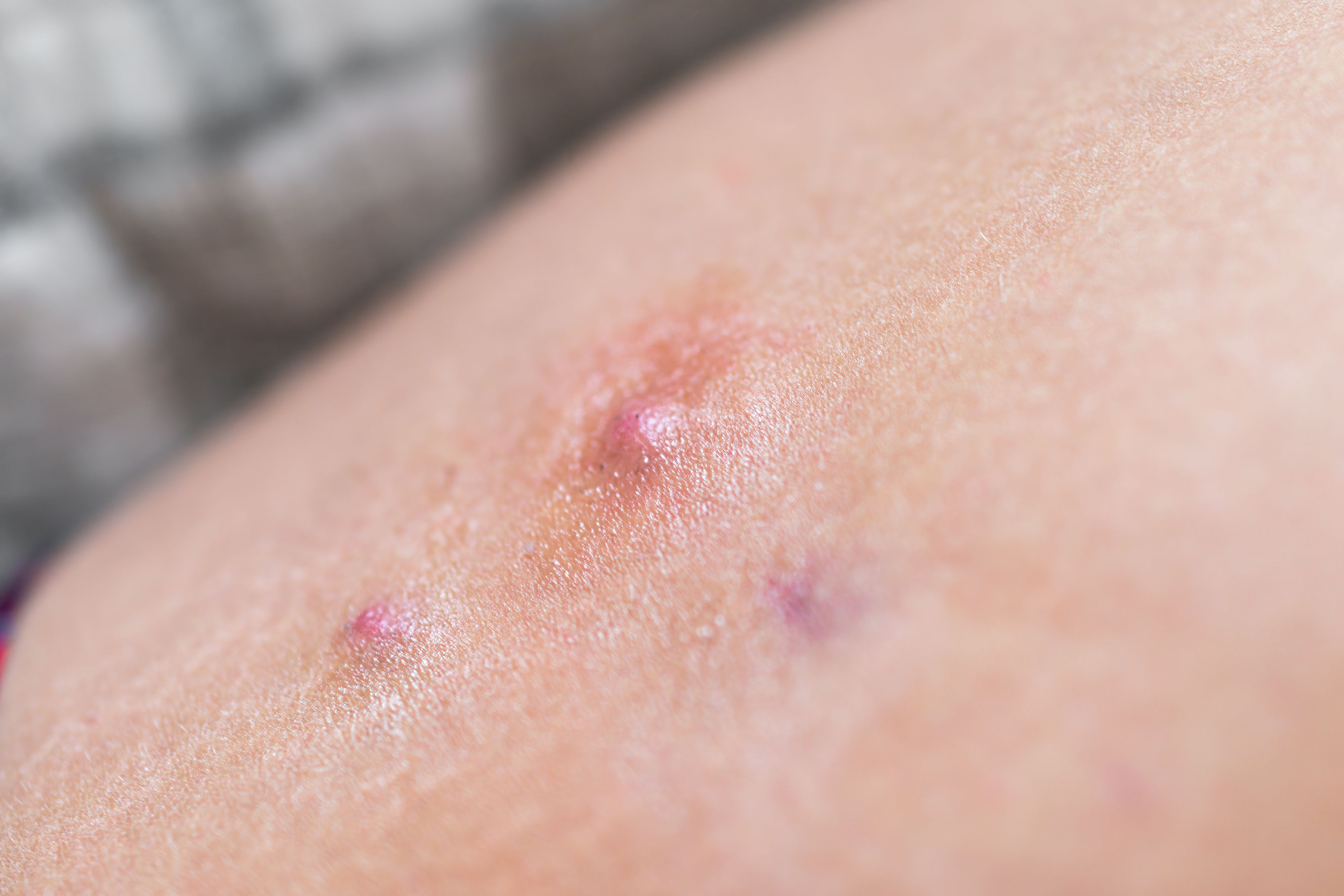
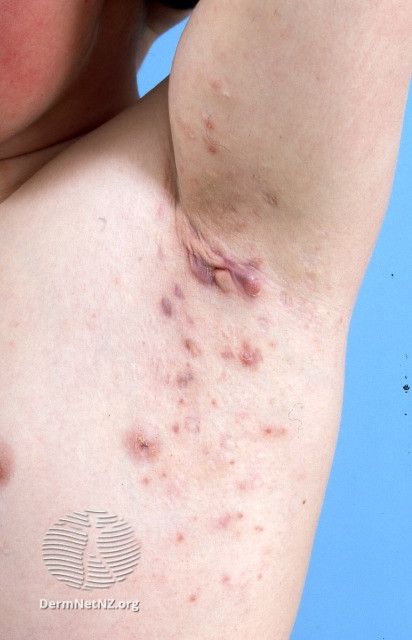
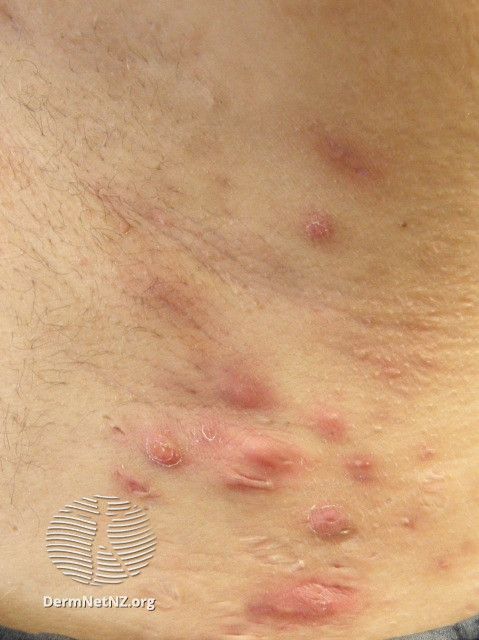

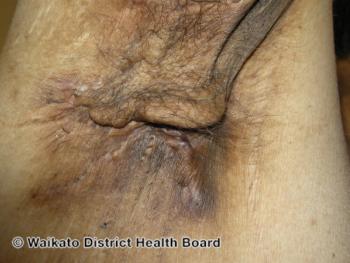
Female sex bias in hidradenitis suppurativa can be attributed to several contributing immunological factors.
Female sex bias in hidradenitis suppurativa can be attributed to several contributing immunological factors.

Genetic variants associated with hidradenitis suppurativa (HS) were identified, although a causal effect is not proven.
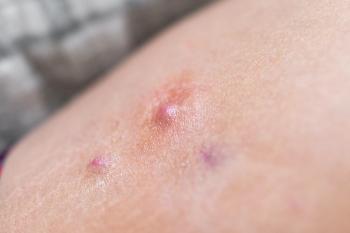
Studies showed the various treatments improved symptoms, but more trials need to be done.

Researchers have isolated 2 genes, SOX9 and KLF5, that play a role in the development of hidradenitis suppurativa.

An anonymous, online survey was conducted through HS support groups from June 2022 to July 2022.

Furthermore, a survey showed that more than half of providers do not discuss clothing modifications, and half report providing patients with wound care supplies that are covered by insurance.

AbbVie announced that treatment has begun in the first randomized, placebo-controlled, double-blind, multicenter study.

If approved, hidradenitis suppurativa would be the 4th indication for the drug within the European Union.

A study found that the costs associated with managing comorbidities of hidradenitis suppurativa increase among adults and adolescents.

Click here to answer this week's HS poll.

In a clinical trial, patients reported improved quality of life after 12 weeks on sonelokimab.

The OSIRIS open-label study resulted in a reduction of pain and improvement in quality of life for participants.
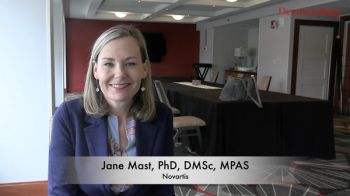
Jane Mast, PhD, DMSc, MPAS, discusses empathetic care in hidradenitis suppurativa and the importance of supporting patients with HS in every step of their journey with the condition.

Joslyn Kirby, MD, discusses the importance of awareness and recognition in hidradenitis suppurativa from a clinician and patient perspective.
With bimekizumab, the conservative imputation method led to higher response rates, achieved endpoints, and blocked IL-17A and IL-17F.

This Hidradenitis Suppurativa Awareness Week, the Dermatology Times® team is spotlighting the often misunderstood condition and providing clinicians with the latest information in treatment and research.

This week is Hidradenitis Suppurativa Awareness Week.
This week is Hidradenitis Suppurativa Awareness Week.
This week is Hidradenitis Suppurativa Awareness Week.
This week is Hidradenitis Suppurativa Awareness Week.
The approval makes the drug Europe’s first and only IL-17A inhibitor approved for the condition.
A recent study supports a degree of correlation between trough serum concentration of infliximab and clinical response to infliximab in patients with the condition.

A pair of phase 3 trials met all primary and secondary endpoints after 48 weeks.

Promising phase 2 data for LY3041658 released during the Late-breaking Research session at the 2023 annual meeting.

Expert insights on the latest issues in wounds as well as HS resources are shared at the annual meeting.