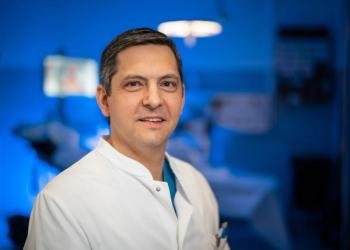
Falk G. Bechara, MD, discusses long-term tunnel control, structural damage, and the evolving role of biologics and surgery in HS care.
Kimball presented new data on MoonLake Immunotherapeutics’ sonelokimab and reflected on other HS updates presented at AAD 2026.
Alexa Kimball, MD, MPH, professor of dermatology at Harvard Medical School in Boston, Massachusetts, discussed recent advancements in hidradenitis suppurativa (HS) therapy, highlighting key findings from the
Patient-reported outcomes mirrored these clinical improvements, reinforcing that sustained treatment provides tangible benefits in quality of life. Kimball emphasized that short-term endpoints commonly used in trials—such as 12 to 16 weeks—do not capture the full impact of therapy for HS, highlighting the importance of ongoing data collection through open-label extensions and future 52-week results. These longitudinal data will help clarify sonelokimab’s role as a potential new option alongside the currently approved systemic therapies for HS.
“This is not a disease that we resolve in 14 or 16 or 12 weeks. So [it’s] great to see continued improvement on all of those measures over time,” Kimball said. “This looks like a very promising avenue to have another potential part in our armamentarium to deploy.”
Beyond targeted biologics, the discussion also touched on the evolving role of GLP-1 receptor agonists in patients with obesity or overweight, a frequent comorbidity in HS. Preliminary poster data Kimball observed at AAD suggested these agents may improve mobility, metabolic health, and overall patient satisfaction, although further research is needed to define their long-term impact and optimal clinical integration.
Kimball concluded that the HS field is rapidly advancing, with multiple promising avenues for improving both disease control and quality of life for patients. The data for sonelokimab, coupled with ongoing evaluation of GLP-1 receptor agonists, reflects a growing emphasis on individualized, long-term management strategies.
References
1. MoonLake announces week 40 results from its phase 3 clinical trials of sonelokimab in hidradenitis suppurativa at the 2026 AAD Annual Meeting. News release. MoonLake Immunotherapeutics. March 28, 2026. Accessed March 31, 2026.
2. Kimball A. Sonelokimab in moderate-to-severe HS: long-term results through week 40 of two phase 3 trials. Presented at: 2026 American Academy of Dermatology Annual Meeting; March 27-31, 2026; Denver, CO.