






Drug Watch
Latest News
Advertisement
Latest Videos






Shorts

0:35
How Denifanstat Will Change the Acne Treatment Landscape
7 months ago
by
Neal Bhatia, MD


Advertisement
More News
Phase 1 results show Bambusa Therapeutics’ BBT001 quickly reduces atopic dermatitis and itch, sustains type 2 biomarker suppression, and may enable quarterly dosing.

Sanofi will not submit the OX40-ligand antibody for regulatory review, citing efficacy and safety data insufficient to improve upon current standard-of-care treatments for moderate to severe AD.
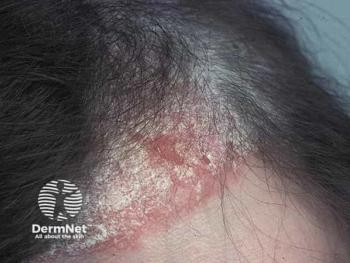
New phase 3 data presented at the AAD Innovation Academy show zasocitinib achieved high rates of clear or almost clear skin at the scalp, palms, soles, and nails at week 16.
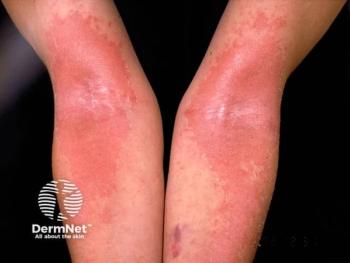
New phase 3 data show oral TYK2 inhibitor soficitinib improves moderate-to-severe atopic dermatitis, easing itch with no new safety signals.

Extended-release oral minoxidil candidate VDPHL01 improved hair counts and patient-reported outcomes in women with pattern hair loss in a phase 2 study.
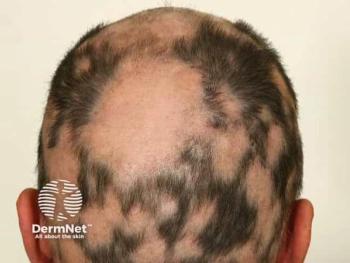
Q32 Bio reported bempikibart reduced SALT scores by 35.3% and produced a SALT-20 response in 40.0% of patients at week 36 in the SIGNAL-AA phase 2a trial.
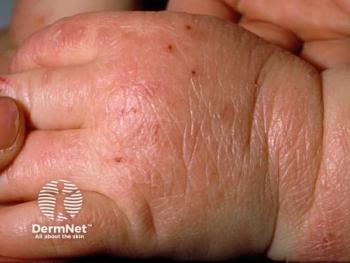
TRAPEDS-1 met its primary pharmacokinetic objective in children aged 6 to 11 years with moderate to severe atopic dermatitis, with no new safety signals over up to 172 weeks of tralokinumab treatment.

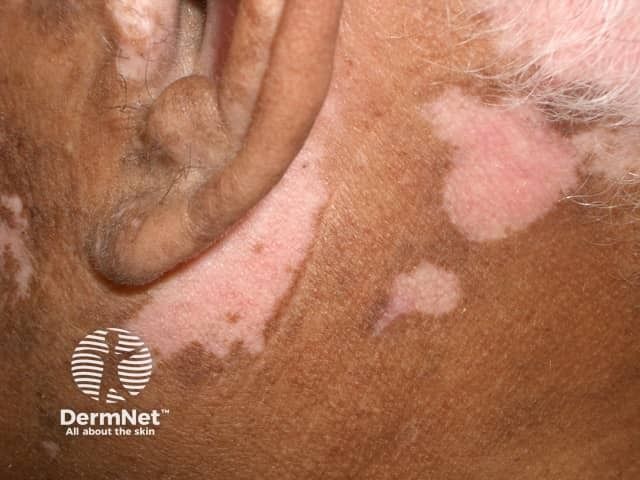
Forte Biosciences' FB102 shows significant facial repigmentation in a phase 1b vitiligo trial, with gains continuing 12 weeks post-treatment and mild adverse effects.
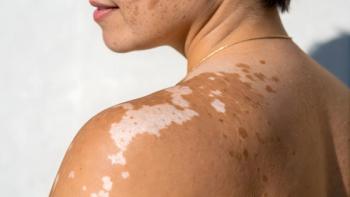
Lynk Pharmaceuticals has dosed the first patient in a phase 2 trial evaluating investigational topical pan-JAK inhibitor LNK01004 for vitiligo.

The FDA accepted Arcutis' supplemental NDA seeking to expand roflumilast cream 0.05% to infants aged 3 months to younger than 2 years with mild to moderate AD.

Teva Pharmaceuticals will advance TEV-'408 into phase 2b after encouraging phase 1b vitiligo data showed repigmentation, favorable safety, and quarterly dosing potential.
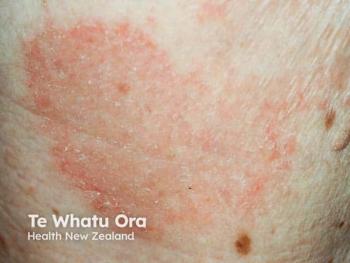
Turn Therapeutics finalized its stage 2 trial design after interim data showed clinically meaningful GX-03 efficacy in patients with baseline EASI scores as low as 1.1.
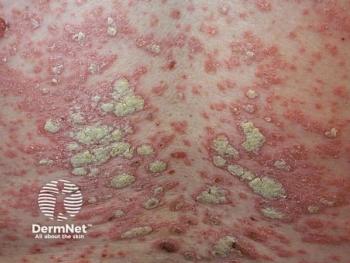
Can-Fite completed interim enrollment for its pivotal phase 3 trial of first-in-class oral A3AR agonist piclidenoson, a potential new mechanism for plaque psoriasis.
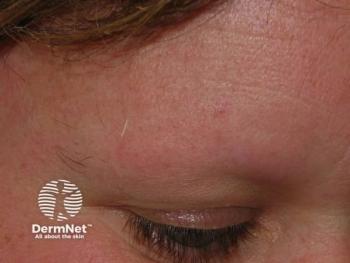
AbbVie's upadacitinib received a positive CHMP opinion for severe alopecia areata as FDA review continues in the US.

The approval expands the existing indication for adults and children down to age 6, includes intertriginous areas, and removes restrictions on duration of use.
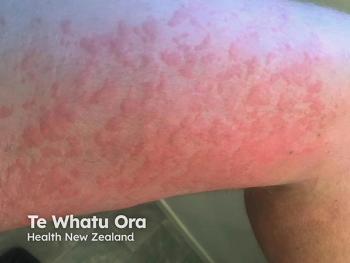
Evommune's EVO756 failed to meet the primary end point in a phase 2b trial for chronic spontaneous urticaria, prompting the company to discontinue development for the indication while continuing studies in atopic dermatitis.
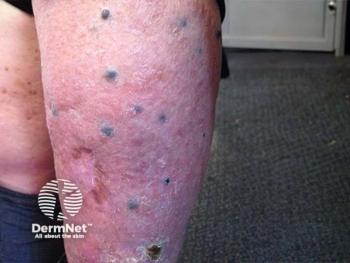
The FDA has accepted Replimune's third resubmitted BLA for RP1 plus nivolumab in advanced melanoma, setting an August 2 PDUFA date.
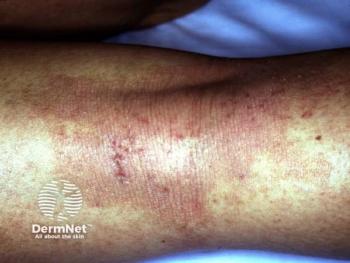
Kymera Therapeutics finished enrollment in its phase 2b BROADEN2 trial of KT-621 nearly six months early, moving up topline AD data to year-end 2026.
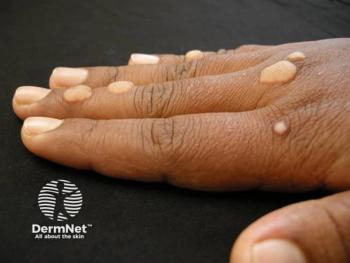
Verrica Pharmaceuticals and Japanese partner Torii Pharmaceutical have each dosed a first patient in COVE-3, the second pivotal phase 3 trial testing Ycanth for common warts.
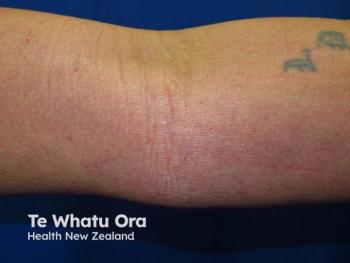
Derm-Biome Pharmaceuticals reported positive preclinical results for DB-006, a small molecule reducing itch, inflammation, and IgE levels in a model of atopic dermatitis.

Dissolvable microneedles deliver doxorubicin to basal cell lesions, showing promising phase 2 clearance and opening hope for Gorlin syndrome patients.
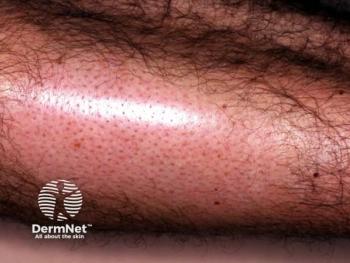
HCW9302 selectively expands Treg cells to suppress autoreactive follicular inflammation without broad immunosuppression.

As Darrell Rigel, MD, MS, notes, bemotrizinol will deliver photostable broad-spectrum UVA/UVB protection with better cosmetic feel, low absorption, and pave the way for more advanced US sunscreens.
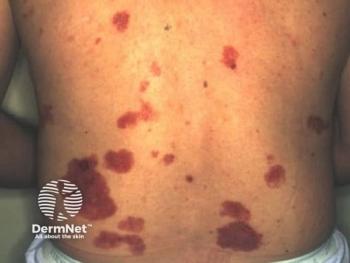
SkinJect demonstrated 64% clinical clearance and 55% complete histological response in a phase 2 study of nodular BCC patients.

Every week, we cut through the noise to bring clinicians the trial results, approvals, and emerging therapies that are actually moving the needle.
Advertisement
Advertisement
Trending on Dermatology Times
1
FDA Grants Fast Track Designation to QRX003 for Peeling Skin Syndrome
2
Barzolvolimab Achieves All Phase 3 End Points in Chronic Spontaneous Urticaria
3
Alopecia Awareness Month: Supporting Patients Beyond the Treatment Plan
4
Don't Be Rash: Building the Pediatric Psoriasis Treatment Ladder
5