




Drug Watch
Latest News
Advertisement
Latest Videos









CME Content




Advertisement
More News

The approval expands the existing indication for adults and children down to age 6, includes intertriginous areas, and removes restrictions on duration of use.

Philip Mease, MD, discusses the FDA's label expansion for guselkumab's inhibition of structural joint damage in psoriatic arthritis.
Evommune's EVO756 failed to meet the primary end point in a phase 2b trial for chronic spontaneous urticaria, prompting the company to discontinue development for the indication while continuing studies in atopic dermatitis.
The FDA has accepted Replimune's third resubmitted BLA for RP1 plus nivolumab in advanced melanoma, setting an August 2 PDUFA date.
Kymera Therapeutics finished enrollment in its phase 2b BROADEN2 trial of KT-621 nearly six months early, moving up topline AD data to year-end 2026.
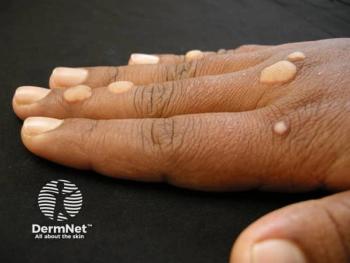
Verrica Pharmaceuticals and Japanese partner Torii Pharmaceutical have each dosed a first patient in COVE-3, the second pivotal phase 3 trial testing Ycanth for common warts.
Derm-Biome Pharmaceuticals reported positive preclinical results for DB-006, a small molecule reducing itch, inflammation, and IgE levels in a model of atopic dermatitis.

Microneedle SkinJect patch aims to clear basal cell carcinoma without surgery, showing phase 2 promise and expanding to Gorlin syndrome trials.
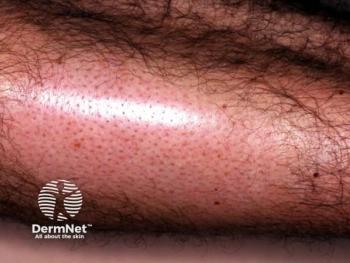
HCW9302 selectively expands Treg cells to suppress autoreactive follicular inflammation without broad immunosuppression.
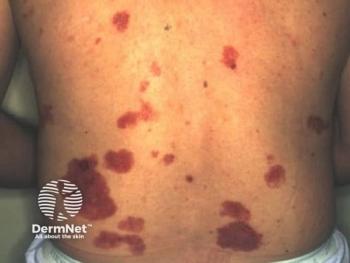
SkinJect demonstrated 64% clinical clearance and 55% complete histological response in a phase 2 study of nodular BCC patients.

Every week, we cut through the noise to bring clinicians the trial results, approvals, and emerging therapies that are actually moving the needle.
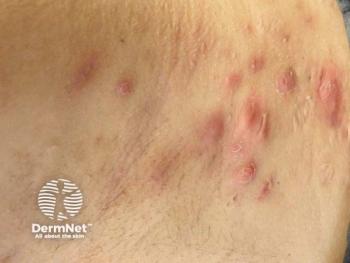
A phase 2 clinical trial found that topical ruxolitinib cream showed promising efficacy and safety in patients with mild to moderate hidradenitis suppurativa.

More than 35% of zasocitinib-treated patients reached complete skin clearance at week 16, with treatment curve separation emerging as early as week 8.
The FDA finalized the addition of bemotrizinol to the OTC sunscreen monograph, approving the broad-spectrum UV filter for use at concentrations up to 6% in adults and children 6 months or older.
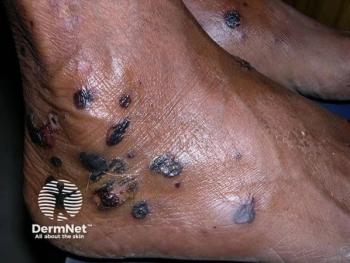
The priority review pathway cuts the standard 300-day Canadian review timeline to approximately 180 days, reflecting Health Canada's assessment of serious unmet need in the EB population.
Every week, we cut through the noise to bring clinicians the trial results, approvals, and emerging therapies that are actually moving the needle.
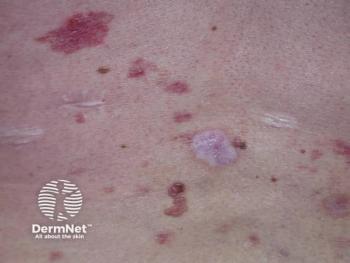
Medicus Pharma advances microneedle doxorubicin therapy to clear multiple Gorlin syndrome BCC lesions.

New IND pushes QRX003 toward first targeted therapy for peeling skin syndrome, with early pediatric results showing rapid healing and no safety issues.
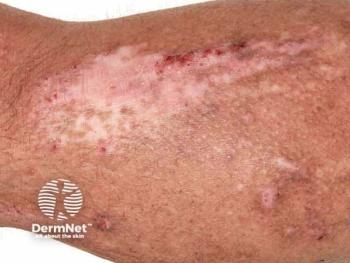
Unlike approved AD biologics and JAK inhibitors targeting specific cytokine pathways, GX-03 is designed to modulate inflammatory signaling locally within the skin microenvironment.
Every week, we cut through the noise to bring clinicians the trial results, approvals, and emerging therapies that are actually moving the needle.
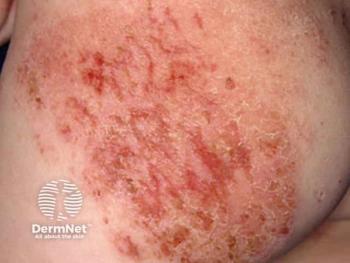
Apogee plans to initiate 3 phase 3 trials of zumilokibart in moderate to severe atopic dermatitis—ADventure 1, ADventure 2, and ADventure TCS—in the second half of 2026.
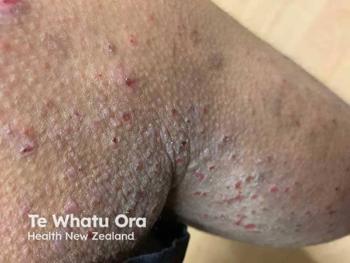
Among more than 1700 patients enrolled in the long-term extension study, the majority transitioned from a moderate to severe AD phenotype at baseline to a mild phenotype within 12 weeks, with that shift maintained through 2 years.

The fixed-dose adapalene 0.1% and benzoyl peroxide 2.5% topical OTC gel broadens nonprescription access to a combination topical regimen that has been used as a prescription product for more than 15 years.
Phase 3 data presented at AAD 2026 showed that amlitelimab significantly improved skin clearance and disease severity in patients aged 12 years and older with moderate to severe atopic dermatitis.
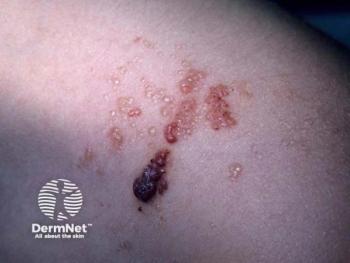
Phase 3 SELVA and phase 2 TOIVA data show Qtorin rapamycin met primary end points for microcystic lymphatic and cutaneous venous malformations.
Advertisement
Advertisement
Trending on Dermatology Times
1
The Value of Precision Medicine in Atopic Dermatitis and Skin Cancers
2
JAK Inhibitor Safety in Atopic Dermatitis: Long-Term Epidemiology Data
3
No Observed Skin Lesion Flares After Switching to Upadacitinib in Atopic Dermatitis
4
Day 2 Recap: Fall Clinical 2026
5