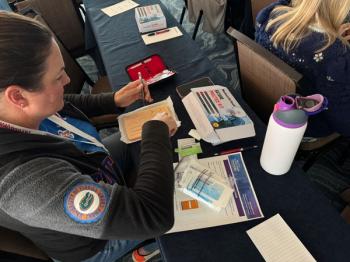
Faculty from the Cutaneous Oncology Workshop answer practical questions spanning skin cancer prevention, diagnosis, treatment, and follow-up.
The FDA cited concerns about patient population heterogeneity and confirmatory trial design.
Replimune Group announced that it has scheduled a Type A meeting with the FDA to discuss the recent Complete Response Letter (CRL) issued for its Biologics License Application (BLA) for RP1 (vusolimogeneoderparepvec) in combination with nivolumab for advanced melanoma.1
The CRL, received in July 2025, represents a setback for the company’s efforts to bring its lead oncolytic immunotherapy candidate to patients with advanced melanoma who have progressed after prior checkpoint inhibitor therapy—a population with limited effective treatment options.2
Background
Replimune originally submitted the BLA based on clinical findings from the IGNYTE trial, which investigated RP1 in combination with nivolumab. RP1 is a genetically engineered herpes simplex virus designed to selectively kill tumor cells, enhance the immunogenicity of tumor cell death, and stimulate a systemic anti-tumor immune response. When paired with the PD-1 inhibitor nivolumab, the investigational therapy aimed to provide a treatment option for patients whose disease progressed following PD-1 blockade.2
The FDA had accepted the BLA under Priority Review in January 2025 and granted Breakthrough Therapy designation, indicating that the treatment showed preliminary evidence of potential benefit over existing therapies. At the time, the agency did not convene an advisory committee meeting or highlight significant review concerns.3
Issues Highlighted in the CRL
In its letter, the FDA stated that the IGNYTE trial did not constitute an “adequate and well-controlled” study sufficient to demonstrate substantial evidence of effectiveness. Concerns centered on the heterogeneity of the patient population, which complicated interpretation of clinical outcomes.2
The agency also raised questions regarding the design of the confirmatory phase 3 study, IGNYTE-3. Specifically, the FDA noted challenges in distinguishing the contribution of each treatment component—RP1 and nivolumab—to the observed clinical benefit. Importantly, the CRL did not identify any new safety concerns.
Company Response and Next Steps
Replimune reported that it has submitted a briefing book to the FDA addressing the issues raised in the CRL. This document includes additional analyses of the BLA data, responses to trial design feedback, and arguments supporting previously agreed-upon definitions of PD-1 resistance and patient population criteria.
“We are eager to engage in a productive discussion with the FDA to reach a swift resolution for the accelerated approval of RP1 in advanced melanoma,” said Sushil Patel, PhD, CEO of Replimune, in a news release. “The melanoma community, including leading physicians and patient advocacy groups have emphasized the urgent need for access to RP1 based on the strength of the data and limited effective treatment options for this population. We remain steadfastly committed to patient access while we work with the FDA to secure regulatory approval for RP1, however, without accelerated approval based on the current application, continuation of the RP1 program in advanced melanoma, including the phase 3 confirmatory trial, will not be viable.”
FDA Transparency
The decision comes amid a larger FDA initiative to increase transparency in drug approval. Earlier this year, the agency released more than 200 previously confidential CRLs issued between 2020 and 2024, aiming to highlight common deficiencies in submissions and improve predictability in regulatory decision-making.4
FDA Commissioner Marty Makary, MD, MPH, stated that the initiative was intended to reduce uncertainty for drug developers and accelerate access to therapies by providing clearer insight into the approval process. Historically, most companies have disclosed only limited details about FDA feedback, leaving clinicians and stakeholders with incomplete information.
Conclusion
The absence of safety concerns provides some reassurance regarding RP1’s risk profile, but the questions around efficacy and trial design represent key hurdles for Replimune. The upcoming Type A meeting will play a decisive role in determining whether the company can resolve the FDA’s concerns and re-establish a regulatory pathway for RP1 in advanced melanoma.
As the oncology and dermatology communities await the outcome, the case underscores the challenges of developing novel immuno-oncology therapies and the increasing regulatory emphasis on rigorous, well-controlled evidence of efficacy.
References