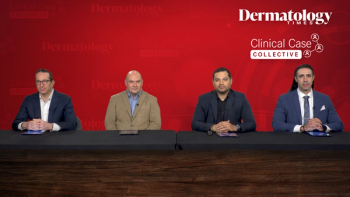
The panel introduces Case 3—a patient with established CSU, co-existing dermatographia, and incomplete prior treatment records—and discusses how to confirm the diagnosis and prepare for advanced therapy.

Adam Friedman, MD, FAAD is Professor and Chair of Dermatology and serves as Residency Program Director, Director of Translational Research, and Director of the Supportive Oncodermatology Program in the Department of Dermatology at The George Washington University School of Medicine & Health Sciences. Dr. Friedman completed his undergraduate training at the University of Pennsylvania and graduated with Distinction in Dermatologic Research at the Albert Einstein College of Medicine in New York. He completed his internship at New York Hospital Queens, and returned to Einstein for his Dermatology residency and was appointed Chief Resident during his final year. Dr. Friedman joined the Einstein faculty after graduation from 2010-2015, during which time he was the Director of Dermatologic Research, Director of the Translational Research Fellowship, and the Associate Program Director.
The panel introduces Case 3—a patient with established CSU, co-existing dermatographia, and incomplete prior treatment records—and discusses how to confirm the diagnosis and prepare for advanced therapy.
The panel discusses how to navigate treatment selection when patients have preferences and how to compare the available advanced therapies.
The panel provides a detailed breakdown of how a BTK inhibitor works in CSU and reviews key findings from the pivotal clinical trials
The panel explores how to assess the full impact of CSU when the skin looks normal, and how to approach the transition to advanced targeted therapy.
The panel introduces Case 2—a more severe patient with daily CSU, recurrent angioedema, throat tightness, and prior emergency department visits.
The panel addresses the role of allergy and immunology in CSU care and argues for a collaborative, access-focused approach between specialties.
The panel turns to treatment strategy—discussing appropriate antihistamine use, dose escalation, and when to move to advanced therapies.
The panel explores how to differentiate CSU from chronic inducible urticaria and acute urticaria, including the potential for overlap between subtypes.
The panel examines how to distinguish CSU from other urticaria subtypes, how to approach angioedema, and how limited—or expansive—the diagnostic workup should be.
The panel reviews the first patient case—a 38-year-old woman with recurrent hives and intermittent swelling—highlighting the key clinical criteria that clinch a CSU diagnosis.
The panel reflects on dermatology's evolving role in CSU, from limited options and reluctance to a new era of empowered, effective disease management.
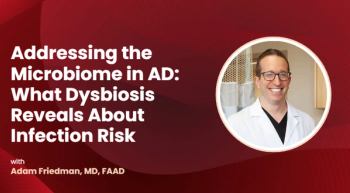
Adam Friedman, MD, discusses dysbiosis and immune dysfunction in atopic dermatitis and the impact on bacterial and viral infections.
Drawing parallels to diabetes and hypertension, Adam Friedman, MD, invokes the dangerous side effect of doing nothing in reframing treatment strategies.
Adam Friedman, MD, maps the AD comorbidity spectrum, from T2-driven diseases to sleep-related indirect consequences, and discusses clinical implications.

In a patient with longstanding Hailey-Hailey disease, lebrikizumab was associated with rapid improvement in symptoms and quality of life.
Only 15–20% of eligible patients currently receive systemic psoriasis treatment, and specialists believe icotrokinra's simplicity could meaningfully move that needle.
Experts discuss effective strategies for managing atopic dermatitis, emphasizing the importance of treatment adherence and quality of life improvements.
Explore effective management strategies for pediatric atopic dermatitis, focusing on treatment options and patient experiences for optimal care.
Parents of children with chronic skin conditions seek guidance on managing flares and long-term treatment strategies for better outcomes.
Experts discuss effective eczema management for young children, emphasizing treatment options, parental education, and the importance of long-term care strategies.
A pediatric case highlights the challenges of managing severe atopic dermatitis in infants, emphasizing the need for effective treatment strategies.
An 18-month-old with severe atopic dermatitis experiences rapid flare-ups, prompting a discussion on treatment options and potential triggers.
Explore effective management strategies for atopic dermatitis in children, focusing on non-steroidal options and addressing parental concerns.
Healthcare professionals discuss effective educational strategies for managing chronic skin conditions, emphasizing proactive treatment and patient understanding.
Healthcare professionals discuss effective educational strategies for managing chronic skin conditions, emphasizing proactive treatment and patient understanding.
Explore the innovative role of PDE4 inhibitors in treating atopic dermatitis, highlighting breakthroughs in topical therapies and their efficacy.
Explore the innovative role of PDE4 inhibitors in treating atopic dermatitis, highlighting breakthroughs in topical applications and their efficacy.
Healthcare professionals discuss the balance of safety and effectiveness in prescribing topical steroids and non-steroidal treatments for pediatric patients.
Explore the evolving landscape of pediatric atopic dermatitis treatment, focusing on innovative therapies and strategies to break the steroid cycle.
Experts explore innovative treatments for pediatric atopic dermatitis, emphasizing non-steroidal options and early intervention for better long-term management.