


News|Videos|October 3, 2026
Looking Beyond the Skin in Psoriasis Treatment Selection
Adam Friedman, MD, discusses PsA screening, comorbidities, early systemic intervention, and individualized oral therapy selection in psoriasis.
Advertisement

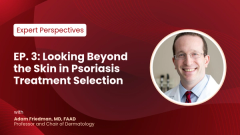
In this Expert Perspectives video, Adam Friedman, MD, discusses screening for psoriatic arthritis and other comorbidities, the potential impact of earlier systemic treatment, and considerations when selecting oral therapies for psoriasis.
Psoriasis extends beyond the skin, making recognition of associated joint disease and other comorbidities an important part of treatment selection. In this Dermatology Times Expert Perspectives video, Adam Friedman, MD, professor and chair of dermatology at the George Washington University School of Medicine and Health Sciences in Washington, DC, discusses practical strategies for identifying comorbid disease and individualizing systemic therapy.
Screening Beyond the Skin
Friedman emphasized the importance of screening patients with psoriasis for early signs of psoriatic arthritis (PsA), particularly because intervention before significant joint damage occurs may improve long-term outcomes. In his practice, screening includes questions about prolonged stiffness at rest, previous arthritis diagnoses, unexplained swelling of the fingers or toes, heel pain, and nighttime lower back pain.
Certain psoriasis presentations may also signal an increased risk of PsA, making examination of the nails and assessment of scalp and inverse psoriasis particularly relevant. Friedman noted that incorporating simple screening questions into the clinical workflow can make this evaluation more efficient.
Screening for gastrointestinal disease can be more challenging because symptoms such as nausea, vomiting, diarrhea, and weight loss are nonspecific. Friedman highlighted the need for improved guidance to help dermatologists recognize patients who may have concomitant inflammatory bowel disease or other gastrointestinal conditions.
Considering the Whole Patient When Selecting Therapy
For patients who prefer oral treatment, Friedman stressed that efficacy is only one part of treatment selection. Clinicians should also consider monitoring requirements, tolerability, and how adverse effects may influence a patient's willingness or ability to remain on therapy.
These practical considerations can ultimately affect adherence and long-term disease control. As newer targeted oral therapies become available, Friedman noted that clinicians may increasingly be able to consider patient preference for oral vs injectable administration without automatically accepting a substantial trade-off in efficacy.
Can Earlier Intervention Alter Disease Trajectory?
Friedman described one of the major questions in chronic inflammatory disease as whether earlier intervention can alter its trajectory. Although clinicians cannot reliably predict which comorbidities an individual patient will develop, he emphasized that moderate to severe psoriasis is associated with a broader systemic inflammatory burden.
Rather than waiting for complications to emerge, Friedman supports appropriately treating systemic inflammation earlier in the disease course. He also emphasized the distinction between association and causation when discussing psoriasis and its comorbidities with patients.
Family Planning and Vaccination
Treatment selection also requires consideration of circumstances that may change over time, including pregnancy planning and vaccination. Friedman noted that limited pregnancy data for newer therapies can complicate counseling and highlighted the importance of pregnancy registries in building evidence to inform future practice.
For patients who require live vaccines, factors including a medication's half-life, time to elimination, and ability to recapture response after treatment interruption may influence therapeutic decisions. Oral therapies with relatively rapid onset and offset may offer additional flexibility in some of these situations.
Expanding Choice in Systemic Psoriasis Care
Historically, oral therapies have sometimes been viewed as a step toward injectable biologic treatment, particularly when efficacy expectations differed between the 2 approaches. Friedman described this distinction as increasingly less clear as the efficacy of targeted oral therapies improves.
For clinicians, this evolving landscape creates an opportunity to incorporate patient preference more fully into treatment selection. The goal, Friedman emphasized, is to identify an effective systemic therapy while also choosing a treatment approach that patients can realistically and comfortably maintain.
References:
- Urruticoechea-Arana A, Benavent D, León F, et al. Psoriatic arthritis screening: A systematic literature review and experts’ recommendations. PLoS One. 2021;16(3):e0248571. doi:10.1371/journal.pone.0248571.
PubMed - Belinchón I, Salgado-Boquete L, López-Ferrer A, et al. Dermatologists’ role in the early diagnosis of psoriatic arthritis: Expert recommendations. Actas Dermosifiliogr (Engl Ed). 2020;111(10):835-846. doi:10.1016/j.adengl.2020.10.025.
ScienceDirect - Mease PJ, et al. Deucravacitinib in active psoriatic arthritis: Efficacy and safety up to 52 weeks from the randomized, double-blind, phase 3 POETYK PsA-2 trial. Arthritis Rheumatol. Published online July 20, 2026. doi:10.1002/art.70280.
PubMed - Nast A, Smith C, Spuls PI, et al. EuroGuiDerm guideline on the systemic treatment of psoriasis vulgaris—Part 2: Specific clinical and comorbid situations. J Eur Acad Dermatol Venereol. 2021;35(2):281-317. doi:10.1111/jdv.16926.
DOI - Chat VS, Uppal SK, Kearns DG, et al. Vaccination recommendations for adults receiving biologics and oral therapies for psoriasis and psoriatic arthritis: Delphi consensus from the Medical Board of the National Psoriasis Foundation. J Am Acad Dermatol. 2024. doi:10.1016/j.jaad.2023.12.070.
Advertisement
Related to this article

Day 3 of EADV 2026 featured long-term psoriasis data, advances in hidradenitis suppurativa, evolving approaches to atopic dermatitis, and late-breaking research.

Seven presentations will highlight phase 3 maintenance and induction findings, 3-year phase 2 data, and preclinical research evaluating obefazimod in ulcerative colitis.
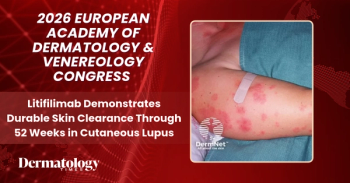
Updated phase 2 results from the AMETHYST study showed continued improvements in skin disease activity through 52 weeks, with more than one-quarter of patients achieving clear or almost clear skin.
Christophe Piketty, MD, PhD, discussed 3-year findings from the ARCADIA long-term extension study and the implications of targeting IL-31 in atopic dermatitis.
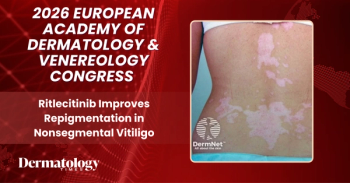
In TRANQUILLO 2, 21.86% of patients taking ritlecitinib 100 mg achieved F-VASI75 at week 52 vs 2.40% with placebo, according to data presented at EADV 2026.

At 2 years, 70% of patients on oral icotrokinra for scalp, genital, or hand/foot psoriasis had clear or almost clear skin, with no new safety signals.

Phase 3 LATITUDE Atlas data presented at EADV 2026 showed higher rates of complete and near-complete skin clearance with zasocitinib compared with deucravacitinib.

Day 2 of EADV 2026 highlighted new findings involving GLP-1–associated nail changes, long-term atopic dermatitis control, emerging therapies, alopecia, and hidradenitis suppurativa.
Advertisement
Advertisement
Trending on Dermatology Times
1
EADV 2026 Day 2: Long-Term AD Data, GLP-1 Nail Findings, and Emerging Treatments Take Center Stage
2
Icotrokinra Sustains Skin Clearance at High-Impact Psoriasis Sites Through 2 Years
3
Nearly 95% of Viral Korean Skincare TikTok Videos Contain Misleading Claims
4
Litifilimab Demonstrates Durable Skin Clearance Through 52 Weeks in Cutaneous Lupus
5