


News|Videos|October 2, 2026
EP. 2: Treatment Durability and Early Intervention in Psoriasis
Author(s)James Song, MD, FAAD
James Song, MD, discusses treatment durability, early intervention, and interpreting long-term clinical trial data in psoriasis.
Advertisement
Episodes in this series

In this Expert Perspectives video, James Song, MD, discusses treatment durability in psoriasis, the potential impact of early systemic intervention, and how clinicians can interpret emerging long-term efficacy data.
Although modern psoriasis therapies can achieve high levels of skin clearance, clinical resolution does not necessarily mean that the underlying immunologic drivers of disease have disappeared. In this Dermatology Times Expert Perspectives video, James Song, MD, director of clinical research and chief medical officer at Frontier Dermatology, discusses the evolving understanding of disease persistence and what emerging data may mean for long-term treatment strategies.
Understanding Disease Persistence
Song highlighted the potential role of CD8-positive tissue-resident memory T cells, which can remain in previously affected skin even after plaques have clinically resolved. These persistent immune cells may help explain why psoriasis often recurs in the same locations after treatment is discontinued.
Emerging research is examining whether reducing these cells could contribute to more durable responses, including prolonged skin clearance after therapy is stopped. Song noted that IL-23–targeted therapies have demonstrated particularly durable off-treatment responses, potentially reflecting the role of the IL-23 pathway in tissue-resident memory T-cell biology.
Could Earlier Treatment Change the Disease Course?
Another emerging question is whether treating psoriasis earlier could improve not only the magnitude of response but also its durability. Song discussed studies suggesting that patients treated relatively soon after disease onset may be more likely to achieve high levels of clearance and maintain responses after treatment withdrawal.
Data have also suggested that certain patients who achieve particularly strong responses may be able to receive therapy less frequently while maintaining disease control. Although additional research is needed, these findings raise the possibility that disease duration could eventually become an important consideration when developing long-term treatment strategies.
Evaluating Long-Term Treatment Durability
As longer-term data become available for biologics and oral therapies, Song emphasized the importance of understanding how durability is defined and measured. Maintenance-of-response analyses, for example, evaluate patients who initially responded to treatment and may therefore produce different efficacy estimates than analyses that include the broader study population.
Patient retention, reasons for discontinuation, and methods for handling missing data can also substantially influence reported long-term outcomes. These factors should be considered when clinicians interpret extension studies or attempt to compare findings across different clinical trials.
Bridging Clinical Trials and Real-World Practice
Long-term extension studies provide important information about sustained efficacy and, particularly, whether new safety signals emerge with prolonged exposure. However, Song noted that patients who respond well to treatment may be more likely to remain enrolled, creating an increasingly enriched study population over time.
Real-world evidence may therefore provide an important complement to clinical trial findings. Examining treatment performance among patients with more varied comorbidities, concomitant medications, and adherence patterns may help clinicians better understand how long-term efficacy and safety translate into everyday dermatology practice.
Ultimately, Song emphasized the importance of understanding both the strengths and limitations of long-term clinical trial data so clinicians can determine how those findings apply to the individual patient in front of them.
References
- Schäkel K, Asadullah K, Pinter A, et al. Early disease intervention with guselkumab in psoriasis leads to a higher rate of stable complete skin clearance (“clinical super response”): Week 28 results from the ongoing phase IIIb randomized, double-blind, parallel-group GUIDE study. J Eur Acad Dermatol Venereol. 2023;37(10):2016-2027. doi:10.1111/jdv.19236.
PubMed - Eyerich K, Weisenseel P, Pinter A, et al. Noninferiority of 16-week vs 8-week guselkumab dosing in super responders for maintaining control of psoriasis: The GUIDE randomized clinical trial. JAMA Dermatol. 2024;160(9):953-963. doi:10.1001/jamadermatol.2024.2463.
JAMA Network - Blauvelt A, Lebwohl MG, Mabuchi T, et al. Efficacy and safety of ixekizumab through 5 years in moderate-to-severe psoriasis: Long-term results from the UNCOVER-1 and UNCOVER-2 phase 3 randomized controlled trials. Dermatol Ther (Heidelb). 2020;10(3):431-447.
PMC - Papp KA, Puig L, Schäkel K, et al. Comparative effectiveness and durability of biologics in clinical practice: Month 12 outcomes from the international, observational Psoriasis Study of Health Outcomes (PSoHO). Adv Ther. 2024.
Advertisement
Related to this article
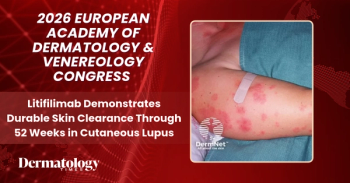
Updated phase 2 results from the AMETHYST study showed continued improvements in skin disease activity through 52 weeks, with more than one-quarter of patients achieving clear or almost clear skin.
Christophe Piketty, MD, PhD, discussed 3-year findings from the ARCADIA long-term extension study and the implications of targeting IL-31 in atopic dermatitis.
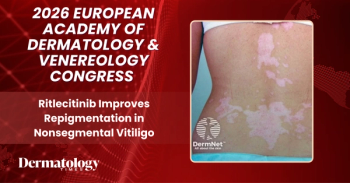
In TRANQUILLO 2, 21.86% of patients taking ritlecitinib 100 mg achieved F-VASI75 at week 52 vs 2.40% with placebo, according to data presented at EADV 2026.
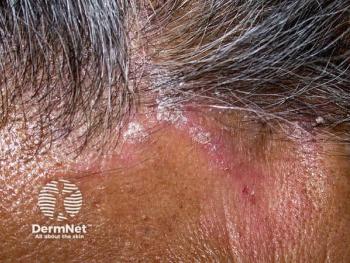
At 2 years, 70% of patients on oral icotrokinra for scalp, genital, or hand/foot psoriasis had clear or almost clear skin, with no new safety signals.

Phase 3 LATITUDE Atlas data presented at EADV 2026 showed higher rates of complete and near-complete skin clearance with zasocitinib compared with deucravacitinib.

Day 2 of EADV 2026 highlighted new findings involving GLP-1–associated nail changes, long-term atopic dermatitis control, emerging therapies, alopecia, and hidradenitis suppurativa.
According to data presented at EADV, at week 16 of the phase 2 study, 47.8% to 62.5% of adults receiving tilrekimig achieved EASI 75 across doses, compared with 9.1% to 19.9% with placebo.

AbbVie reports F-VASI 75 of 55.1% in Viti-Up-1 and 47.4% in Viti-Up-2 at week 76 among patients continuing upadacitinib, with numerically higher responses alongside NB-UVB.
Advertisement
Advertisement
Trending on Dermatology Times
1
EADV 2026 Day 2: Long-Term AD Data, GLP-1 Nail Findings, and Emerging Treatments Take Center Stage
2
EADV 2026 Day 1: Late-Breaking Data, Emerging Therapies, and New Directions in Dermatology
3
Tilrekimig Phase 2 Data Show EASI 75 Gains in Atopic Dermatitis
4
Nearly 95% of Viral Korean Skincare TikTok Videos Contain Misleading Claims
5