Alexandra Charrow, MD, discussed biologic selection, deroofing, and emerging procedural approaches to hidradenitis suppurativa at Maui Derm NP+PA Fall 2026.
Adam Friedman, MD, discusses dysbiosis and immune dysfunction in atopic dermatitis and the impact on bacterial and viral infections.
Infection is among the most clinically consequential and underappreciated comorbidities in
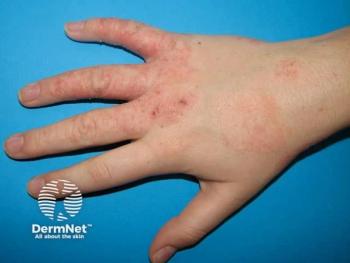
Friedman, professor and chair of dermatology at the George Washington University School of Medicine and Health Sciences, described the skin of AD patients as uniquely hospitable to pathogens. "There is something really unique with atopic dermatitis, where it's a love-hate relationship between pathogens and atopic dermatitis skin," he said in an interview with Dermatology Times.
The pH Problem: How AD Disrupts the Microbiome
Understanding the difference between healthy skin and atopic skin is important, Friedman explained. Healthy skin maintains an acidic pH that supports a diverse community of microorganisms of roughly 500 or more species. "In AD, at baseline, it's a basic pH, which messes with that diversity, but also fosters an environment that's great for staph aureus," Friedman said. The resulting dysbiosis is not a passive bystander. He referred to research from
From Dysbiosis to Infection: Why the Armor Is Down
Dysbiosis, Friedman emphasized, is distinct from
The bacterial culprit most clinicians reach for is
Viral Threats: Herpeticum, Coccacum, and Molluscum
The infection risk in AD extends beyond bacteria. Friedman outlined 3 viral complications clinicians should keep on their radar. For example,
The Bottom Line: Treat the AD, Treat the Infection
The most clinically actionable takeaway from Friedman's RAD 2026 presentation may be the simplest: in many cases, treating the AD is sufficient to resolve the infection without targeting the infection directly. Multiple studies examining both topical and systemic AD therapies have demonstrated infection improvement even when the infection itself goes untreated.
"You don't even have to treat the infection. You treat atopic dermatitis, the infection can actually improve just from that alone," Friedman told Dermatology Times. That finding reframes what's at stake when AD goes undertreated. "That really speaks to the harm of not treating, the side effect of not treating. Treating AD lessens that infection risk."
Additional conference coverage can be found